
Porcelain vs. Ceramic Tile: The Short Answer
Porcelain tile is a type of ceramic tile. Both are made from clay and other natural materials, then shaped and fired. The key technical difference is water absorption: under the U.S. tile standard, porcelain tile absorbs 0.5% or less of its weight in water. That low absorption generally makes porcelain a strong choice for floors, busy areas, and locations exposed to moisture. Ceramic tile covers a wider range of products and is often a practical, design-forward choice for walls, backsplashes, and many residential floors when the product is rated for that use.
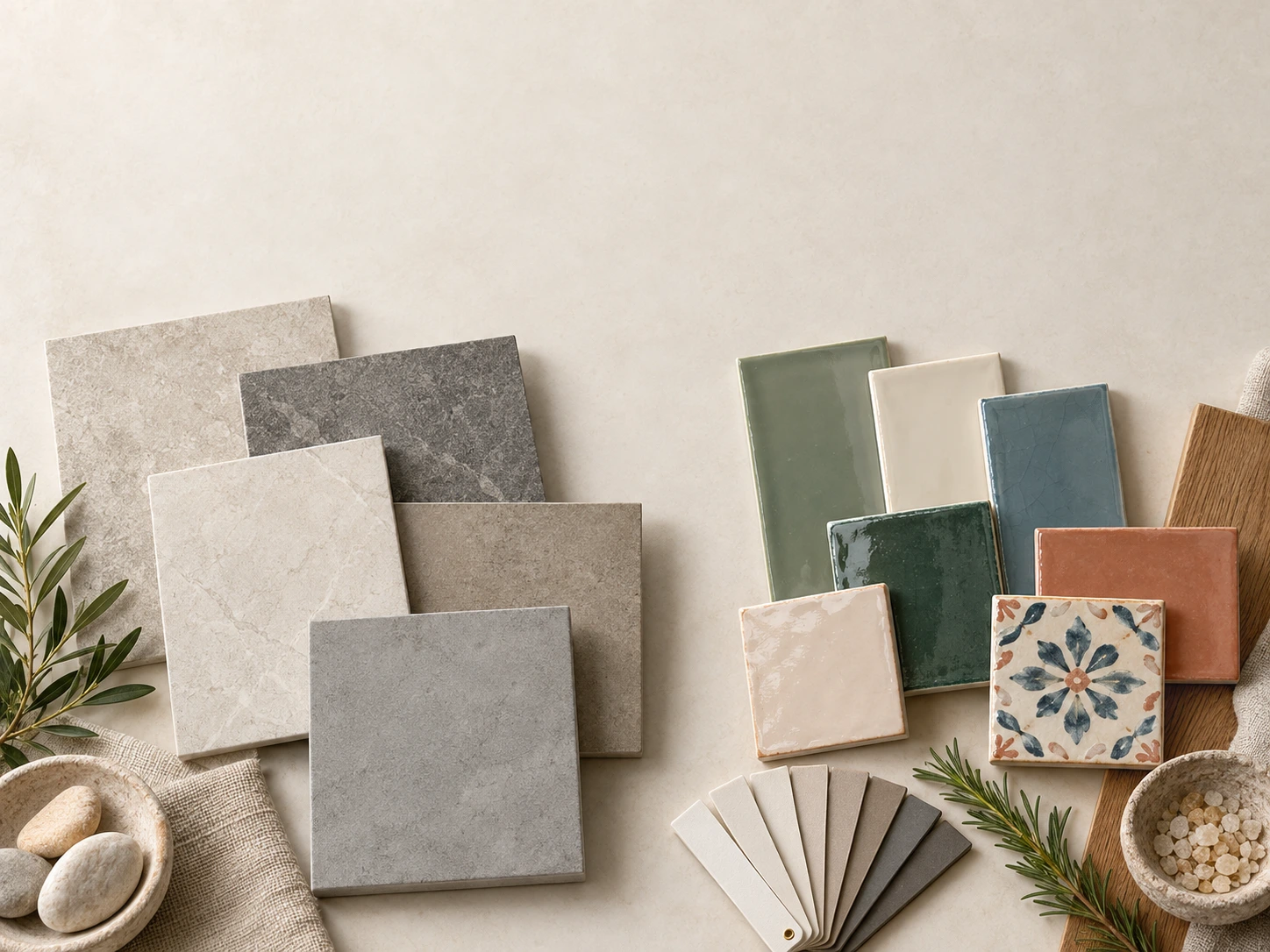
There is no universal winner. The right choice depends on where the tile will go, the product’s ratings, your design, your budget, and the installation requirements. Always confirm the manufacturer’s technical sheet for the exact tile you are considering.
Porcelain vs. Ceramic Tile at a Glance
| What to Compare | Porcelain Tile | Other Ceramic Tile |
|---|---|---|
| Definition | Ceramic tile with water absorption of 0.5% or less under the U.S. standard. | Broad category that includes porcelain and non-porcelain products. |
| Moisture | Very low absorption; often well suited to wet or damp areas when specified correctly. | Absorption varies by product; check the technical data and application rating. |
| Typical Strengths | Dense body, broad floor and wall options, and many stone-, concrete-, and wood-look designs. | Wide design selection; often easier to cut and may be more budget-friendly. |
| Common Uses | Interior floors, bathrooms, kitchens, entryways, and some approved exterior applications. | Walls, backsplashes, decorative features, and floors when rated for the location. |
| Installation | Can be harder to cut and may require appropriate tools, mortar, and installer experience. | Often easier to cut; installation still depends on tile type, substrate, and location. |
| Best Buying Rule | Choose by the product’s use rating, finish, slip information, and technical sheet. | Choose by the product’s use rating, finish, slip information, and technical sheet. |
What Is Ceramic Tile?
Ceramic tile is made from clay and other mineral materials that are formed, dried, and fired in a kiln. The finished tile may be glazed or unglazed and comes in many colors, patterns, sizes, and finishes. Because “ceramic” is an umbrella term, products sold under it can have different technical properties. A decorative ceramic wall tile and a ceramic floor tile are not automatically interchangeable.
For that reason, do not choose by the word ceramic alone. Check whether the manufacturer approves the exact product for floors, walls, wet areas, or exterior use. Product data—not a broad category label—should guide the decision.
What Is Porcelain Tile?
Porcelain is a specific category of ceramic tile that meets a low water-absorption threshold. The Tile Council of North America explains that standards define porcelain tile as impervious, with water absorption of 0.5% or less when measured using ASTM C373. The Porcelain Tile Certification Agency offers independent testing and certification for products that meet this criterion.
This standard is useful, but it does not answer every design or installation question. A porcelain tile can still have a finish that is unsuitable for a particular floor, and not every porcelain tile is approved for outdoor use. Review the full technical information for the product and the intended setting.
The Main Differences That Matter When You’re Choosing
Water absorption and moisture: Porcelain’s low absorption can make it a dependable option for bathrooms, kitchens, laundry rooms, and other areas where moisture is part of daily life. However, a tile surface alone does not make a shower waterproof. The complete assembly—including the substrate, waterproofing, mortar, grout, movement joints, and workmanship—must be designed and installed correctly.
Durability: Porcelain is often selected for floors and higher-use areas because of its dense body. Still, durability is not determined by the porcelain label alone. Glaze, surface finish, tile thickness, installation, traffic, and maintenance all matter. For any tile floor, verify the intended-use rating and ask about scratch, stain, and wear performance where relevant.
Cost: Ceramic tile is often available at a lower purchase price, while porcelain options can cost more. But the tile price is only one part of the project. Cutting, layout, setting materials, waste, substrate preparation, and installer experience also affect the total. Compare the complete project—not just the per-square-foot price.
Cutting and installation: Porcelain’s density can make it harder to cut, drill, or shape than some non-porcelain ceramic tile. This may call for suitable equipment and an installer experienced with the selected product. Tile size, thickness, pattern, and site conditions also influence installation difficulty.
Appearance and design: Both categories offer a wide range of looks. Ceramic is especially popular for decorative wall applications, while porcelain is available in many formats and finishes, including stone-look, wood-look, and concrete-look designs. Choose the appearance and performance together; neither category has a single fixed style.
Which Tile Is Better for Each Area?
Bathroom floors: Explore our bathroom tile design guide for more ideas on coordinating tile, finishes, and materials. Porcelain is a common choice because of its low water absorption, but the surface must also be appropriate for a floor that may get wet. Check the manufacturer’s wet-area guidance and available slip-resistance information. Smaller mosaics can create more grout joints and help follow a sloped shower floor, but the final choice should be confirmed with the installer.
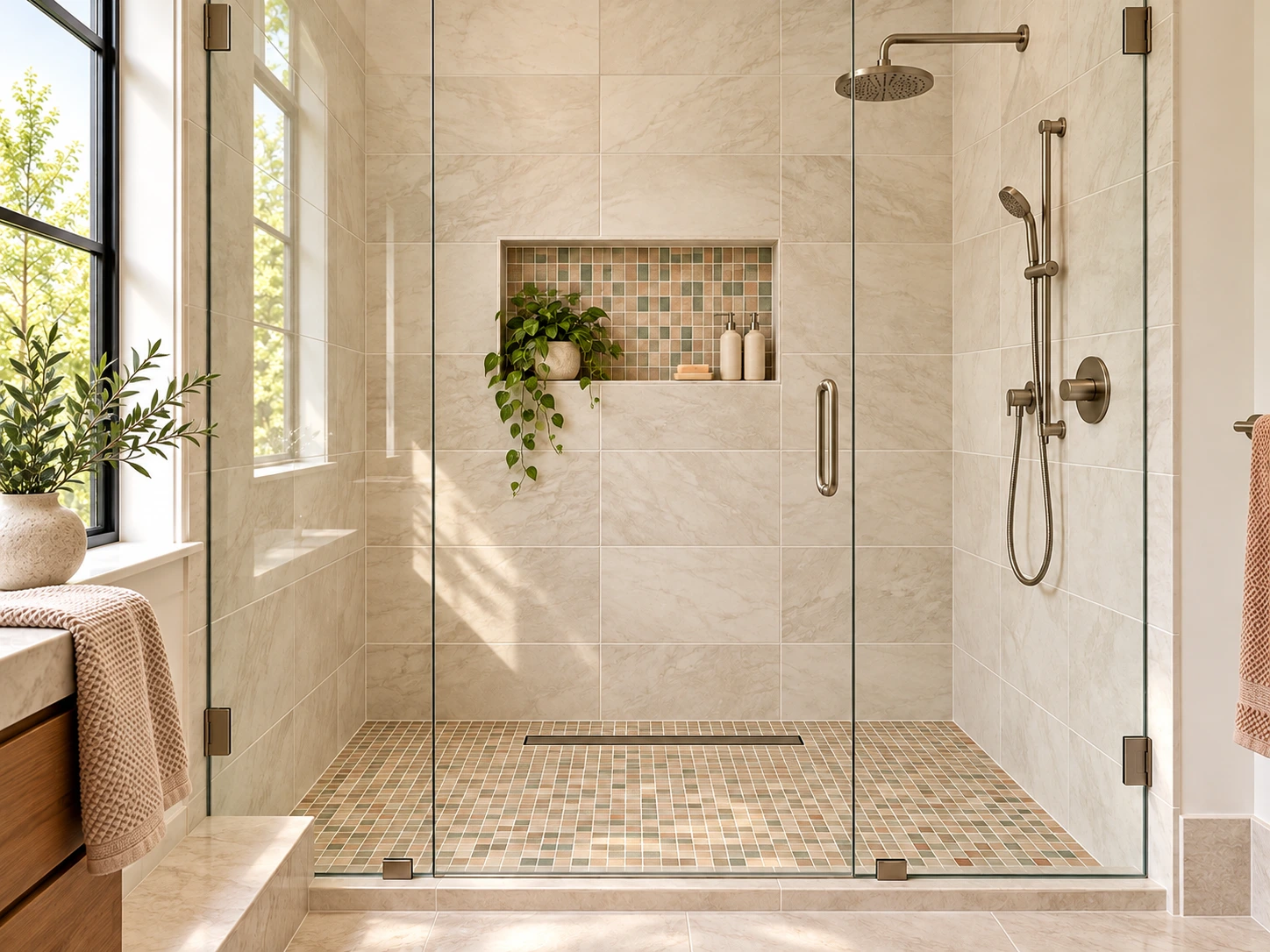
Shower walls: Porcelain and ceramic products may both be suitable when the manufacturer approves them for the application and the shower assembly is properly waterproofed. Consider weight, size, maintenance, grout joints, and the look you want.
Shower floors: Select a tile specifically suited to shower-floor use, including the slope, drain, and wet-foot conditions. Surface texture, tile size, grout layout, and the manufacturer’s guidance all matter. Do not assume that every tile labeled porcelain is automatically slip-resistant.
Kitchen floors and entryways: Porcelain is often considered for these busy spaces, but a suitable ceramic floor tile may also work. Compare the product’s use classification, wear characteristics, finish, cleaning needs, and your household’s traffic.
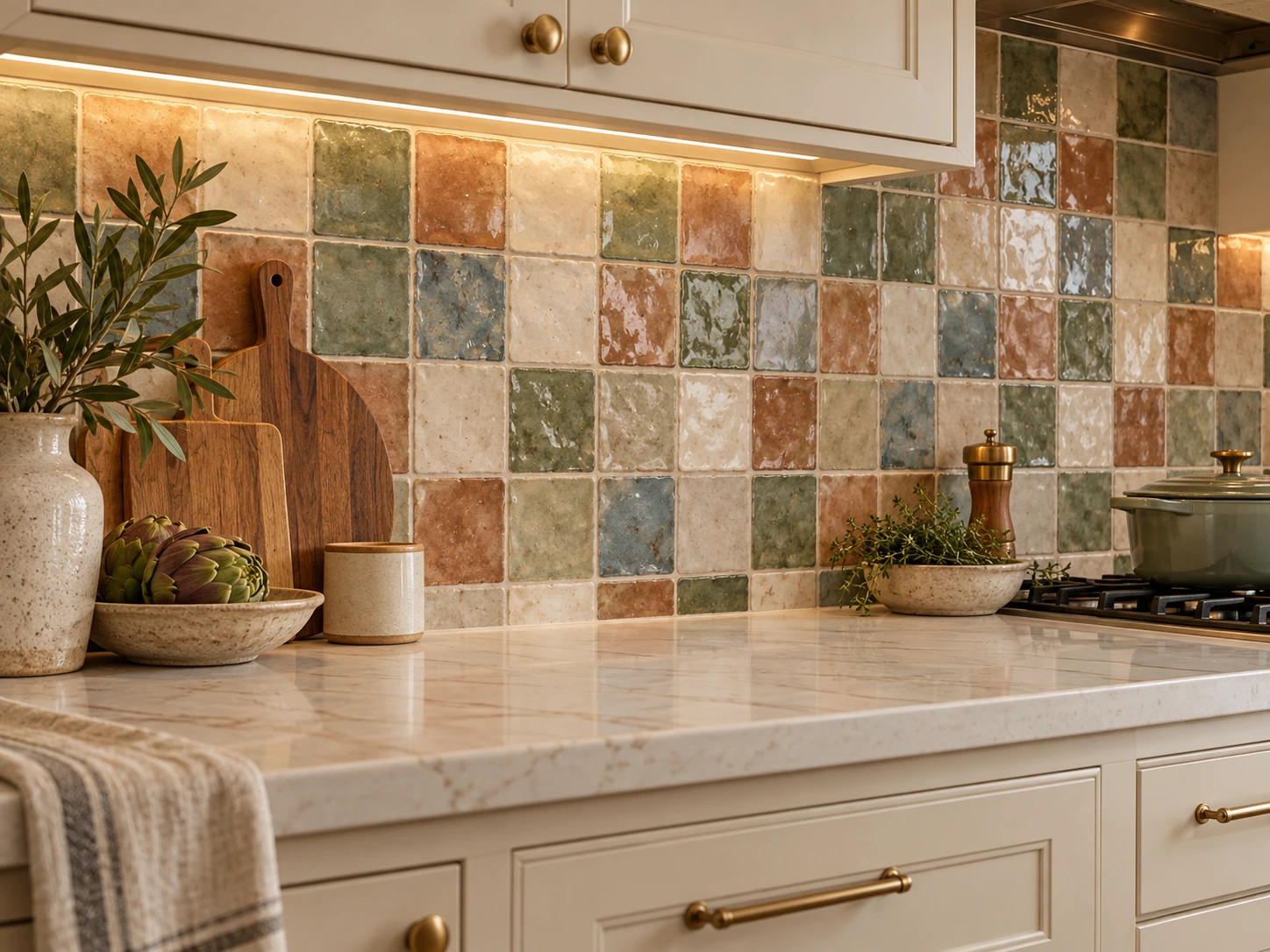
Kitchen backsplashes and decorative walls: See our kitchen backsplash tile options for more patterns and styles. Ceramic tile can be an excellent choice for backsplashes and feature walls, with abundant color, shape, and pattern options. Porcelain can work here too. The best option is the one that suits the design, cleaning needs, budget, and installation plan.
Outdoor areas: Use only a tile whose manufacturer specifically approves it for the outdoor conditions at your home. Consider freeze-thaw exposure, water absorption, surface texture, drainage, and the installation system. The word “porcelain” by itself is not a complete outdoor specification.
How to Choose the Right Tile for Your Project
Start with the location. Is the tile going on a wall, a dry floor, a shower floor, or outside? The answer narrows the options before you compare colors.
Check the product documentation. Look for intended applications, water absorption, finish, slip-related information, size, thickness, and care instructions. Ask the showroom or manufacturer for the technical data sheet if you cannot find it online.
Consider daily use and maintenance. A glossy decorative wall tile may be lovely behind a range, while a textured surface may suit a different application. Think about spills, soap residue, hard water, pets, children, and how much routine cleaning you are comfortable doing.
Plan the full design. Coordinate tile with your bathroom color and material palette by bringing cabinet, countertop, paint, and flooring samples when possible. View tile in the room’s lighting and compare grout colors. A tile sample can look different from a full installation, so ask about shade variation and how many faces or patterns are included.
Confirm installation details before ordering. Your installer can check substrate condition, tile flatness, layout, transition heights, edge trim, movement joints, and setting materials. For large-format tile or complex patterns, discuss the plan before purchase.
Porcelain vs. Ceramic Tile: Which Should You Choose?
Choose porcelain when the specific product’s performance and approved use fit a floor, moisture-prone space, or other demanding application—and when the design, budget, and installation plan work for you.
Choose a non-porcelain ceramic tile when its product rating fits the location and you want a particular color, shape, decorative look, or price point. Many ceramic tiles are especially effective on backsplashes and walls, and some are suitable for floors too.
If you are unsure, compare the technical sheets for the exact products rather than relying on a general rule. The right tile is the one that meets the needs of the space and gives you the look you want.
Explore Tile Options at Karpet King Design Center
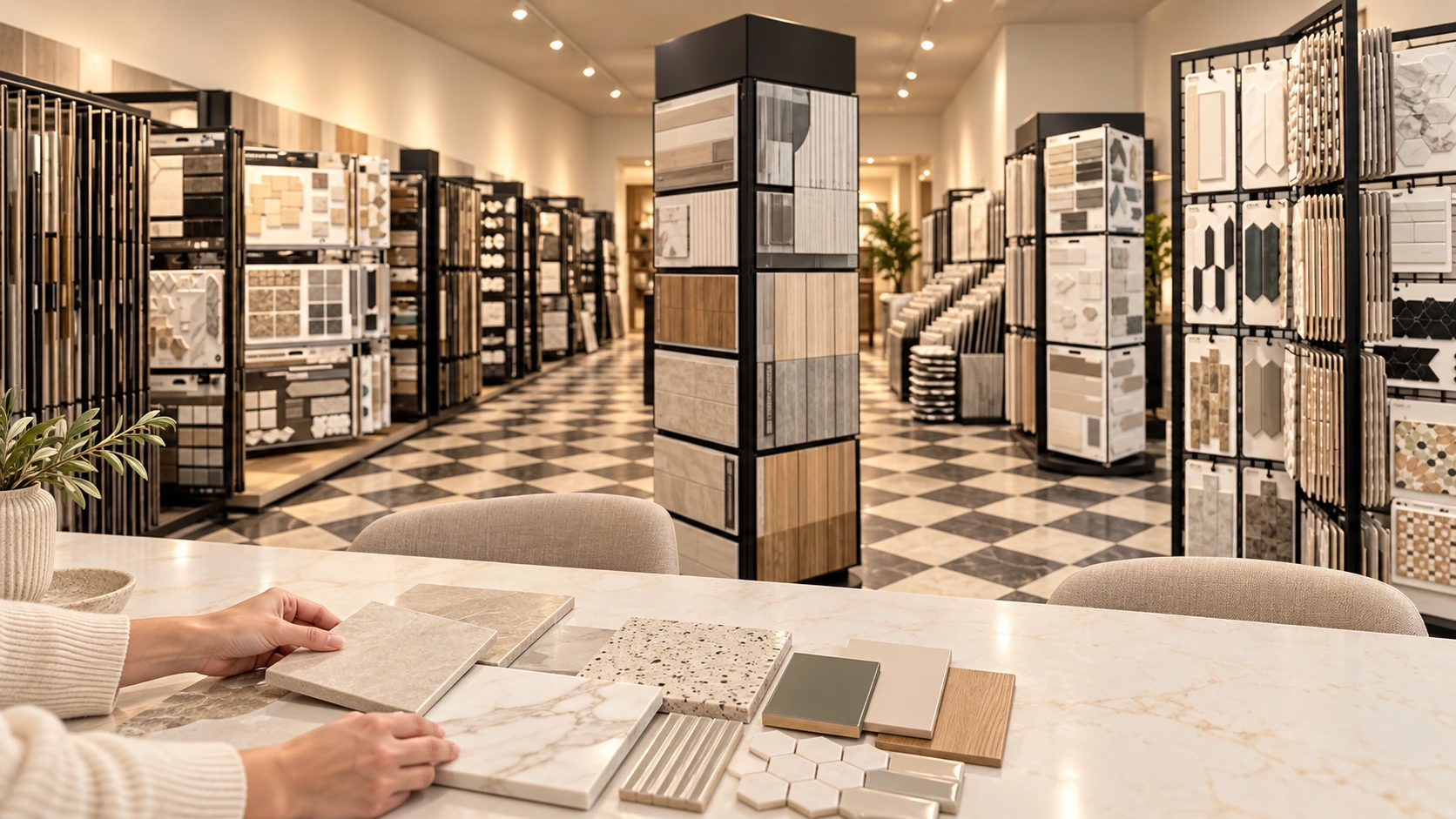
Choosing tile is easier when you can compare color, texture, finish, and scale in person. Visit Karpet King Design Center in Rockville to explore tile options for bathrooms, kitchens, floors, backsplashes, and accent walls. Bring your cabinet, countertop, or paint samples, and our team can help you narrow the choices for your project.
Planning a bathroom or kitchen update? Contact Karpet King Design Center to discuss tile selection and coordinate your materials.
Technical Sources and Further Reading
Use these authoritative references for product standards and application guidance. The article’s technical claims should be checked against the selected product’s current manufacturer documentation before installation.
Tile Council of North America — Porcelain Tile Certification: https://tcnatile.com/resource-center/porcelain-tile-certification/
Tile Council of North America — Porcelain vs. Non-Porcelain FAQ: https://tcnatile.com/resource-center/faq/porcelain-vs-non-porcelain/
Daltile — Finding the Right Floor Tile: https://www.daltile.com/how-to/how-to-choose-the-right-tile/floor-tile
Daltile — Ceramic vs. Porcelain Tile: What’s the Difference?: https://www.daltile.com/tile-therapy/articles/ceramic-vs-porcelain-tile-whats-the-difference
