
Hardwood Flooring Guide for Maryland Homes: 10 Smart Decisions Before You Buy
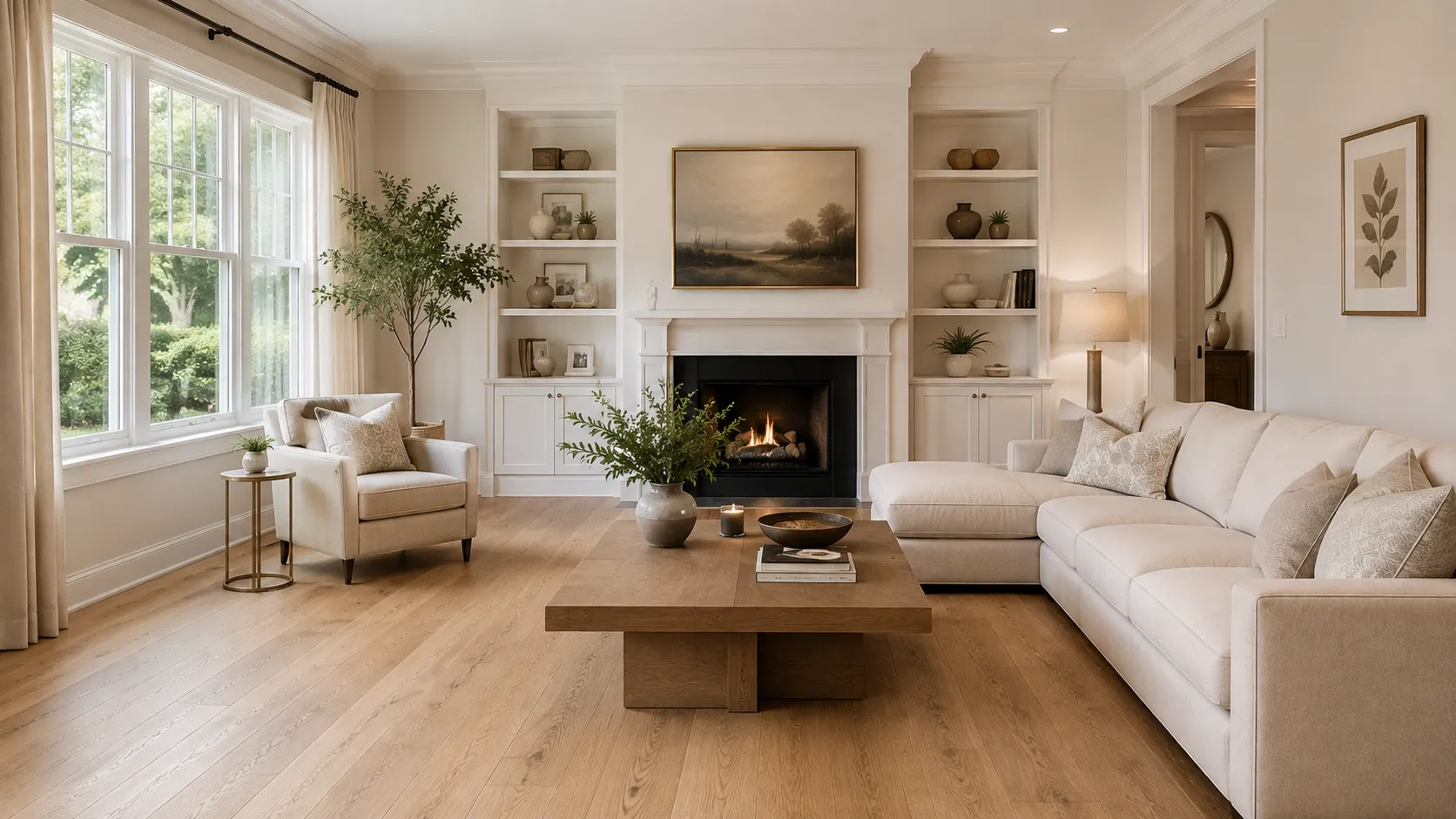
Choosing hardwood flooring is one of the most permanent design decisions in a home. The right floor has to work with your architecture, daily routine, lighting, cabinetry and long-term maintenance expectations - not just look good on a small sample board.
This hardwood flooring guide is designed for Maryland homeowners who want to understand the choices before they buy. It covers solid and engineered construction, species, natural variation, undertone, plank width, layout, finish, moisture, care and refinishing. If you are shopping locally, you can also compare full-size hardwood samples at Karpet King Design Center in Rockville before making a final decision.
QUICK ANSWER
For many Maryland homes, engineered hardwood is a practical place to start because its layered construction generally moves less with changes in temperature and humidity than solid wood. That does not make it automatically better. The best choice depends on the exact product, subfloor, room location, desired plank width, refinishing expectations and manufacturer requirements. Always evaluate the specific floor rather than the category name alone.
Hardwood Flooring Guide at a Glance
|
Decision |
What to compare |
Why it matters |
|
Construction |
Engineered vs. solid |
Affects dimensional stability, installation options and future refinishing potential. |
|
Species |
White oak, red oak, maple, hickory, walnut |
Changes grain, natural color, variation and overall design character. |
|
Grain & variation |
Subtle vs. expressive |
Determines whether the floor feels quiet and refined or organic and character-rich. |
|
Undertone |
Warm, neutral, cool, red/yellow/gray influence |
Changes how the floor coordinates with cabinets, walls, stone and furniture. |
|
Plank width |
Wide vs. narrow |
Changes the visual rhythm and perceived scale of the room. |
|
Pattern |
Straight, herringbone, chevron |
Adds different levels of movement and architectural detail. |
|
Finish |
Matte, satin and texture |
Changes reflectivity, surface character and how everyday marks are perceived. |
|
Site conditions |
Subfloor, moisture, humidity, grade level |
Can affect which products and installation methods are appropriate. |
|
Long-term care |
Cleaning, recoating, refinishing |
Affects how the floor ages and whether it can be renewed later. |
1. Start With the Room, Not the Color
Before comparing oak tones or stain colors, identify where the hardwood will be installed and what the room asks of the floor. A main-level living room, upstairs bedroom, kitchen and below-grade basement do not create the same site conditions. The subfloor, moisture exposure, traffic level, pets, direct sun and connection to adjacent rooms can all influence the best product.
For open plans, think beyond one room. A floor may continue through an entry, living room, dining room and kitchen, so plank direction and transitions should be planned as part of the architecture. In smaller spaces, consider how much of the floor will actually remain visible after furniture and rugs are placed.
Designer tip: take photos of the room in daylight and evening light, and bring cabinet doors, countertop samples, paint colors or rug swatches when you compare flooring. Hardwood is a large visual surface; judging it alone can create undertone surprises later.
2. Compare Engineered Hardwood vs. Solid Hardwood
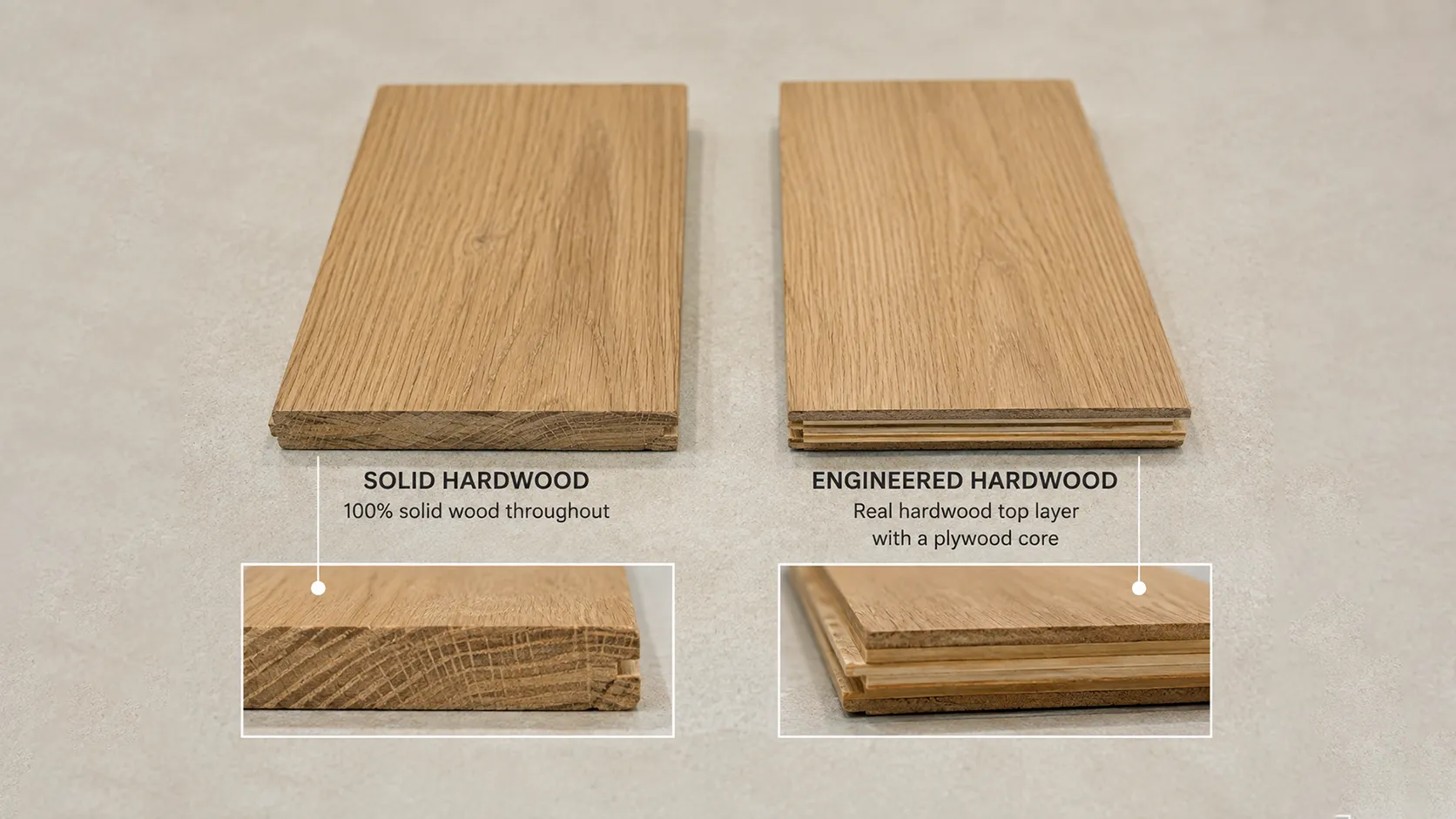
Both are real wood flooring, but their construction is different. The National Wood Flooring Association (NWFA) describes solid flooring as one piece of wood from top to bottom, while engineered flooring uses multiple layers with real wood at the surface. Engineered wood generally expands and contracts less than solid wood, which can make it useful in a wider range of locations.
|
Feature |
Engineered hardwood |
Solid hardwood |
|
Construction |
Real hardwood surface over a layered core |
One piece of wood from top to bottom |
|
Design range |
Often strong in wide-plank, European-oak and contemporary collections |
Strong traditional selection with many classic species and profiles |
|
Movement with humidity |
Generally less movement than solid wood |
More responsive to environmental moisture changes |
|
Below-grade use |
Some products may be approved; verify manufacturer and site conditions |
Generally reserved for on- or above-grade applications |
|
Refinishing |
May be refinishable depending on wear-layer thickness and construction |
Can often be refinished more times because there is more solid wood above the tongue |
|
Best choice when... |
You want dimensional stability, wide-plank design options or a product approved for the site |
You value traditional solid construction and future sanding potential |
The category alone is not enough. Engineered floors vary widely in wear-layer thickness, core construction, plank dimensions and installation requirements. Solid floors also vary by species, grade and cut. Compare the exact specifications and warranty for the product you are considering.
3. Plan for Maryland Humidity and Jobsite Conditions
Wood naturally exchanges moisture with the surrounding air, so Maryland's seasonal changes make jobsite preparation important. Current NWFA technical guidance emphasizes checking the actual environment, flooring and substrate rather than relying on a fixed number of acclimation days. The goal is to condition the flooring to the expected living conditions and follow the manufacturer's installation instructions.
The U.S. Environmental Protection Agency recommends keeping indoor relative humidity below 60 percent and ideally around 30-50 percent for general moisture control. For wood flooring, the specific acceptable range should come from the flooring manufacturer and installation guidance for the product.EPA moisture guidance can be useful background for homeowners managing indoor humidity.
What this means for a homeowner: keep HVAC operating normally before and after installation, disclose known moisture issues, and expect the installer to assess the subfloor and site conditions. If a basement, slab or moisture-prone room is part of the project, confirm in writing that the exact hardwood product and installation system are approved for that location.
4. Choose a Wood Species for Character, Not Just a Name
Species influences the floor's natural base color, grain pattern and visual movement. Grade, cut, stain and finish can change the final appearance dramatically, so species should be treated as a starting point rather than a guarantee of one look.
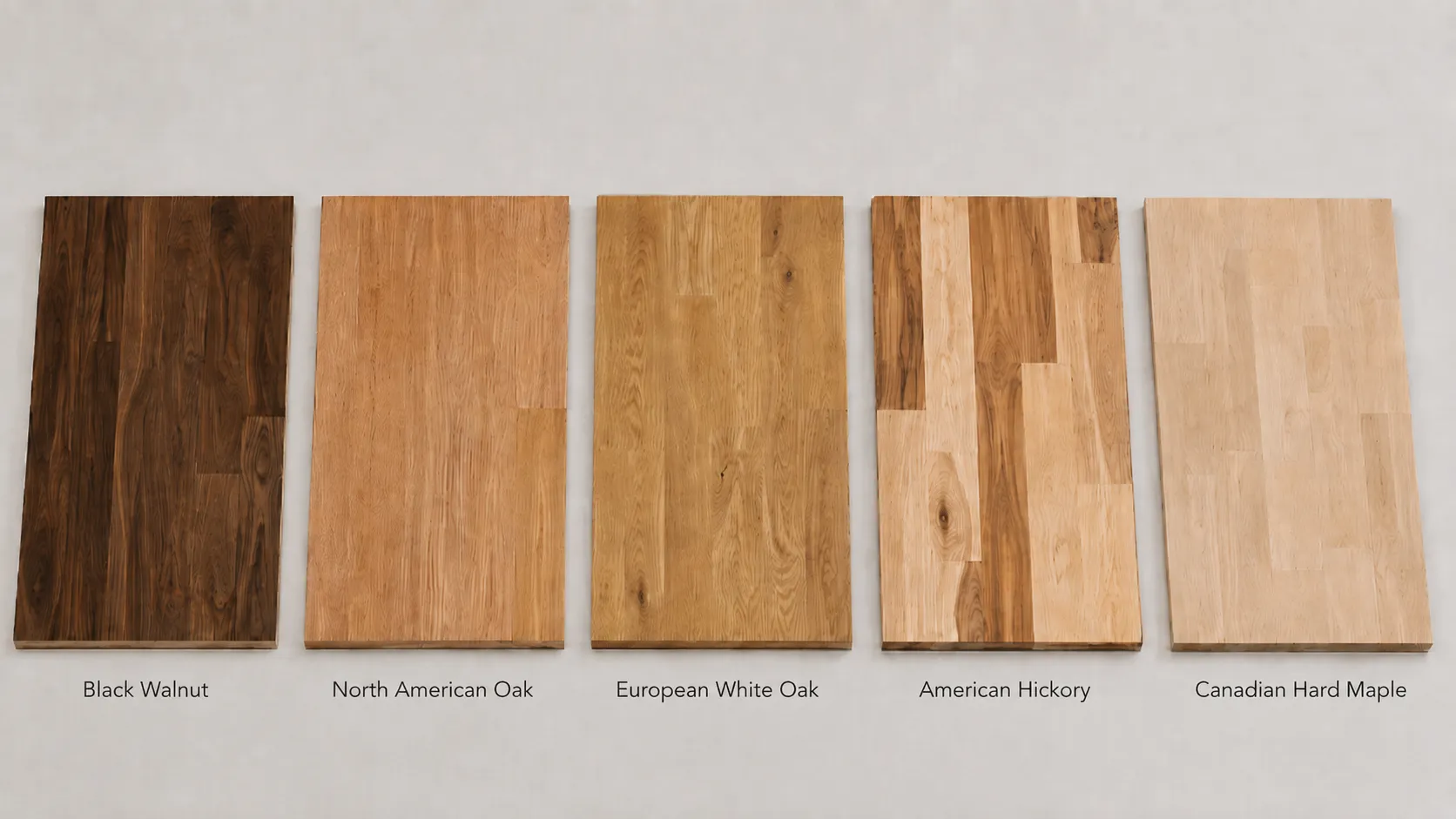
White oak: Refined, versatile grain with a neutral-to-warm base. Works especially well with natural, beige and lightly toned finishes.
Red oak: More visible grain and naturally warmer undertones. Familiar in traditional and transitional interiors.
Maple: Smoother, subtler grain that can create a cleaner visual field. Some maple products show less dramatic grain than oak.
Hickory: Strong contrast and natural variation. A good fit when you want the wood itself to be expressive and character-rich.
Walnut: Naturally deeper brown color and flowing grain. Often chosen for richer, more sophisticated interiors.
Always review the specific collection. A select-grade white oak floor can look very different from a rustic or character-grade white oak floor, even though the species name is identical.
5. Decide How Much Grain and Natural Variation You Want
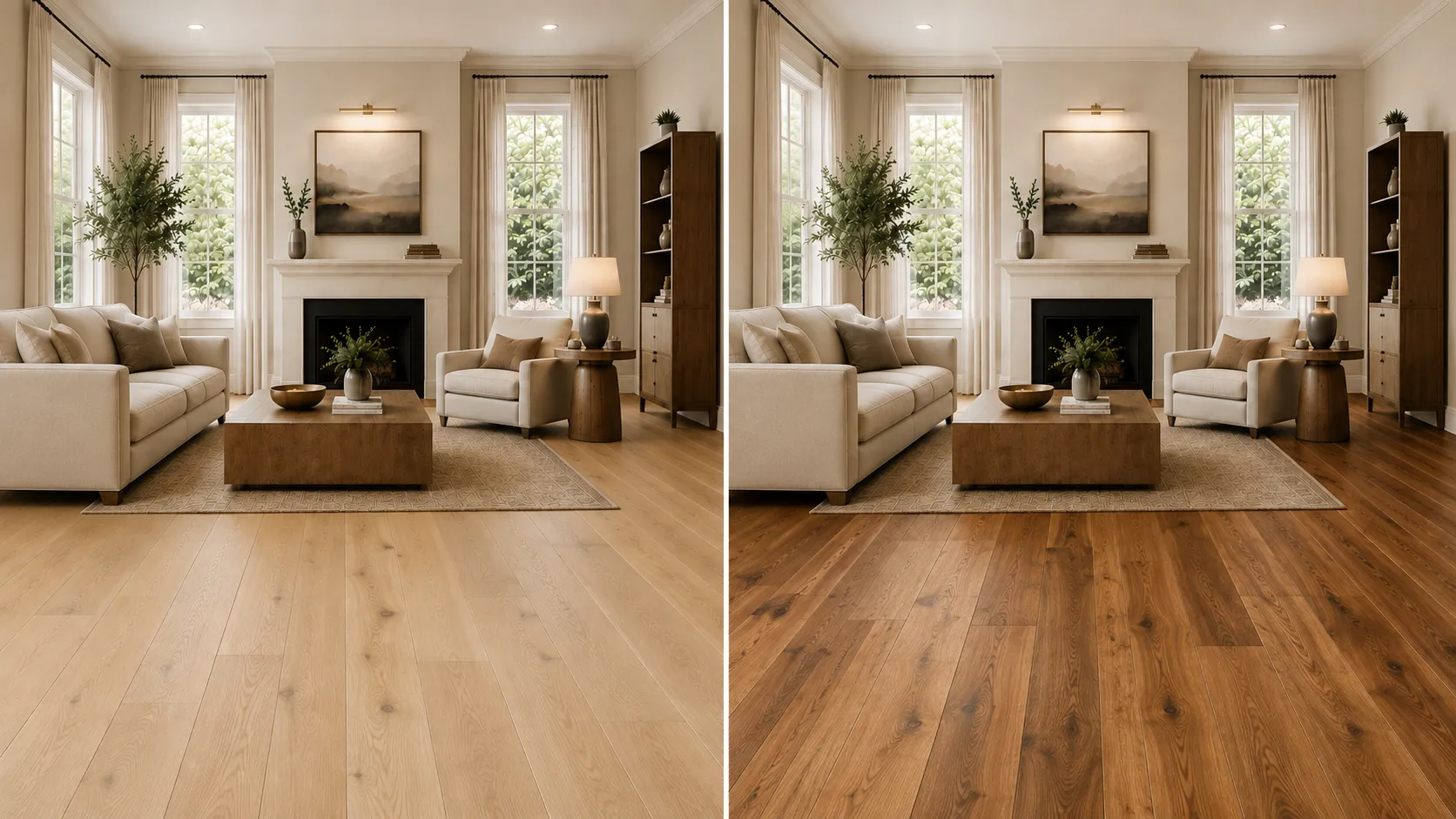
Two floors in a similar color can create completely different rooms if their grain and variation are different. A subtle grain and consistent board-to-board color creates a cleaner, quieter background. More knots, mineral streaks and color movement make the floor feel more organic and expressive.
Neither is automatically better. The decision is about visual balance. If cabinetry, stone and furniture already carry strong pattern, a quieter floor can give the room breathing space. If the architecture and furnishings are simple, a character-rich floor can become the material that gives the room personality.
Ask to see more than one sample board when variation matters. One attractive plank cannot show the full range of a natural wood collection.
White oak: Refined, versatile grain with a neutral-to-warm base. Works especially well with natural, beige and lightly toned finishes.
Red oak: More visible grain and naturally warmer undertones. Familiar in traditional and transitional interiors.
Maple: Smoother, subtler grain that can create a cleaner visual field. Some maple products show less dramatic grain than oak.
Hickory: Strong contrast and natural variation. A good fit when you want the wood itself to be expressive and character-rich.
Walnut: Naturally deeper brown color and flowing grain. Often chosen for richer, more sophisticated interiors.
Always review the specific collection. A select-grade white oak floor can look very different from a rustic or character-grade white oak floor, even though the species name is identical.
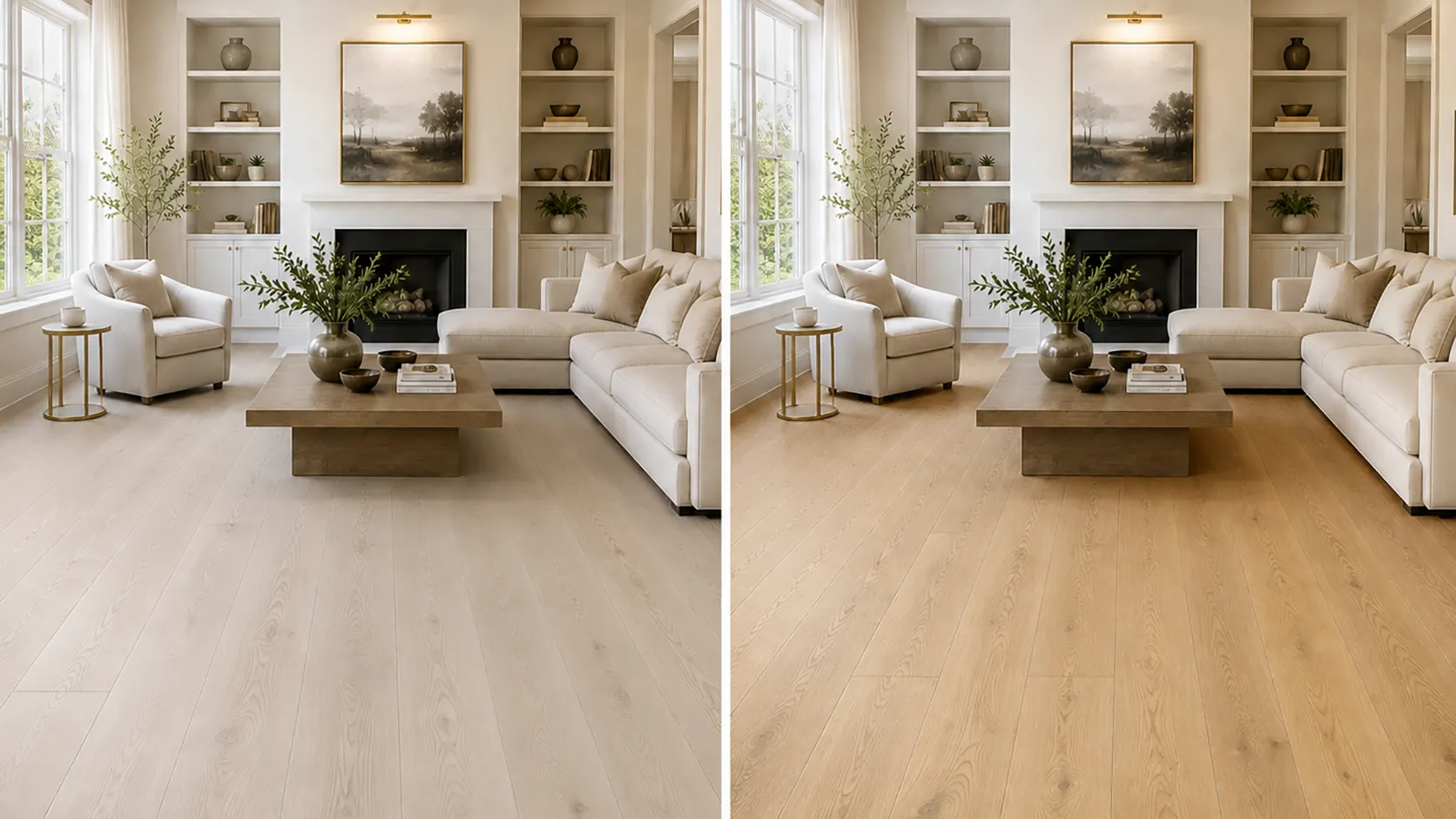
6. Read the Undertone in Your Actual Light
Color names can be misleading. Two floors may both be called “natural oak” while one leans honey or yellow and the other reads beige, taupe or slightly gray. That hidden undertone affects how the floor works with white paint, cabinetry, countertops, rugs and existing furniture.
The safest approach is to compare the floor with the fixed materials that will remain in the room. A warm floor does not require every other material to be warm, but the palette needs a deliberate relationship. Near-matches are often harder to coordinate than clear, controlled contrast.
View samples at different times of day. Morning daylight, afternoon sun and warm evening lamps can shift the appearance of wood. Whenever possible, borrow a larger sample and place it flat on the floor, because vertical showroom displays can read differently from an installed horizontal surface.
For more help building the full palette, see Karpet King's flooring and interior design guide, which explains how flooring relates to cabinetry, countertops, rugs, wall color and connected rooms.
7. Choose Plank Width and Direction With the Room in Mind
Plank width changes the rhythm of a floor. Wider planks create fewer seams and often make a room feel calmer, more open and more contemporary. Narrower planks create more repeated lines and can feel more traditional or detailed.
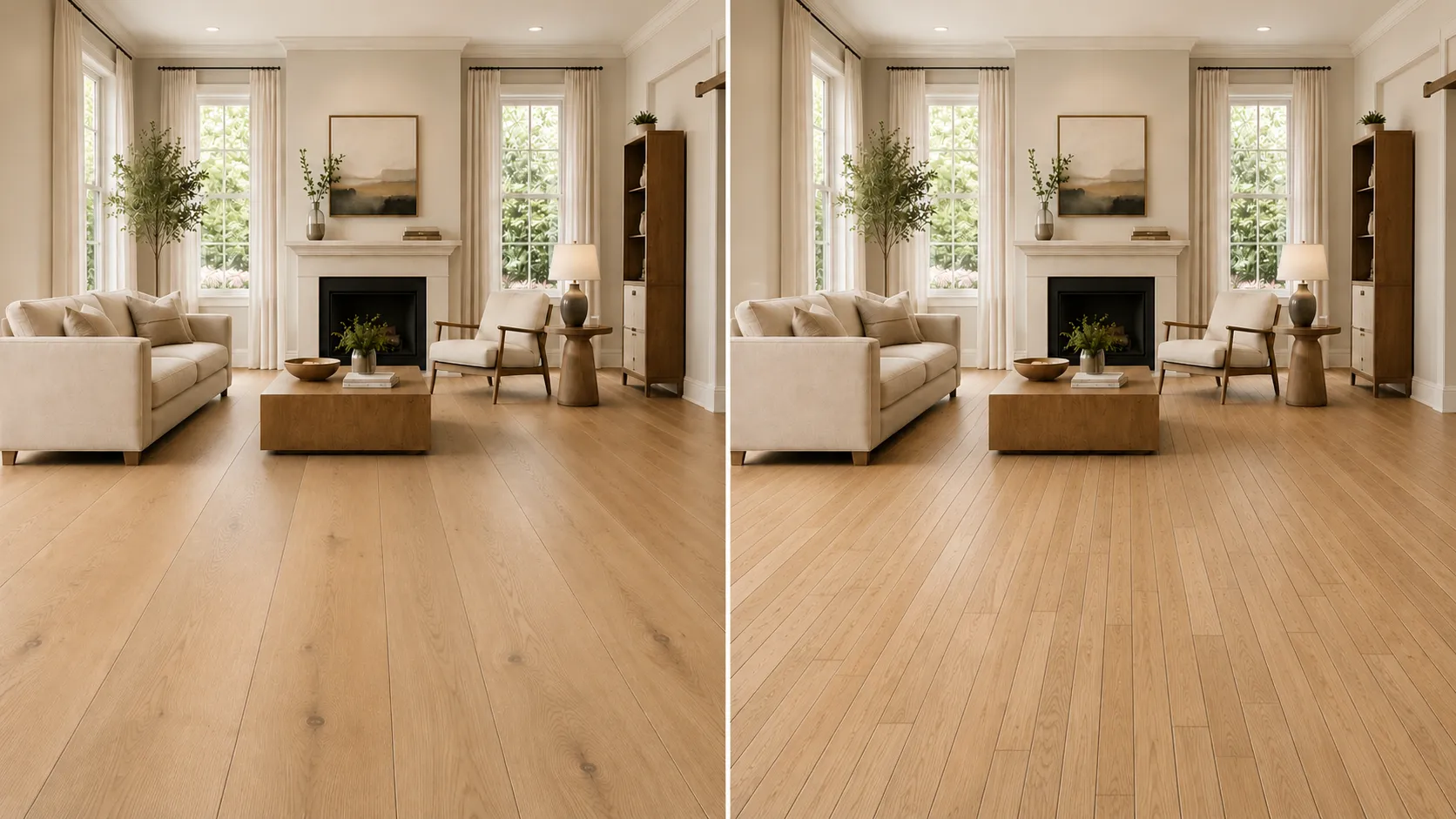
Width should also relate to scale. Very wide planks can be beautiful in a large open plan, but the product construction, subfloor and installation requirements matter. Do not choose width only from a lifestyle image; compare a full-size board and understand how many planks will actually span your room.
Plank direction affects sightlines. Straight planks often look best when they support the longest architectural line or the main direction of movement. In connected rooms, avoid unnecessary direction changes unless a doorway, threshold or structural condition gives you a clear reason.
8. Decide Whether the Floor Should Be Quiet or Patterned
Straight-laid hardwood is the most versatile foundation because it creates a continuous linear field. Herringbone and chevron introduce more movement and architectural detail. They can be especially effective in entries, dining rooms, libraries or larger open areas where the pattern has room to read.
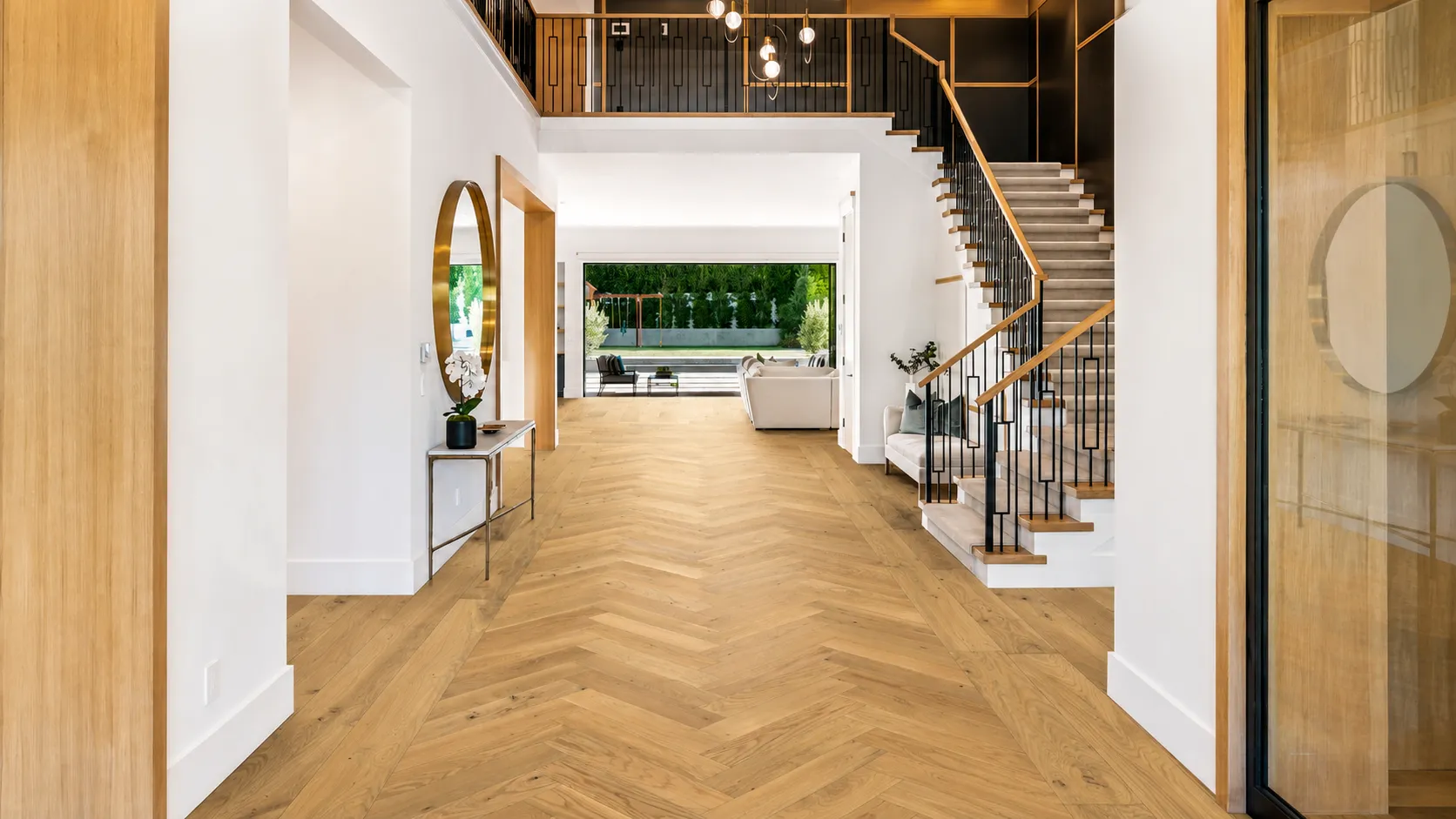
Herringbone uses rectangular pieces arranged in a repeated broken-zigzag pattern. Chevron uses angled ends that meet point-to-point. They are related looks, but they should not be treated as interchangeable when you are ordering material or planning installation.
Patterned hardwood requires more layout planning and can increase material and installation complexity. If you love the look, discuss transitions, borders, room centering and waste allowance before ordering rather than treating the pattern as a last-minute styling choice.
9. Pick Texture and Finish for the Way You Want the Floor to Read
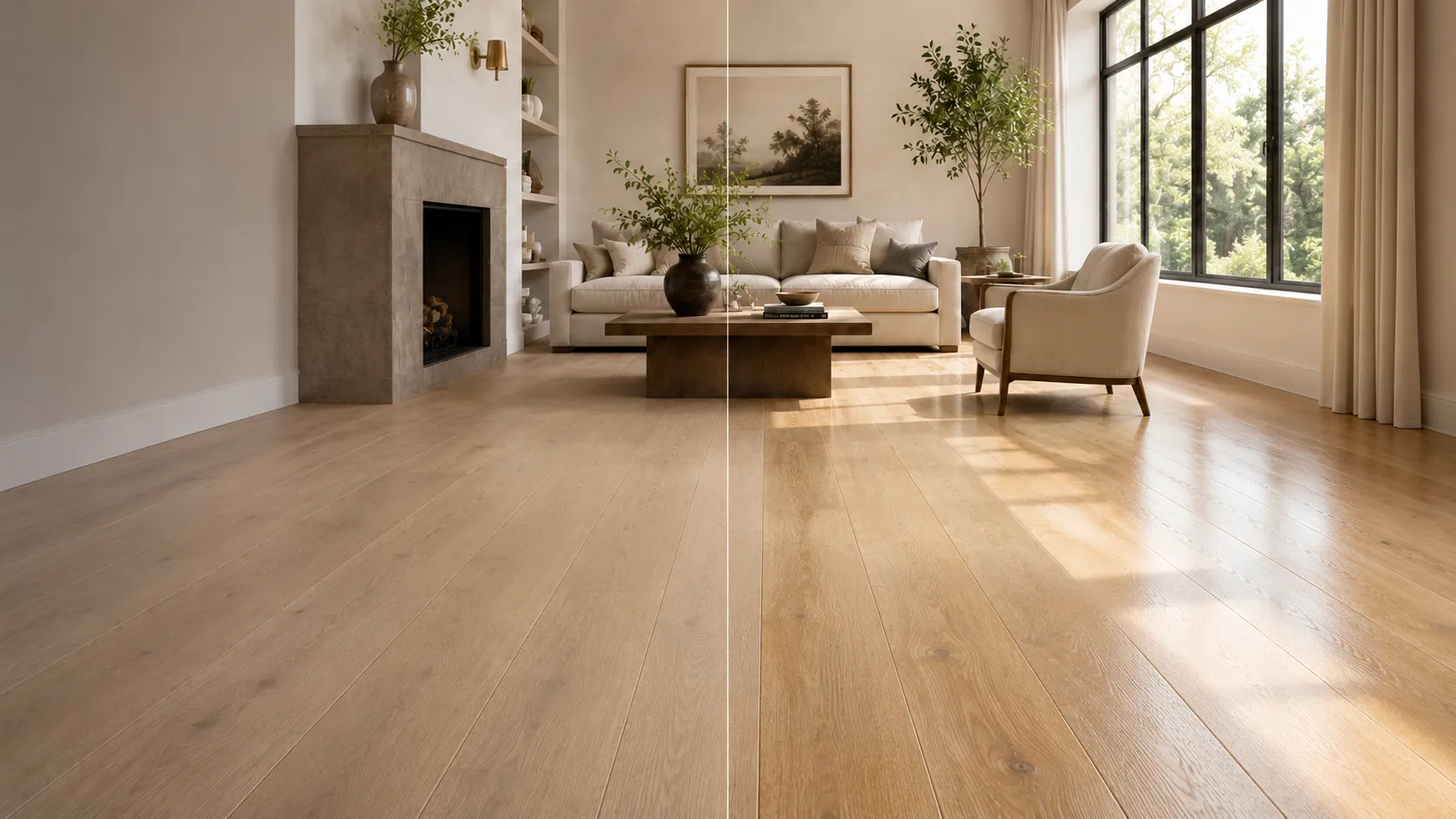
Finish changes the way light moves across wood. Matte and low-sheen finishes keep reflectivity lower and emphasize a more natural, relaxed appearance. Satin reflects more light and can feel slightly more polished. The exact sheen level varies by manufacturer, so compare real samples rather than relying on the finish name alone.
Wire-brushed texture gently emphasizes the grain and can add tactile character. Smooth floors create a cleaner surface appearance. Hand-scraped or distressed looks are more specific style choices and should be evaluated at room scale so the texture does not become visually repetitive.
For active households, also think about what will disguise everyday wear. Mid-tone colors, visible grain, matte finishes and some texture can make small dust, dents or surface marks less noticeable than extremely dark, glossy or highly uniform floors. Product finish systems differ, so ask about the exact care instructions and warranty.
10. Think About Care, Refinishing and the Sample Before You Order
Real wood flooring can be maintained and, in many cases, renewed over time. The NWFA maintenance guidance recommends routine sweeping, dust mopping or vacuuming with a bare-floor setting, wiping spills promptly with a dry or slightly damp cloth, and avoiding wet mops and steam mops. Always use care products approved for the exact finish on your floor.
When a finish becomes dull, a maintenance coat may sometimes restore the surface. A full sand-and-refinish may be appropriate when wear or damage is deeper. The NWFA refinishing guidance notes that the number of times a floor can be sanded depends on factors such as wear-layer thickness, floor condition, equipment and contractor skill. This is especially important for engineered hardwood, where wear-layer thickness varies by product.
Before ordering, ask for the manufacturer care guide, warranty and installation requirements. If future refinishing is a priority, ask specifically about wear-layer thickness and whether the manufacturer permits sanding or recoating.
Finally, compare larger samples in your actual home. A showroom is useful for narrowing the field, but daylight, wall color, cabinetry and surrounding finishes can change how a floor reads. Sample borrowing is one of the most useful steps between “I like this board” and “I want this across the whole room.”
Where Does Hardwood Work Best?
|
Room |
What to consider |
|
Living rooms & dining rooms |
A classic use for both solid and engineered hardwood. Focus on design continuity, traffic, furniture protection and sun exposure. |
|
Bedrooms |
Hardwood can create a clean, cohesive look, especially when the same floor continues from a hallway. Area rugs can add softness where desired. |
|
Hallways & entries |
Excellent places to showcase grain or pattern, but choose a finish and color that fit the traffic level and plan for walk-off mats where exterior moisture enters. |
|
Kitchens |
Possible with an appropriate product and household habits, but spills should be cleaned promptly. Confirm manufacturer approval and protect against plumbing or appliance leaks. |
|
Basements |
Engineered hardwood is often the starting point because it moves less with humidity than solid wood, but the exact product, slab moisture and installation system must be approved for below-grade use. |
|
Bathrooms & laundry rooms |
Real wood is usually not the first choice where repeated water exposure is expected. If considering it, rely on explicit manufacturer approval and realistic moisture management rather than appearance alone. |
Common Hardwood Shopping Mistakes to Avoid
- Choosing the stain color before deciding whether the construction and room conditions are appropriate.
- Judging natural variation from one small board instead of several samples or a larger display.
- Ignoring undertone because two products share the same color name.
- Choosing very wide planks without reviewing the product construction and installation requirements.
- Assuming every engineered hardwood can be refinished the same number of times.
- Assuming “water resistant” or a kitchen lifestyle photo means the product is suitable for standing water or every moisture-prone room.
- Using a steam mop or generic cleaner without checking the finish manufacturer's care instructions.
- Ordering before planning transitions, stairs, borders, direction changes and adjacent-floor heights.
Compare Hardwood in Person at Karpet King Design Center
A hardwood flooring guide can narrow the choices, but the final decision is easier when you see the materials at full scale. At Karpet King Design Center in Rockville, you can compare engineered and solid hardwood, species, plank widths, grain, finishes and pattern options, then coordinate the floor with rugs, stair runners, cabinetry, countertops and tile.
Start by exploring hardwood flooring in Rockville, MD, then visit the showroom or book an interior design consultation to compare samples with the rest of your project materials.
If you are ready to price the project, request a flooring estimate. Professional flooring installation and hardwood floor refinishing are available as separate services.
KARPET KING DESIGN CENTER
751 East Gude Drive, Rockville, MD 20850 | (301) 770-4110 | [email protected]
Serving Rockville and surrounding Montgomery County / DMV communities.
Frequently Asked Questions
Use This Hardwood Flooring Guide as a Decision Checklist
The best hardwood floor is not simply the most popular color. It is the product whose construction fits the site, whose grain and variation match the amount of character you want, whose undertone works with the room, and whose plank, pattern and finish support the architecture.
Use this hardwood flooring guide to narrow the direction, then confirm the decision with real samples, manufacturer specifications and professional site evaluation. A thoughtful selection at the beginning can create a floor that feels connected to the home now and still makes sense years from now.
