How to Create a Warm Modern Interior Without Making Your Home Feel Dark
Warm modern design in 2026 is no longer limited to cream walls, pale oak, and layers of beige. Today’s interiors are becoming richer, more natural, and more personal, with medium-toned woods, earthy greens, warm browns, clay colors, ochre, burgundy, and tactile surfaces appearing throughout kitchens, bathrooms, flooring, and rugs.
The challenge is knowing how to introduce these deeper colors without making the home feel heavy.
The secret is balance: keep the largest surfaces light enough to reflect light, then add warmth through natural wood, textured flooring, expressive tile, stone, carpet, and carefully placed color.
Begin with Flooring That Feels Natural, Not Gray
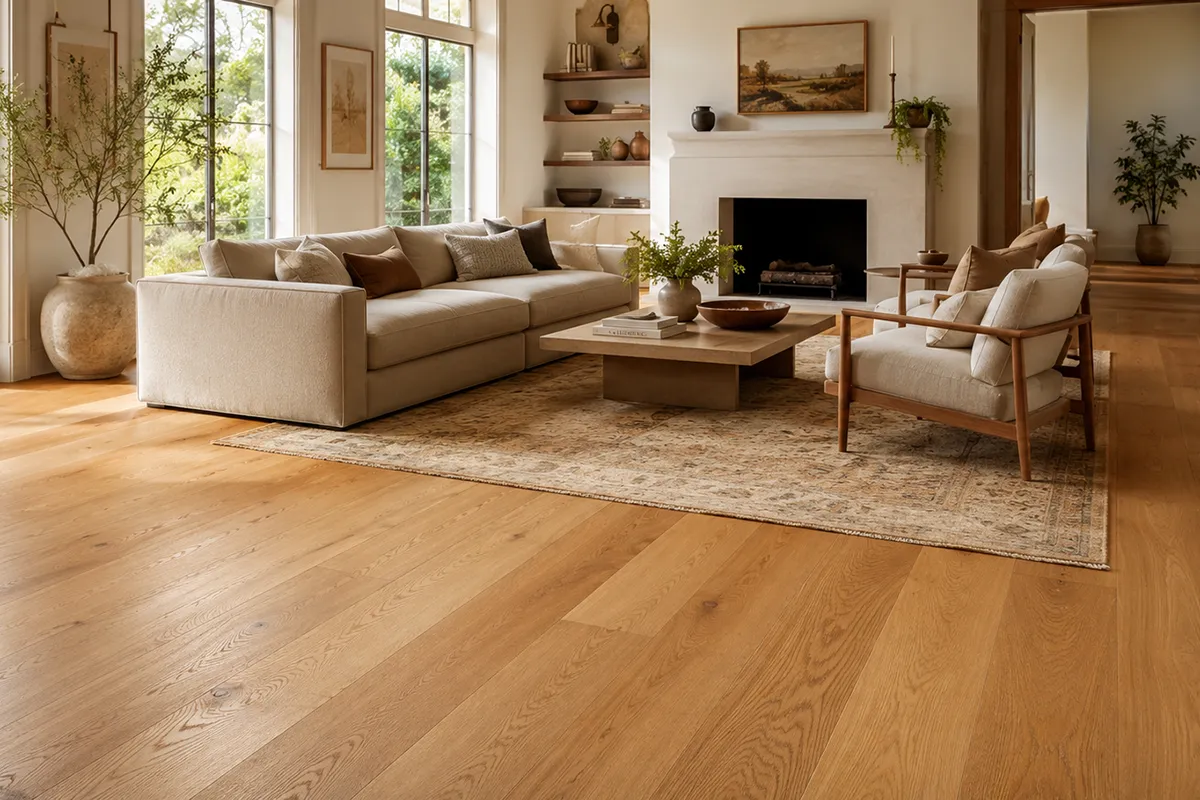
Flooring covers one of the largest surfaces in the home, so it sets the foundation for the entire design.
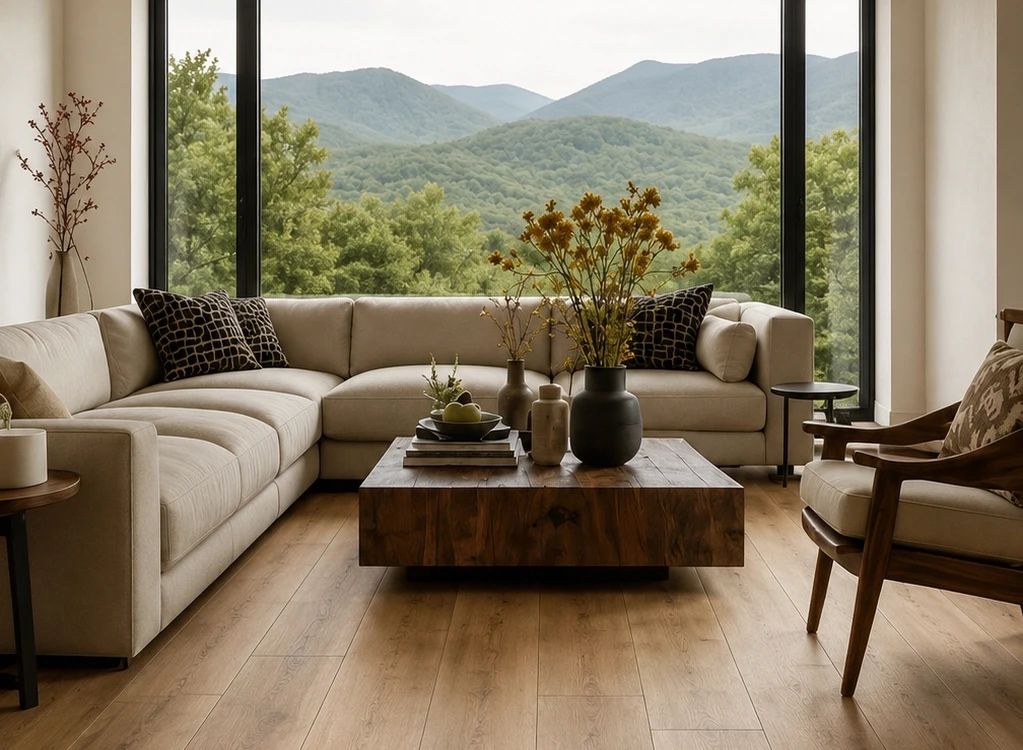
For 2026, flooring is moving away from cool gray stains and artificial-looking weathered finishes. Natural wood tones, warm brown flooring, white oak, light smoked oak, caramel, chestnut, and soft medium-brown finishes are becoming more desirable. Matte and low-sheen surfaces are also popular because they allow the wood grain to feel more authentic and reduce glare.
A floor does not need to be extremely pale to keep the home bright. Medium natural wood can add more depth and character than washed-out flooring while still feeling open.
Look for flooring with:
- Natural brown, honey, caramel, or soft chestnut tones
- Matte or low-gloss finishes
- Visible but controlled grain variation
- Wider planks for a cleaner appearance
- Warm or neutral undertones rather than blue-gray tones
Very dark espresso flooring can still be beautiful, but it requires more light and careful coordination. In smaller rooms or homes with limited windows, a natural or medium-brown floor usually provides a better balance.
Add Warmth with Carpet and Area Rugs
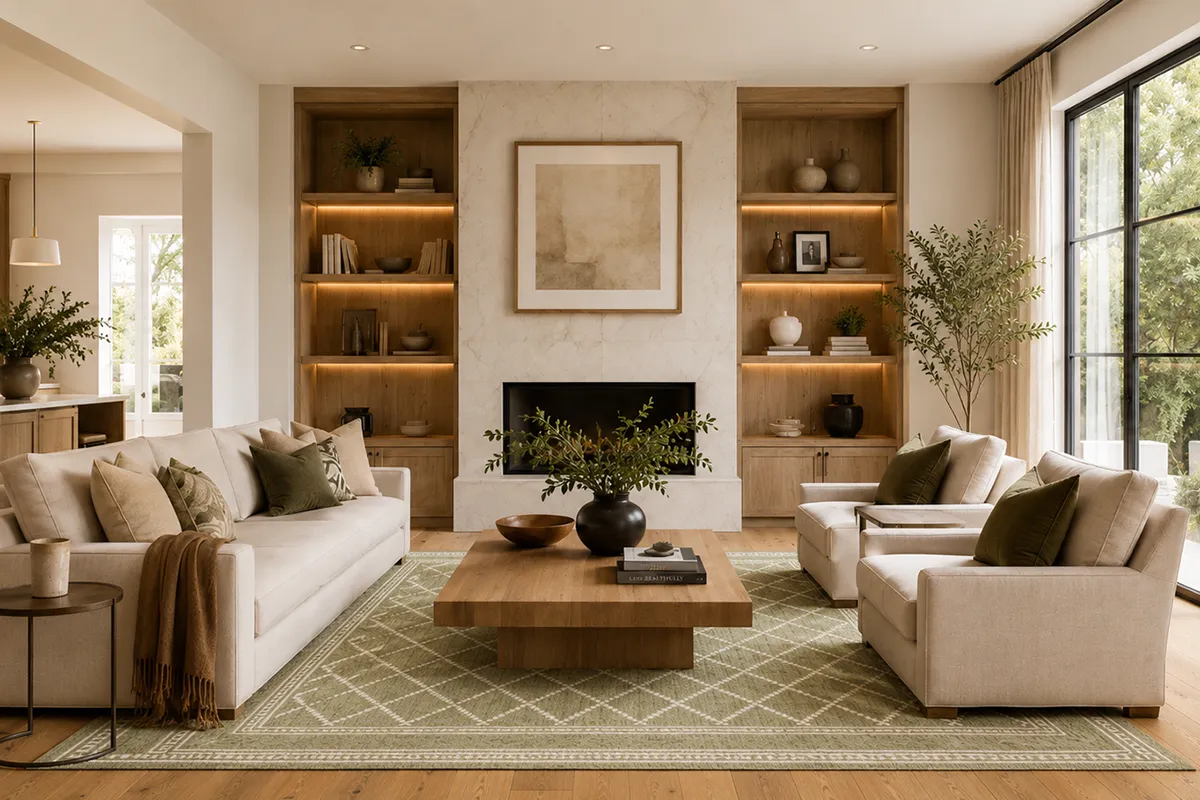
Carpet and area rugs soften hardwood, luxury vinyl, tile, and stone while adding warmth and comfort.
The updated 2026 palette moves beyond plain gray carpet. More current choices include:
- Oatmeal
- Flax
- Natural wool
- Warm sand
- Camel
- Cognac
- Tobacco
- Soft olive
- Moss
- Muted ochre
- Clay
- Rust
Lighter natural shades work beautifully for wall-to-wall carpet, while deeper colors can appear within stair runners, borders, patterned carpet, or custom area rugs.
A rug that combines oatmeal, olive, camel, and muted rust can introduce color without becoming too dark. Tonal patterns, subtle stripes, organic geometrics, wool textures, and loop constructions can also create visual interest without overwhelming the room.
Bring More Character into the Kitchen
Warm modern kitchens in 2026 are becoming more layered and expressive.
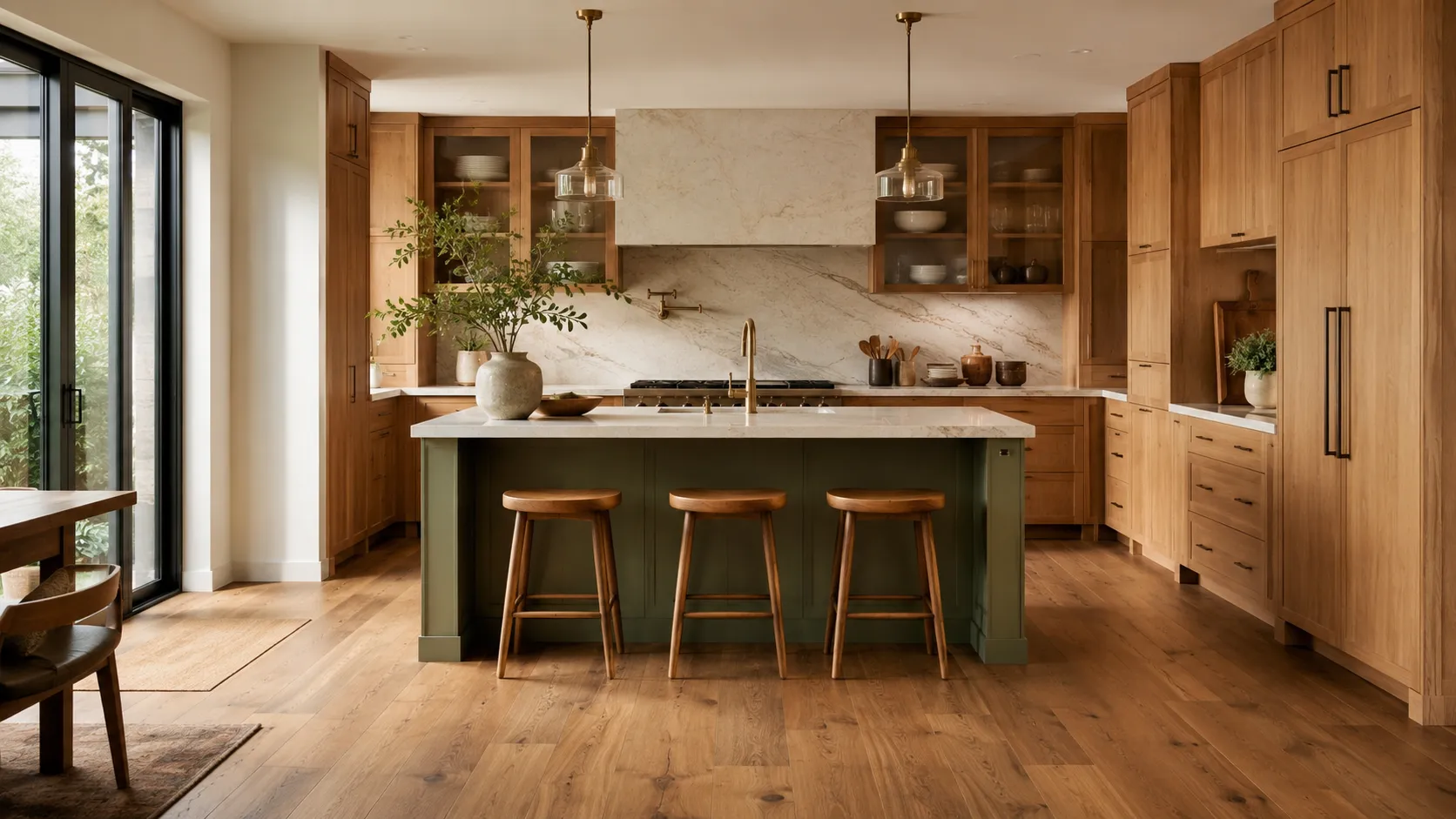
White and cream cabinetry still have a place, but they are no longer the only choices. Wood-grain cabinetry is growing in popularity, with white oak remaining especially important. Mixed cabinet finishes, medium-toned stained wood, and natural quartzite are also becoming more prominent.
Current cabinet directions include:
- Natural white oak
- Medium stained oak
- Walnut
- Chestnut
- Warm brown wood
- Mushroom
- Clay taupe
- Muted olive
- Moss green
- Deep forest green
- Warm mahogany
- Earthy burgundy
The key is not to use every rich finish across the entire kitchen.
A deep olive island can be paired with warm off-white perimeter cabinets. Walnut lower cabinets can be balanced with lighter upper cabinets. A burgundy coffee bar or pantry wall can add personality without dominating the room.
Greens, blues, and browns are among the important kitchen color directions for 2026, while warmer woods are replacing the all-white look in many new designs.
Balance Rich Cabinets with Lighter Countertops
Carpet and area rugs soften hardwood, luxury vinyl, tile, and stone while adding warmth and comfort.
The updated 2026 palette moves beyond plain gray carpet. More current choices include:
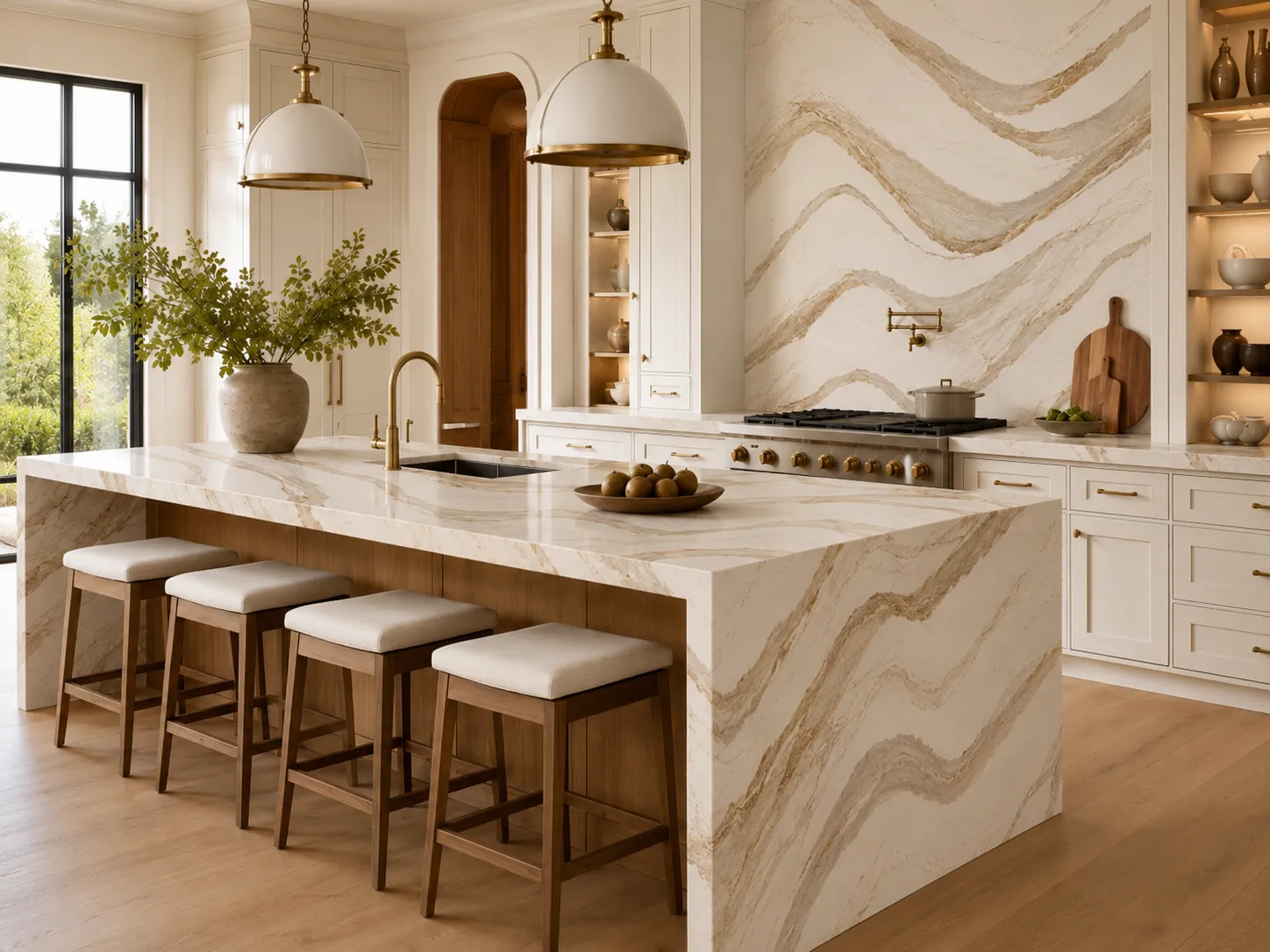
- Taj Mahal quartzite
- Warm white quartz
- Creamy porcelain slabs
- Light stone with beige or gold veining
- Soft marble-look quartz
- Quartzite with natural movement
Natural quartzite continues to grow in kitchen design because it combines authentic movement with a warm, high-end appearance.
A walnut kitchen paired with a creamy quartzite countertop will feel dramatically lighter than the same cabinetry combined with black stone.
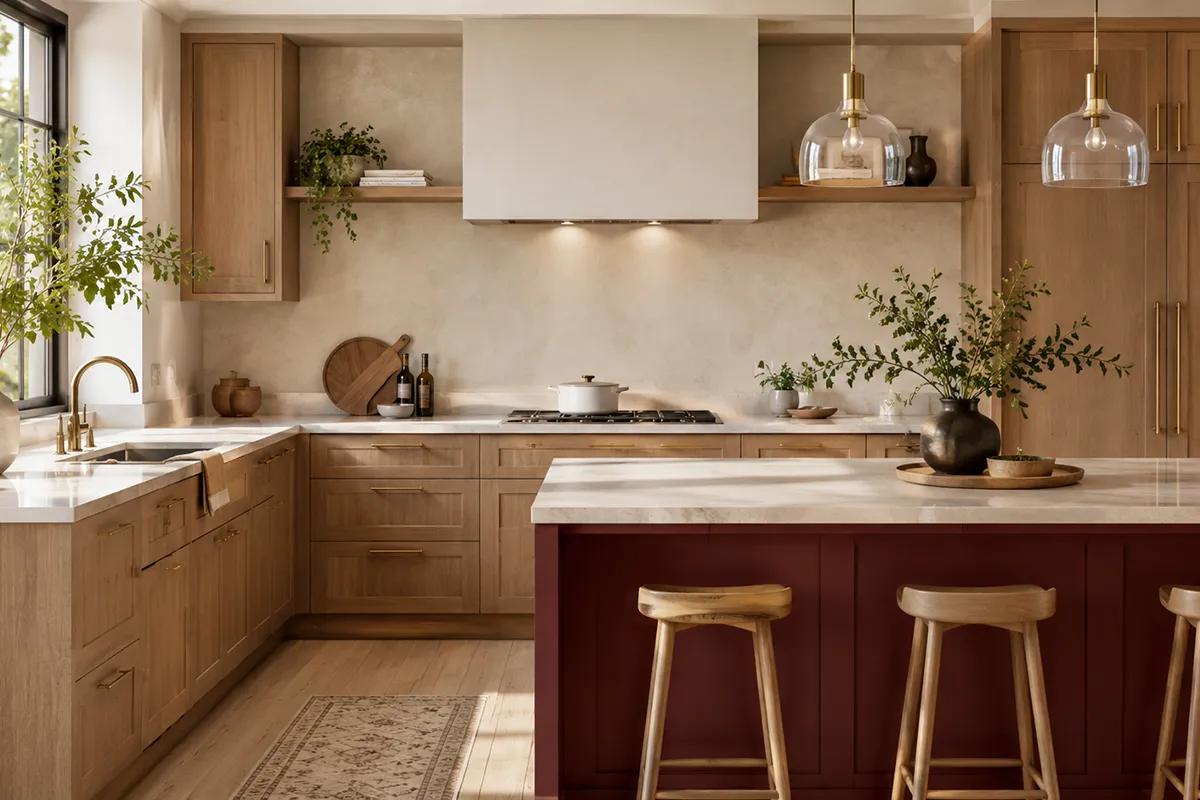
The backsplash can provide another layer of balance. Consider warm white handmade-look tile, biscuit, soft ochre, eucalyptus, muted olive, or a full-height slab matching the countertop.
Using the countertop material as a full-height backsplash also reduces grout lines and creates a cleaner, more seamless surface.
Use Colorful Tile Without Darkening the Room
Warm modern tile in 2026 is becoming more expressive.
Alongside warm whites and natural stone looks, tile palettes now include greens, browns, earthy reds, clay tones, and other colors inspired by forests, sand, fruit, stone, and sunsets. Current tile directions include:
- Limestone and travertine
- Warm sand and biscuit
- Clay and terracotta
- Muted ochre
- Eucalyptus and olive
- Moss green
- Warm brown
- Earthy red
- Soft burgundy or plum
These colors work best when they are used with intention.
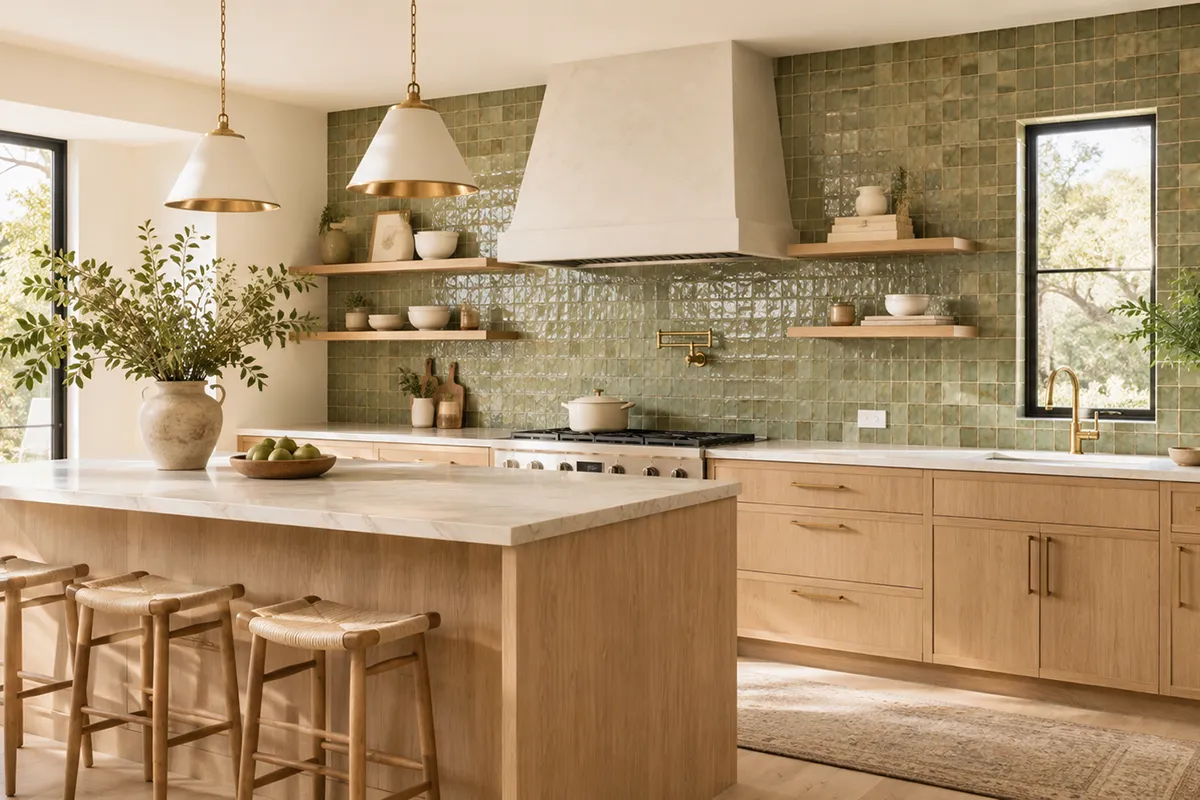
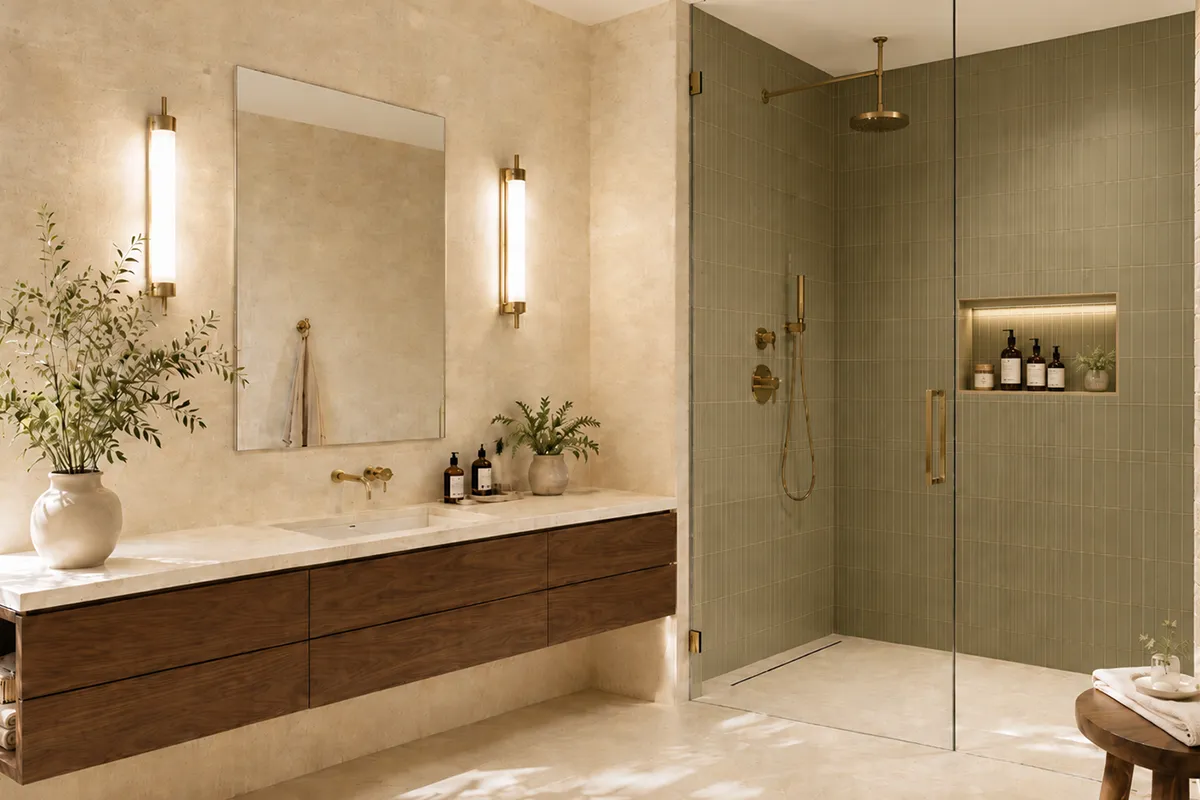
Instead of covering every bathroom wall in a dark green tile, use it inside the shower niche, behind the vanity, or on one feature wall. Keep the main floor or surrounding walls in a lighter limestone, warm ivory, or travertine-inspired porcelain.
Artisan-style tiles, subtle irregularities, relief textures, handmade effects, and sculptural surfaces are also part of the 2026 tile direction. They add warmth by interacting with light rather than relying only on dark color.
Create a Bathroom That Feels Warm and Open
Bathrooms often have limited natural light, so material balance is especially important.
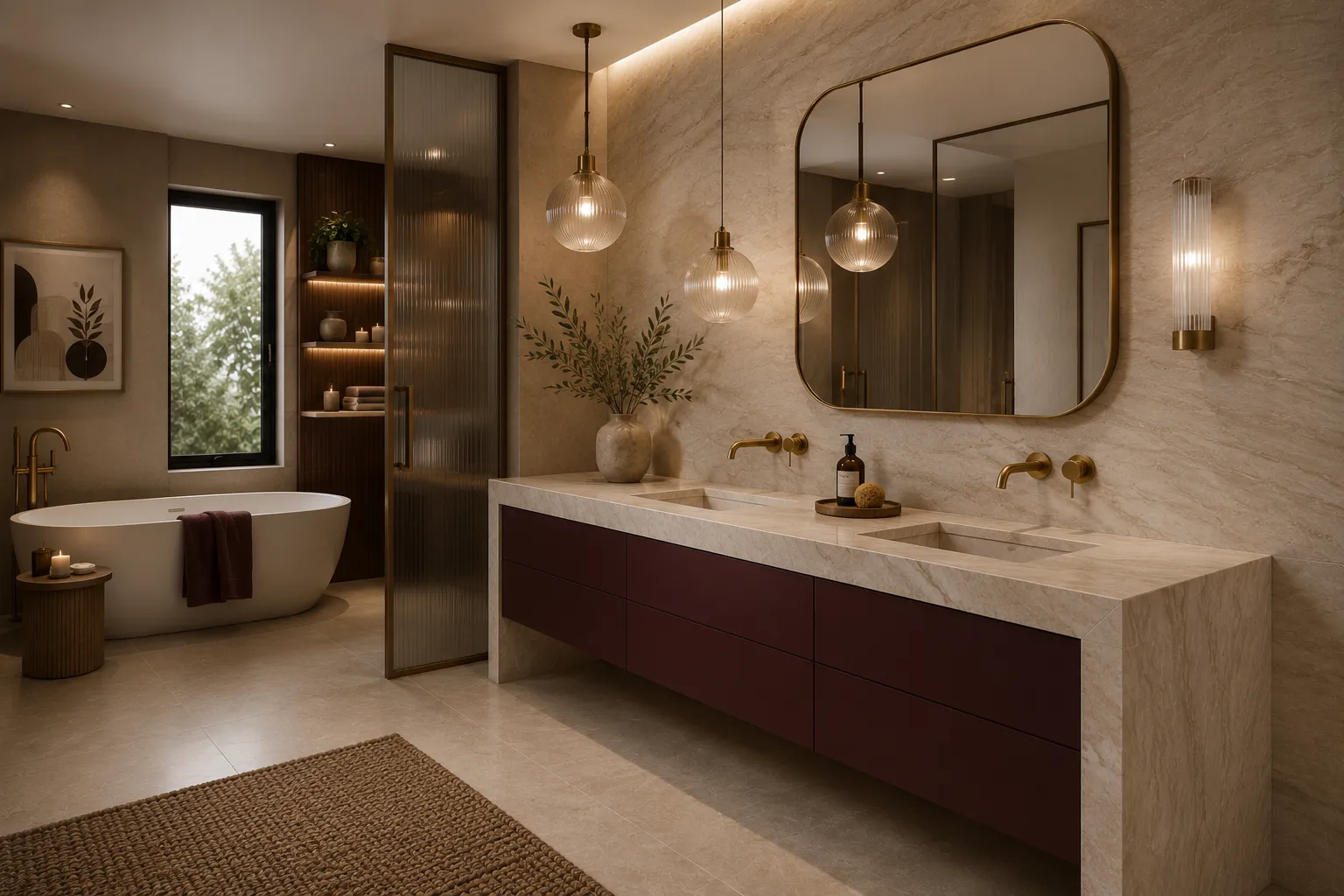
A warm modern bathroom might combine:
- Light travertine- or limestone-look porcelain
- A natural oak or walnut vanity
- A warm white or creamy countertop
- Clear glass shower panels
- A textured tile feature
- Olive, ochre, burgundy, or clay used in one controlled area
Large-format tile can help the bathroom feel more open by reducing grout lines and creating a more continuous surface.
A natural wood vanity adds warmth without darkening the entire room. If the vanity is deep olive, walnut, or burgundy, balance it with a lighter countertop and surrounding tile. Even a dark accent can feel bright when it is surrounded by materials that reflect light.
Let One Material Be the Statement
One of the easiest ways to keep a warm modern interior from becoming visually heavy is to choose one focal material in each room.
In a kitchen, the focal point might be a richly veined quartzite backsplash.
In a bathroom, it could be an olive vanity or textured tile wall.
In a living space, it might be a patterned wool rug layered over natural oak flooring.
The remaining surfaces should support that statement rather than compete with it.
Using a dramatic floor, bold countertop, colorful backsplash, dark cabinetry, and strong patterned rug all at once can make the space feel busy and smaller. Warm modern design works best when color and texture are carefully edited.
Coordinate Every Surface Before Making Final Decisions
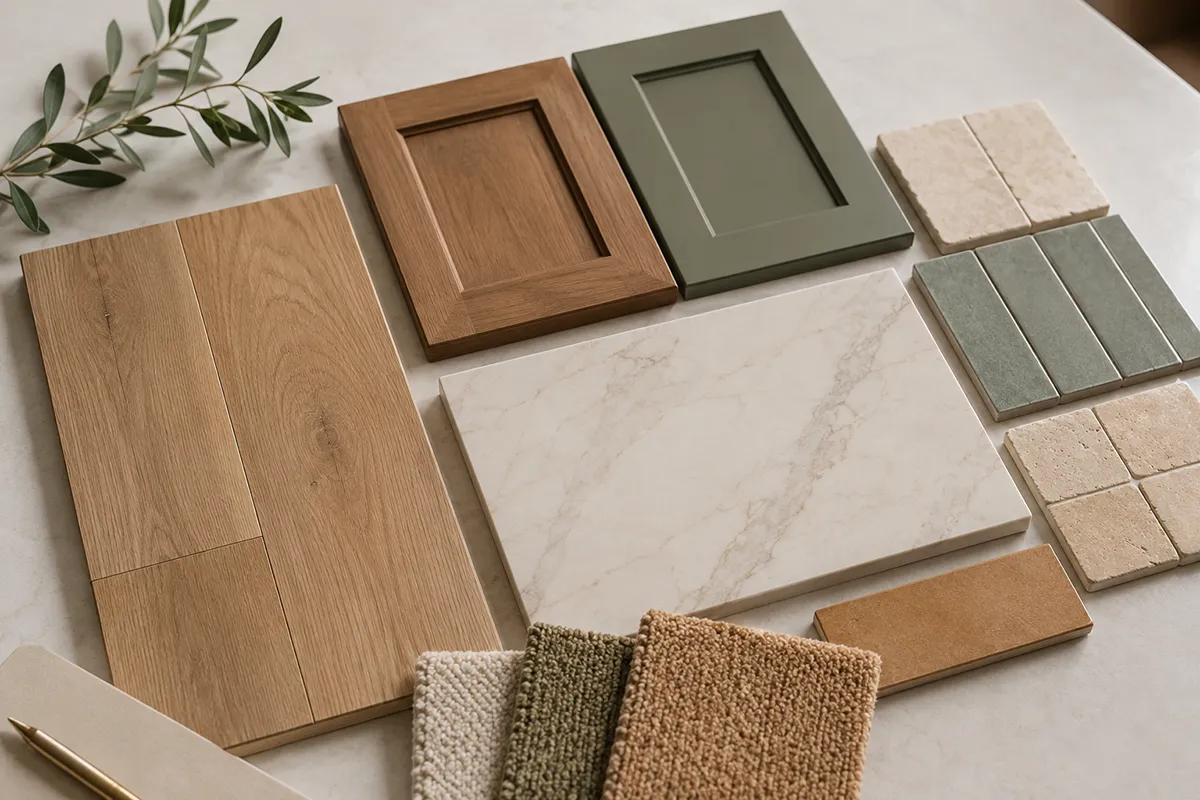
Flooring, carpet, cabinets, countertops, backsplash, and bathroom tile should be viewed together before anything is ordered.
A warm brown floor may look beautiful on its own but appear too orange beside a particular cabinet finish. An ivory countertop may reveal a pink or yellow undertone once it is placed next to the backsplash.
Place all major samples together and look at them under both natural and artificial light.
A balanced 2026 material palette might include:
- Natural or medium-brown oak flooring
- Warm white cabinetry with an olive or walnut island
- Taj Mahal quartzite
- A biscuit or eucalyptus backsplash
- Natural or medium-brown oak flooring
- Warm white cabinetry with an olive or walnut island
- Taj Mahal quartzite
- A biscuit or eucalyptus backsplash
This combination feels warmer and more personal than the cool gray interiors of previous years, but it remains bright because the deeper colors are used in controlled amounts.
A Warm Home Does Not Have to Be a Dark Home
Creating warmth is not about making every surface brown, beige, or dark.
It is about combining natural wood, stone, tile, carpet, and color in the right proportions.
Keep some of the largest surfaces light. Introduce medium wood tones for depth. Use olive, ochre, clay, warm mahogany, burgundy, or moss as purposeful accents. Add softness through carpet and custom rugs, and allow one material in each room to become the focal point.
At Karpet King Design Center in Rockville, Maryland, homeowners can explore flooring, carpet, custom area rugs, kitchen cabinets, countertops, backsplashes, and bathroom tile together in one showroom.
Our design team can help coordinate the colors, undertones, textures, and finishes needed to create a warm modern home that feels current, welcoming, and full of light.
Visit our Rockville showroom
for home renovation and material selections serving Rockville, Bethesda, Potomac, Chevy Chase, Gaithersburg, Washington, DC, Northern Virginia, and surrounding Maryland communities.
Karpet King Design Center
751 East Gude Drive, Rockville, MD 20850
Phone: (301) 770-4110
Email: [email protected]