
Hardwood vs. LVP Flooring in Maryland: Which Is Better for Your Home?
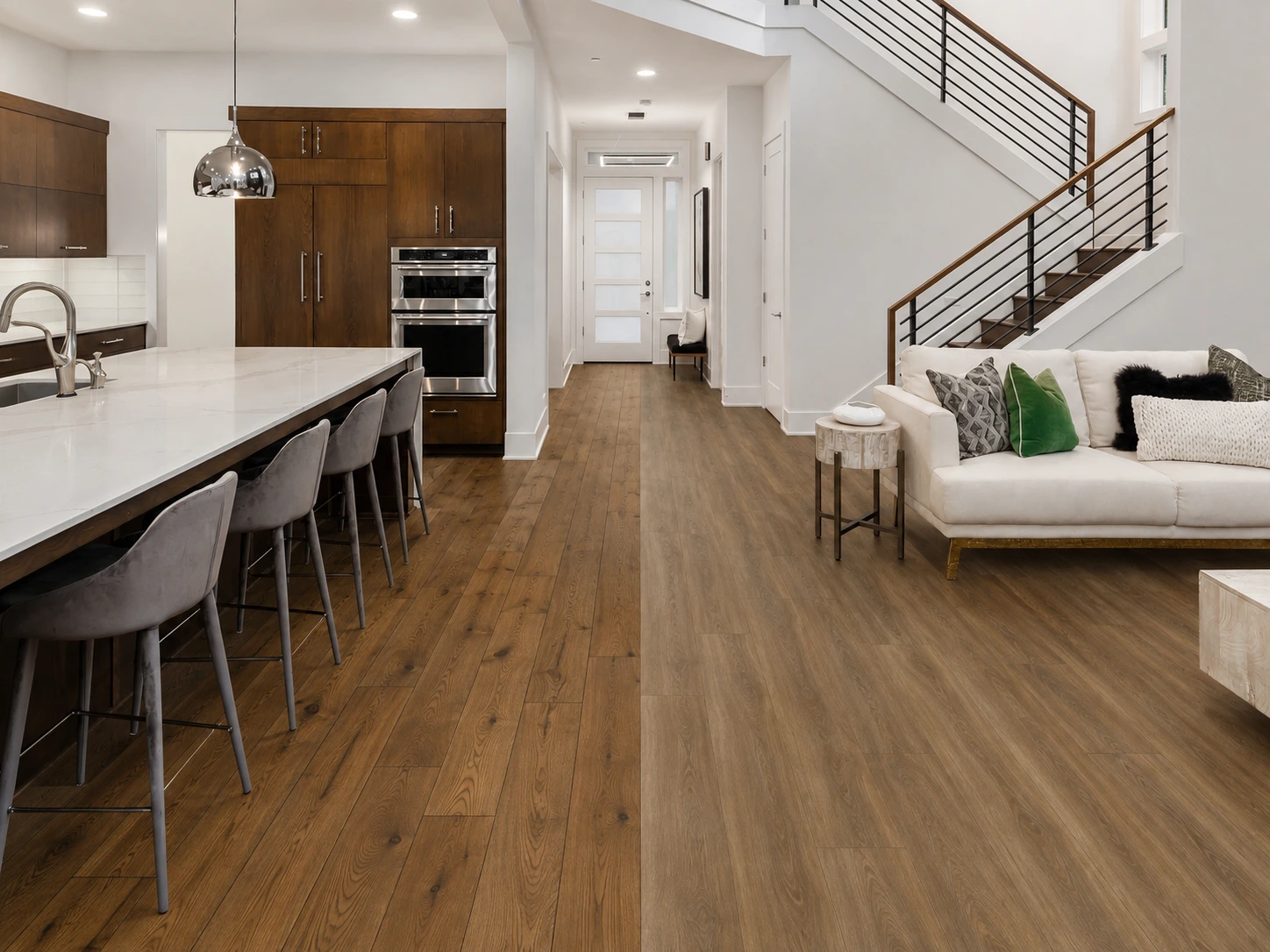
If you are comparing hardwood vs LVP for a Maryland home, the hardest part is that both can be excellent choices. They simply solve different problems. Hardwood gives you a real wood surface, natural variation, the possibility of renewal through recoating or refinishing, and a look that many homeowners associate with long-term value. Luxury vinyl plank, or LVP, is a resilient flooring product designed for easier maintenance, strong moisture performance, and a lower entry cost in many projects.
The right answer depends less on which material is “better” and more on where the floor is going, how long you plan to keep it, what kind of wear the room receives, and how much water risk you are willing to manage. In Maryland and the wider DMV, seasonal humidity, basements, entry traffic, pets, kitchens, and older housing stock can all change the decision.
This guide compares hardwood vs LVP by appearance, water resistance, durability, maintenance, lifespan, cost, resale considerations, installation, and room-by-room use. The goal is not to declare one universal winner. It is to help you choose the floor that makes the most sense for your home.
Hardwood vs LVP: The Quick Answer
Choose hardwood when authentic wood, natural grain, long-term design value, and the ability to renew the surface matter most. Choose LVP when moisture resistance, easier maintenance, a lower initial project cost, or a basement and other spill-prone spaces are the priority.
For many homes, the best answer is not one material everywhere. A homeowner may choose hardwood for the main living level and bedrooms, then use LVP in a basement, laundry room, mudroom, or other moisture-prone space. The materials can be coordinated so the home still feels intentional.
|
Factor |
Hardwood |
LVP |
|
Surface |
Real wood |
Manufactured resilient surface with wood-look visual |
|
Authenticity |
Natural grain and board-to-board variation |
Can be highly realistic; visual repeats vary by product |
|
Water exposure |
Needs prompt spill cleanup; standing water is a risk |
Often stronger water resistance; some products are rated waterproof |
|
Scratches / wear |
Can scratch or dent, but many floors can be recoated or refinished |
Wear layer can be forgiving; deep damage cannot be sanded away |
|
Long-term renewal |
Often renewable; depends on construction and wear layer |
Not refinishable; damaged planks may sometimes be replaced |
|
Basements |
Engineered may be approved in some conditions; solid generally above grade |
Often a practical choice when product and subfloor conditions are approved |
|
Initial project cost |
Usually higher |
Usually lower |
|
Pets / busy homes |
Works well with the right species, finish and care |
Often lower-stress for spills, scuffs and active households |
|
Design value |
Authentic, permanent material character |
Flexible wood looks, colors and performance options |
|
Best fit |
Dry living areas, long-term homes, premium/custom details |
Moisture-prone areas, basements, practical family zones, budget-driven projects |
1. Start by Understanding What You Are Actually Buying
Hardwood is real wood flooring. Solid hardwood is one piece of wood from top to bottom. Engineered hardwood also has a real wood wear surface, but it is built over multiple layers. The National Wood Flooring Association notes that engineered wood generally expands and contracts less than solid wood as temperature and humidity change, which can make it appropriate for a wider range of installation conditions.
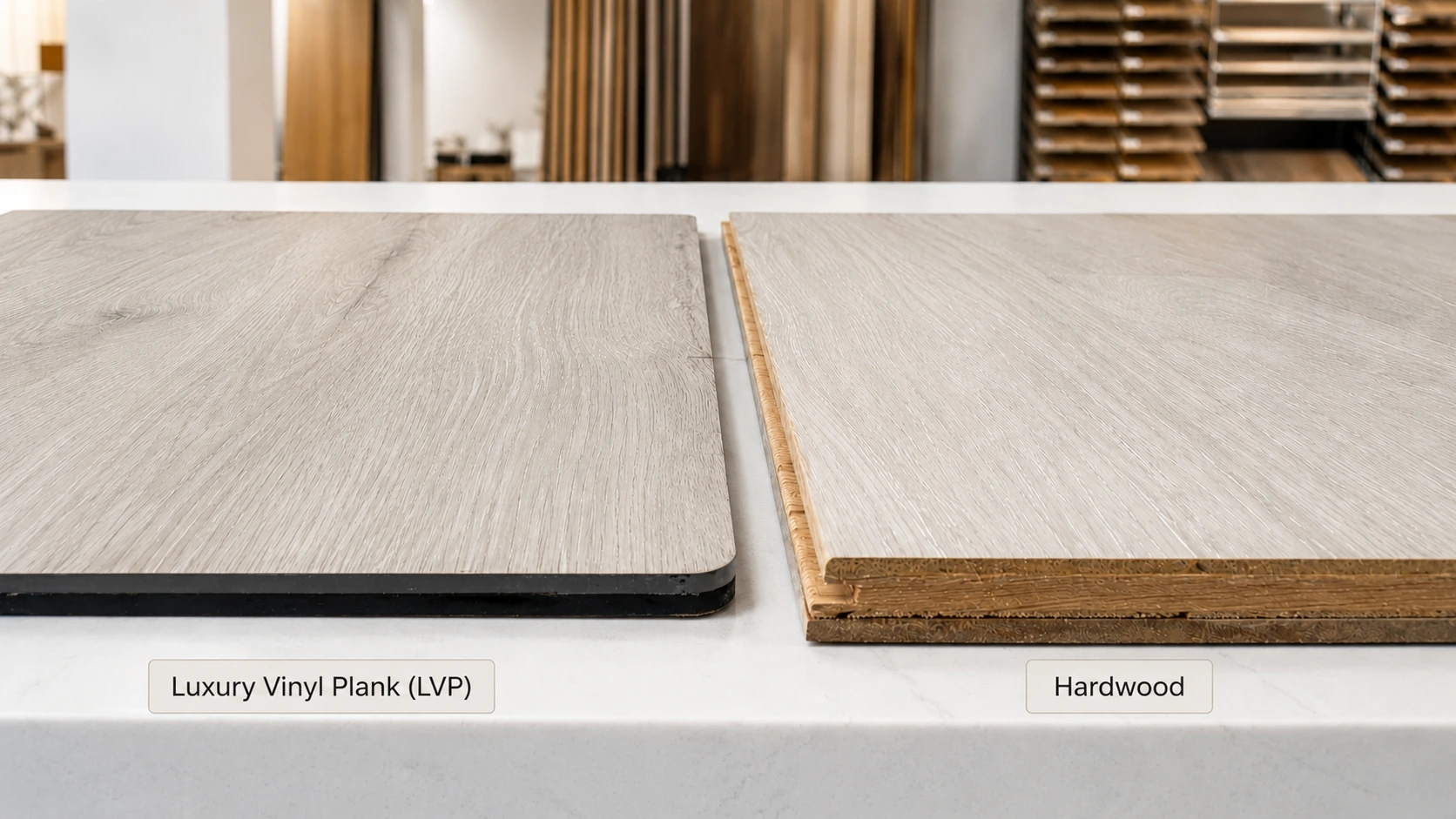
LVP is different. Luxury vinyl plank is a resilient flooring product designed to reproduce the look of wood through a decorative visual layer, protective wear layer, and vinyl or rigid core construction. Depending on the product, LVP may be flexible, WPC, SPC, or another rigid-core format. Product thickness, wear layer, locking system, backing, and warranty can vary significantly.
That construction difference affects almost every comparison that follows. Hardwood gives you a real wood surface that can develop patina and, in many cases, be renewed. LVP gives you a manufactured performance surface that can be very practical around water and everyday wear, but it cannot be sanded and refinished like real wood.
If you want a deeper explanation of solid versus engineered construction, species, grain, undertone and finish, use our complete hardwood flooring guide for Maryland homes as the companion article to this comparison.
2. Which Looks and Feels More Authentic?
If authenticity is the priority, hardwood has the advantage because every board is real wood. Natural grain, knots, mineral streaks, tone changes, and board-to-board variation are part of the material rather than a printed image. This is especially noticeable in larger rooms, wide-plank installations, staircases, and spaces with strong natural light.
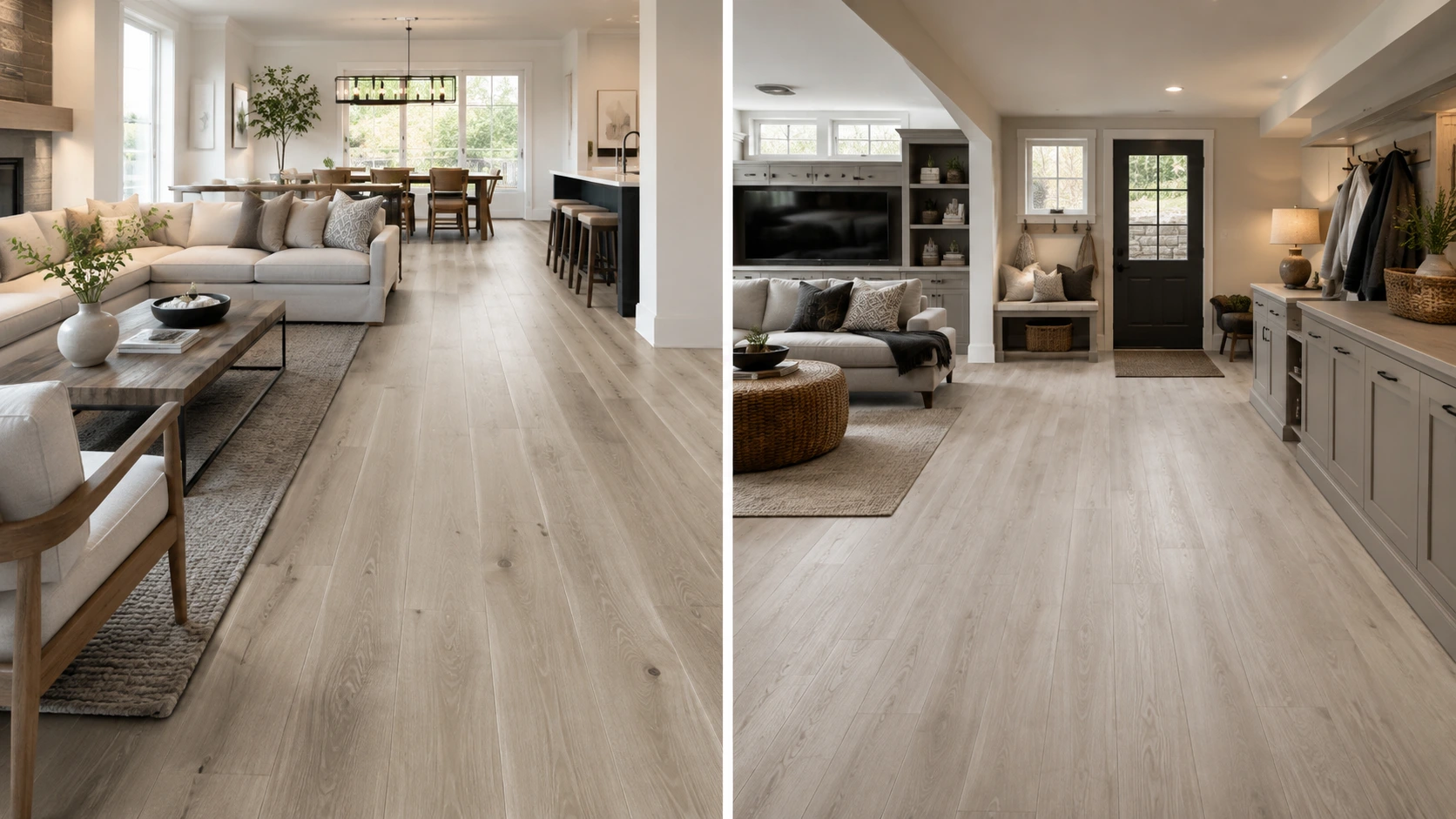
Premium LVP has improved dramatically. Embossed textures, matte surfaces, longer planks, beveled edges, and higher-definition visuals can create a convincing wood look. In a busy family room or basement, a well-selected LVP can feel much more elevated than older sheet vinyl or entry-level plank products.
The difference becomes easier to see when you compare several planks together. Real hardwood does not repeat the same printed pattern. LVP collections use a set of visual films, so repeats can appear across a large installation. Better products use more unique plank visuals and careful installation planning to make repetition less obvious.
Designer tip: compare both products at full scale, not from one small sample. Place several boards on the floor in natural daylight and view them from standing height. Look at grain depth, edge detail, sheen, color variation, and repeated visuals before deciding.
3. Hardwood vs LVP in Maryland Humidity and Moisture
Maryland homes experience seasonal changes in indoor humidity, and real wood responds to moisture in the surrounding air. The NWFA explains that wood gains and loses moisture as environmental conditions change. Consistent HVAC operation, correct acclimation, moisture testing, and proper installation are therefore important for wood floors.
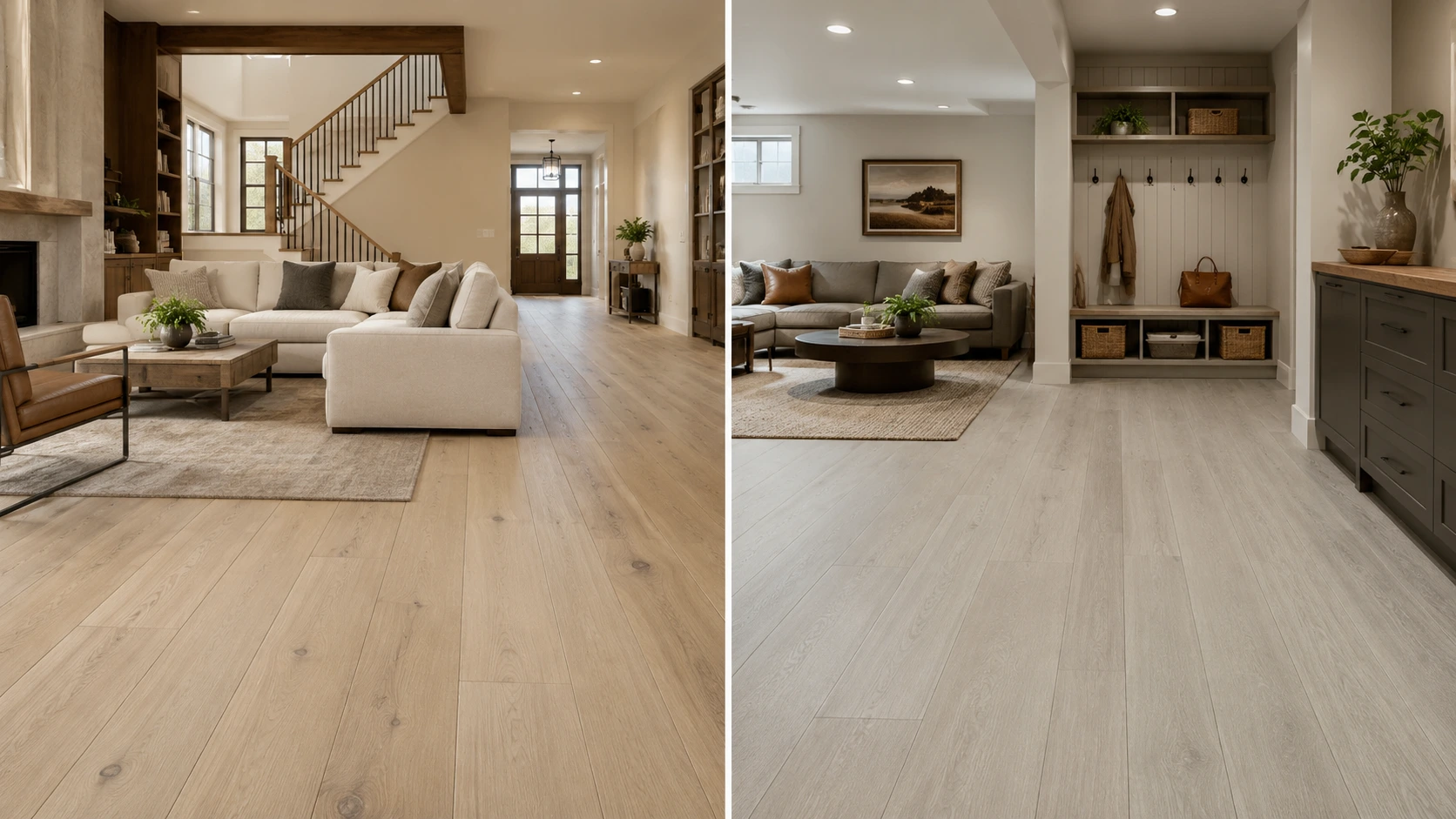
The U.S. Environmental Protection Agency recommends keeping indoor relative humidity below 60 percent and ideally around 30 to 50 percent for general moisture control. For hardwood, the flooring manufacturer and installer may provide a narrower recommended range, so always follow the specific product requirements.
LVP is generally more forgiving around spills and moisture. The Resilient Floor Covering Institute notes that resilient flooring can offer strong water-resistant or waterproof performance depending on construction. Many current rigid-core LVP products are sold as waterproof, but that does not mean the entire building assembly is waterproof. Water can still travel through perimeter gaps or seams, and subfloor moisture problems must still be addressed.
This is why LVP often becomes the practical first choice for basements, laundry areas, mudrooms, and spaces where water exposure is more likely. Hardwood can perform beautifully in conditioned living areas, but standing water, plumbing leaks, and persistent moisture are risks that need to be managed.
4. Durability With Kids, Pets, Scratches and Daily Traffic
“Durable” means different things for the two materials.
Hardwood can dent or scratch because it is real wood. Species hardness, finish system, texture, color, and sheen all influence how visible daily wear becomes. The NWFA notes that species vary in hardness and that finish and other factors also affect performance. A matte, textured, mid-tone oak may disguise everyday marks better than a very dark, high-sheen floor.
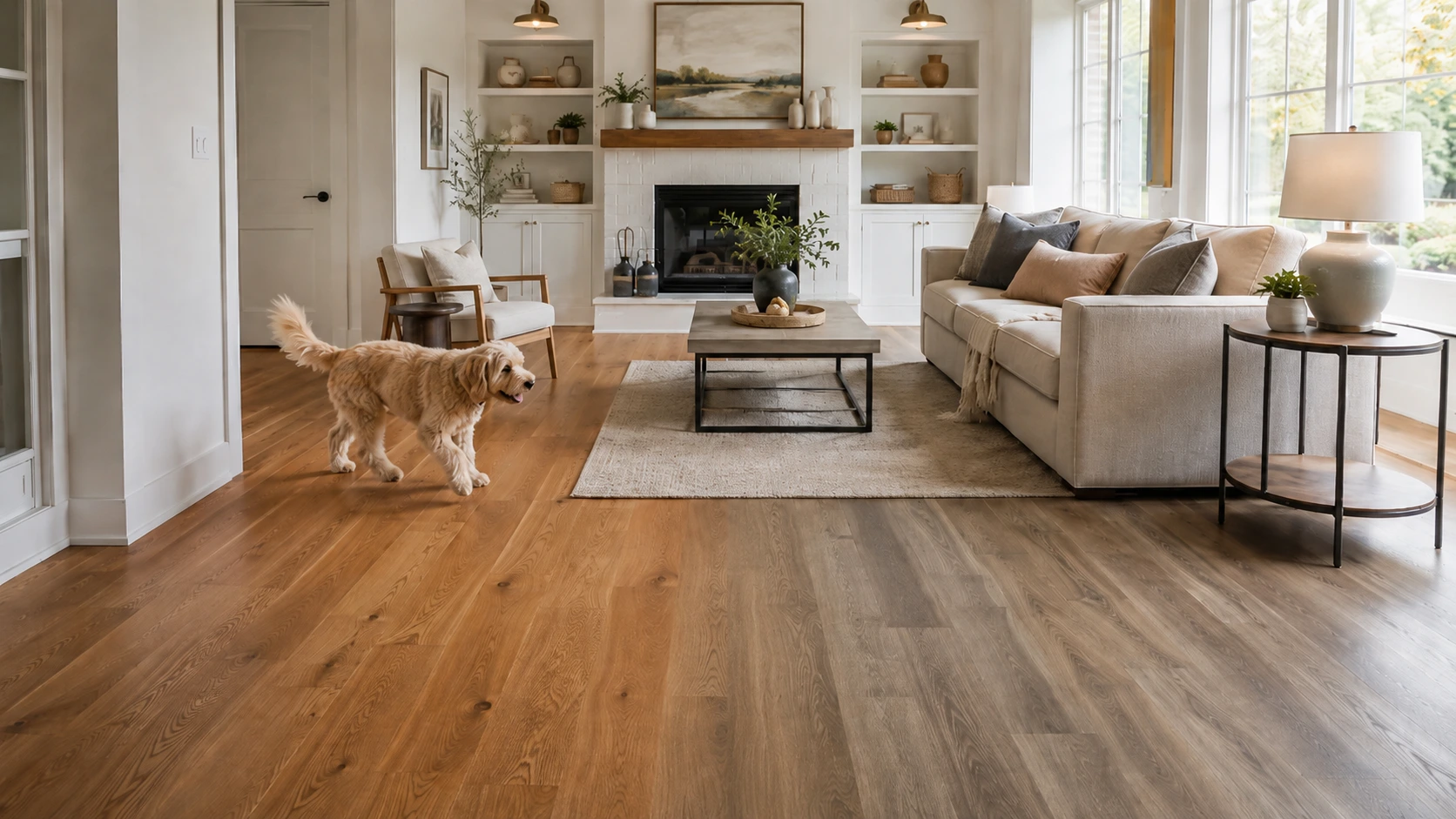
The advantage of hardwood is that surface wear is not necessarily the end of the floor. A maintenance coat may refresh a dull finish, and a deeper sand-and-refinish can address more significant wear when the floor’s construction and condition allow it.
LVP is designed with a protective wear surface and can be very forgiving in active households. It often resists stains, scuffs, and routine spills well. It is a strong candidate for homes with children, pets, rolling bags, or frequent entry traffic. However, LVP is not impossible to damage. Heavy furniture, sharp objects, dragging appliances, or grit under chair legs can gouge or scratch the surface.
The key difference is repair strategy. Hardwood can often be renewed across a room. LVP cannot be sanded. If a plank is badly damaged, replacement may be possible depending on the installation method, product availability, and location of the damaged plank.
5. Maintenance, Repair and Long-Term Life
LVP is attractive to homeowners who want simple routine care. Most products require regular sweeping or vacuuming and damp cleaning with a manufacturer-approved cleaner. No sanding, staining, waxing, or traditional refinishing is required.
Hardwood also has straightforward day-to-day care, but it rewards a longer maintenance strategy. NWFA guidance recommends removing grit regularly, cleaning spills promptly, using furniture protection, and following the finish manufacturer’s cleaning instructions. When the finish starts to look dull, a professional maintenance coat may be enough. When damage is deeper, sanding and refinishing may be appropriate.
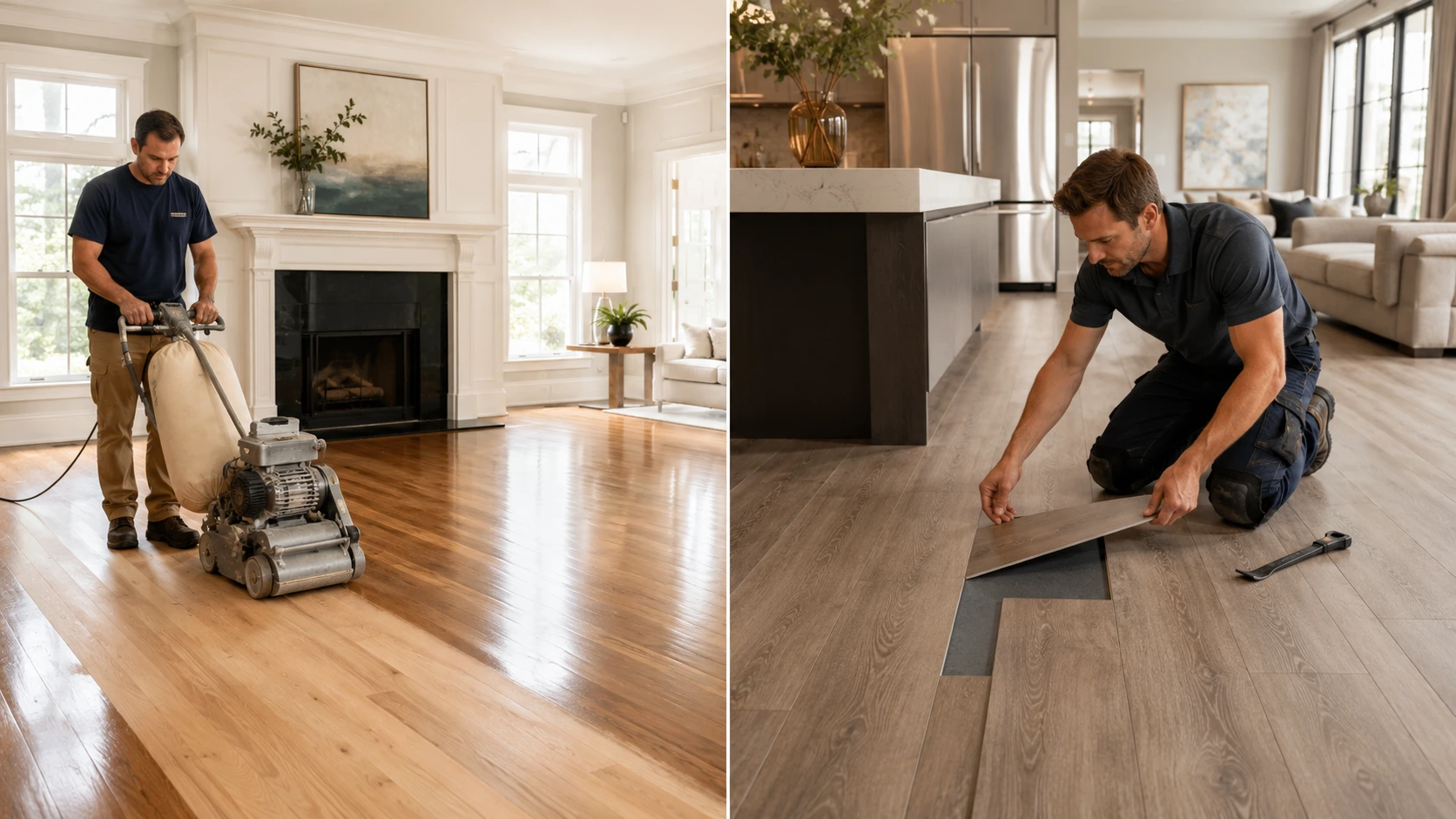
This is where long-term ownership changes the value of conversation. A quality hardwood floor may remain in a home for decades because the surface can be renewed rather than automatically replaced. The NWFA notes that the number of times a floor can be sanded depends on factors such as the wear layer, condition, equipment, and contractor skill. Solid hardwood generally offers more future sanding potential than engineered hardwood, while engineered products vary widely by wear-layer thickness.
LVP does not have that renewal pathway. When the wear surface is exhausted, the usual solution is replacement rather than refinishing. That does not make LVP a poor value. It simply means the product is evaluated more like a durable finish material with a defined service life, while hardwood can function as a long-term building material when properly maintained.
6. Cost: Look Beyond the Price per Square Foot
LVP usually has the lower initial project cost. RFCI lists lower installation costs and a broad range of price points among the advantages of flexible LVP/LVT. Hardwood typically costs more because the material itself is more expensive and installation may require additional subfloor preparation, fastening, adhesive, acclimation, sanding, finishing, or trim work depending on the product.
But a flooring quote should never be compared on material price alone.
A lower-cost LVP can be the smarter decision if you expect to remodel again in 10 or 15 years, need waterproof performance, or are renovating a basement. Hardwood may make more financial sense for a long-term home where you value authentic wood and future refinishing. The right comparison is total project cost plus how long you realistically expect to keep the floor.
- removal and disposal of existing flooring
- subfloor leveling or repairs
- moisture testing or mitigation
- underlayment or adhesive
- transitions and reducers
- baseboard or shoe molding
- stairs and nosings
- furniture moving
- delivery
- installation labor
Once you narrow the material, request a flooring estimate that separates product, preparation, accessories and labor so you can compare quotes on the same scope.
7. Which One Is Better for Resale Value?
Resale value is local, property-specific, and impossible to guarantee from flooring alone. Buyers react to the entire home, neighborhood, price point, condition, and quality of installation.
That said, real wood has a long history of buyer recognition. In the National Association of REALTORS’ 2022 Remodeling Impact Report, hardwood floor refinishing and new wood flooring showed strong estimated cost recovery and high homeowner “Joy Scores.” Those figures are useful context, not a promise of return, and later NAR reports use a different set of projects.
For higher-end homes, original homes with existing hardwood, and design-led renovations, hardwood can support a premium, permanent feel. In a basement, rental, starter home, or practical family space, quality LVP may be completely appropriate and can present better than worn, low-grade, or badly installed wood.
If resale is a major goal, compare your plan with similar homes in your local market rather than assuming one flooring type automatically adds a fixed percentage to the sale price.
8. Room by Room: Where Hardwood Wins and Where LVP Wins
|
Room |
Best decision framework |
|
Living rooms & dining rooms |
Hardwood often leads for authentic material, long sightlines and a refined foundation. LVP works well when easier maintenance, pets or budget matter more. |
|
Bedrooms |
Either can work. Hardwood creates continuity with halls; LVP can be practical when you want one easy-care floor through several rooms. |
|
Kitchens |
Both can work. Hardwood needs prompt spill/leak management; LVP is lower-stress when water resistance is a major priority. Verify exact product approval. |
|
Basements |
LVP is usually the practical first choice. Some engineered hardwood may be approved in conditioned basements with suitable slab/subfloor conditions; solid is generally above grade. |
|
Entryways & mudrooms |
LVP often has the practical edge for wet shoes, grit and pet paws. Hardwood can work in a formal entry with mats and disciplined moisture control. |
|
Bathrooms & laundry |
LVP is usually more practical where repeated water exposure is expected, provided the exact product is approved for the room. |
|
Stairs |
Hardwood excels as a permanent architectural stair and pairs beautifully with custom runners. LVP stair systems can work, but inspect the matching nosing/components carefully. |
If the goal is a cohesive whole-home palette, use the same undertone family across materials even when you switch from hardwood to LVP. Our flooring and interior design guide explains how flooring coordinates with cabinets, countertops, rugs, wall color and lighting.
9. Installation and Subfloor Conditions Can Decide the Answer for You
A beautiful product installed over the wrong substrate can become an expensive problem.
Solid hardwood usually requires an appropriate wood subfloor and is commonly nailed or stapled. Engineered hardwood may allow nail-down, glue-down, or floating installation depending on the product. LVP may be floating, glue-down, or loose-lay, again depending on the collection.
Before ordering, the installer should evaluate the subfloor, flatness, existing floor height, moisture conditions, transitions, stairs, door clearances, and manufacturer requirements. Concrete slabs need particular attention because both moisture and flatness affect performance.
For condos and upper-level spaces, sound-control requirements may also affect the flooring and underlayment choice. The “best” material is the one that is approved for the actual site conditions, not just the one that looks best on a sample board.
If you are ready to move from samples to a real project scope, professional flooring installation and vinyl flooring installation in Rockville, MD pages explain the service process and product categories available through Karpet King.
10. Hardwood vs LVP: Which Should You Choose?
Choose hardwood if:
- you want a genuine wood surface and natural variation
- the floor is going in dry, conditioned living areas
- you plan to stay in the home long term
- refinishing or future color changes matter to you
- the project calls for a premium, architectural finish
- you want hardwood stairs, borders, herringbone, or other custom wood details
Choose LVP if:
- water resistance is a major priority
- the project includes a basement, laundry area, mudroom, or spill-prone zone
- you want easier routine maintenance
- you need a lower initial project cost
- pets, children, rentals, or heavy daily traffic are major considerations
- you want a wood look without committing to real wood
Choose a mixed-flooring plan if:
- the main level deserves hardwood but the basement needs LVP
- you want hardwood in formal rooms and practical resilient flooring in utility spaces
- your home has different subfloors or moisture conditions by level
- performance matters more than forcing one material into every room
The strongest whole-home designs do not necessarily use one flooring everywhere. They use a controlled palette, coordinated undertones, thoughtful transitions, and the right material for each space.
Compare Hardwood and LVP in Person
Online photos can make hardwood and LVP look surprisingly similar. In person, the differences in grain depth, texture, edge detail, sheen, board variation, and underfoot feel become much easier to judge.
At Karpet King Design Center in Rockville, Maryland, homeowners can compare hardwood flooring in Rockville, MD and luxury vinyl plank and resilient flooring side by side, coordinate samples with cabinetry, countertops, tile, rugs, and paint, and discuss installation conditions before ordering. The showroom serves Rockville, Bethesda, Potomac, Chevy Chase, Gaithersburg, Washington, DC, and the wider DMV.
If you are still deciding between hardwood vs LVP, bring photos of your room, information about the subfloor, and any cabinet, paint, countertop, or rug samples that need to coordinate with the floor. An interior design consultation and side-by-side sample comparison usually make the right choice much clearer.
When you are ready, visit the showroom or request a flooring estimate for the actual rooms and installation conditions in your home.
|
BOTTOM LINE |
Frequently Asked Questions
KARPET KING DESIGN CENTER
751 East Gude Drive, Rockville, MD 20850 | (301) 770-4110 | [email protected]
Serving Rockville and surrounding Montgomery County / DMV communities.
