Hardwood Flooring Guide for Maryland Homes: 10 Smart Decisions Before You Buy

Hardwood Flooring Guide for Maryland Homes: 10 Smart Decisions Before You Buy
Hardwood Flooring Guide for Maryland Homes: 10 Smart Decisions Before You Buy

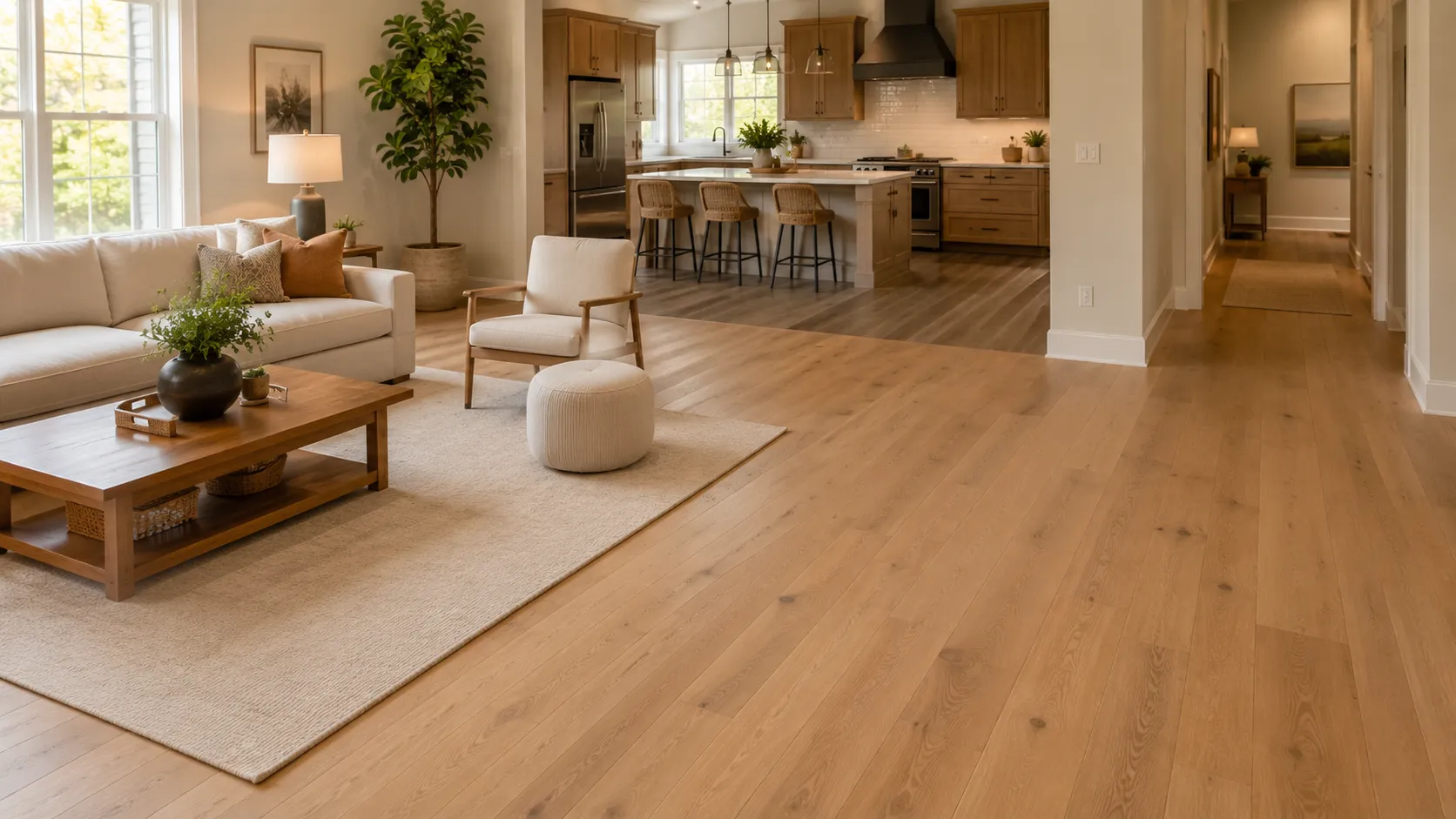
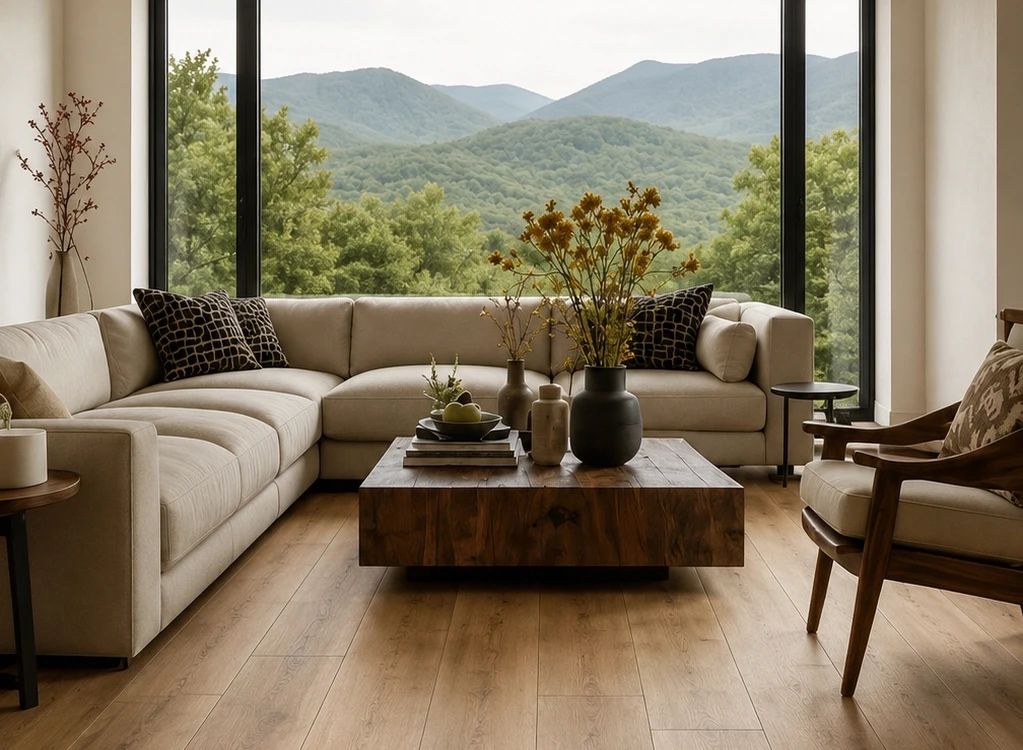
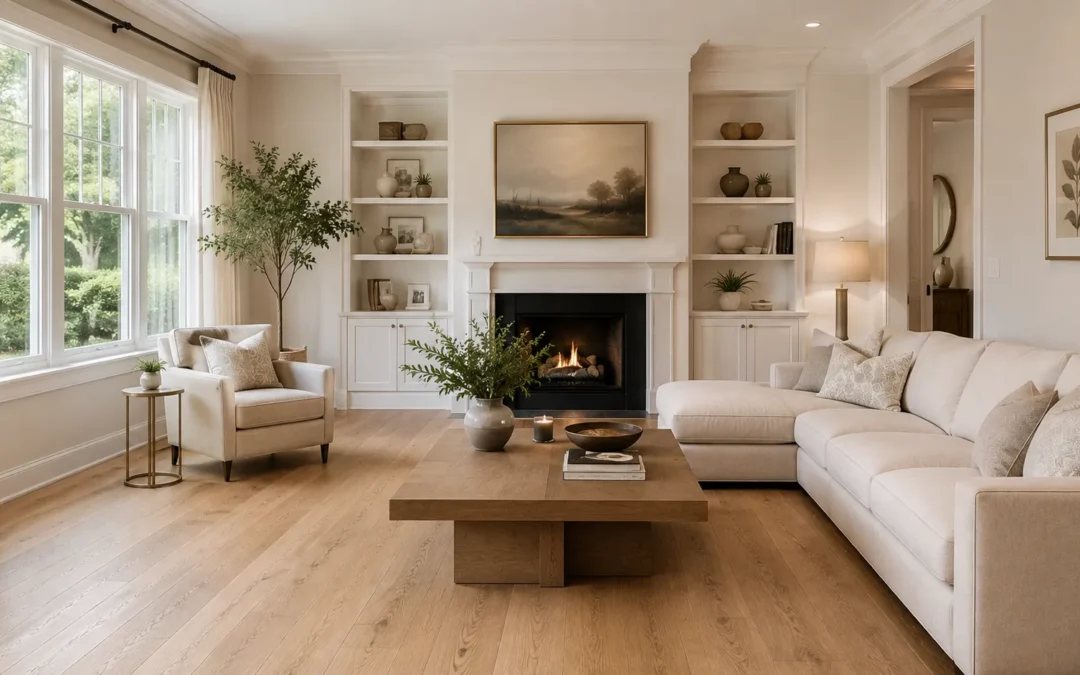
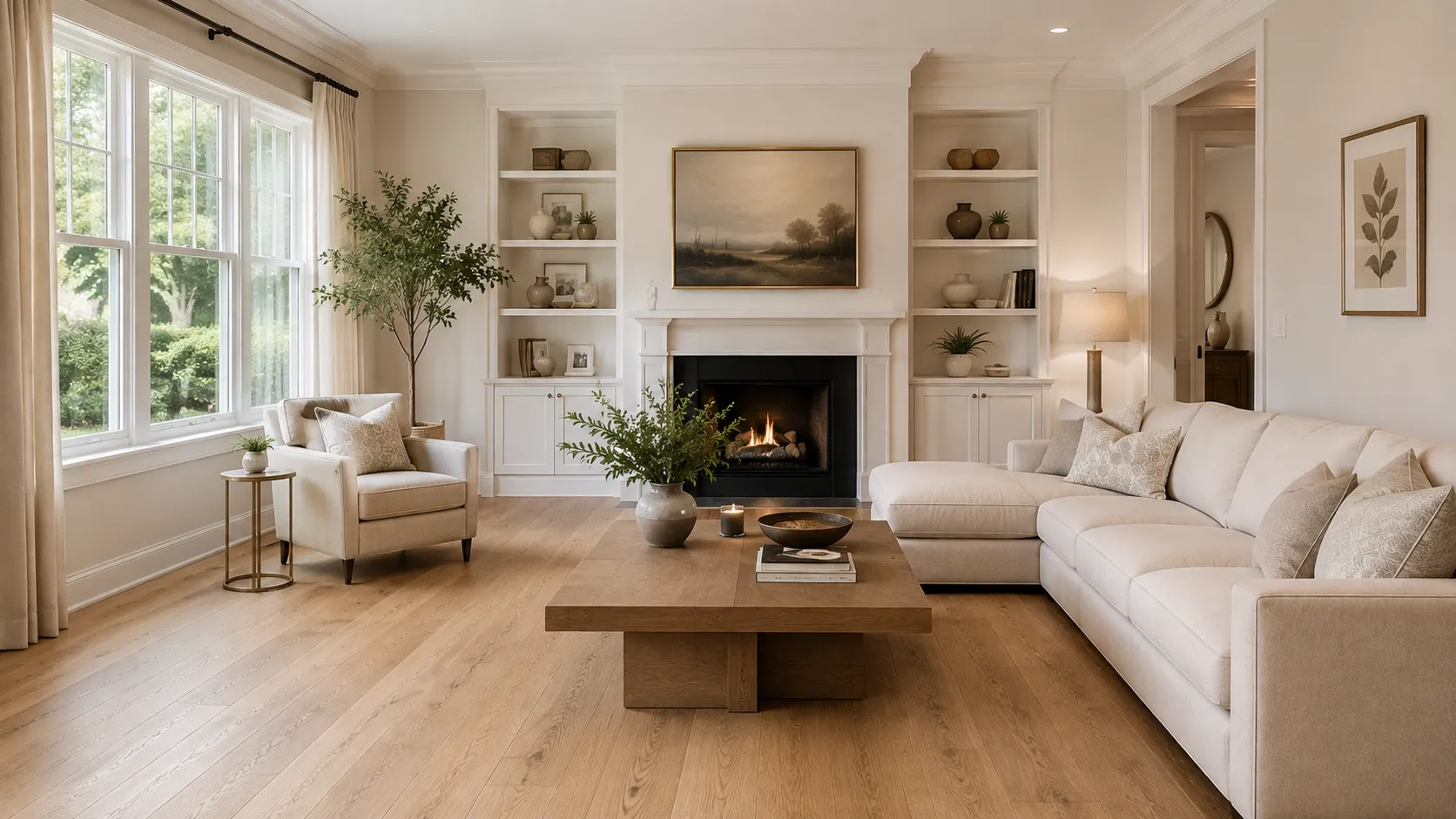
Wide-plank natural oak hardwood flooring in a bright open-plan living room with soft neutral furniture

Choosing hardwood flooring is one of the most permanent design decisions in a home. The right floor has to work with your architecture, daily routine, lighting, cabinetry and long-term maintenance expectations - not just look good on a small sample board.

This hardwood flooring guide is designed for Maryland homeowners who want to understand the choices before they buy. It covers solid and engineered construction, species, natural variation, undertone, plank width, layout, finish, moisture, care and refinishing. If you are shopping locally, you can also compare full-size hardwood samples at Karpet King Design Center in Rockville before making a final decision.

QUICK ANSWER

For many Maryland homes, engineered hardwood is a practical place to start because its layered construction generally moves less with changes in temperature and humidity than solid wood. That does not make it automatically better. The best choice depends on the exact product, subfloor, room location, desired plank width, refinishing expectations and manufacturer requirements. Always evaluate the specific floor rather than the category name alone.

Hardwood Flooring Guide at a Glance

Decision

What to compare

Why it matters

Construction

Engineered vs. solid

Affects dimensional stability, installation options and future refinishing potential.

Species

White oak, red oak, maple, hickory, walnut

Changes grain, natural color, variation and overall design character.

Grain & variation

Subtle vs. expressive

Determines whether the floor feels quiet and refined or organic and character-rich.

Undertone

Warm, neutral, cool, red/yellow/gray influence

Changes how the floor coordinates with cabinets, walls, stone and furniture.

Plank width

Wide vs. narrow

Changes the visual rhythm and perceived scale of the room.

Pattern

Straight, herringbone, chevron

Adds different levels of movement and architectural detail.

Finish

Matte, satin and texture

Changes reflectivity, surface character and how everyday marks are perceived.

Site conditions

Subfloor, moisture, humidity, grade level

Can affect which products and installation methods are appropriate.

Long-term care

Cleaning, recoating, refinishing

Affects how the floor ages and whether it can be renewed later.

1. Start With the Room, Not the Color

Before comparing oak tones or stain colors, identify where the hardwood will be installed and what the room asks of the floor. A main-level living room, upstairs bedroom, kitchen and below-grade basement do not create the same site conditions. The subfloor, moisture exposure, traffic level, pets, direct sun and connection to adjacent rooms can all influence the best product.

For open plans, think beyond one room. A floor may continue through an entry, living room, dining room and kitchen, so plank direction and transitions should be planned as part of the architecture. In smaller spaces, consider how much of the floor will actually remain visible after furniture and rugs are placed.

Designer tip: take photos of the room in daylight and evening light, and bring cabinet doors, countertop samples, paint colors or rug swatches when you compare flooring. Hardwood is a large visual surface; judging it alone can create undertone surprises later.

2. Compare Engineered Hardwood vs. Solid Hardwood

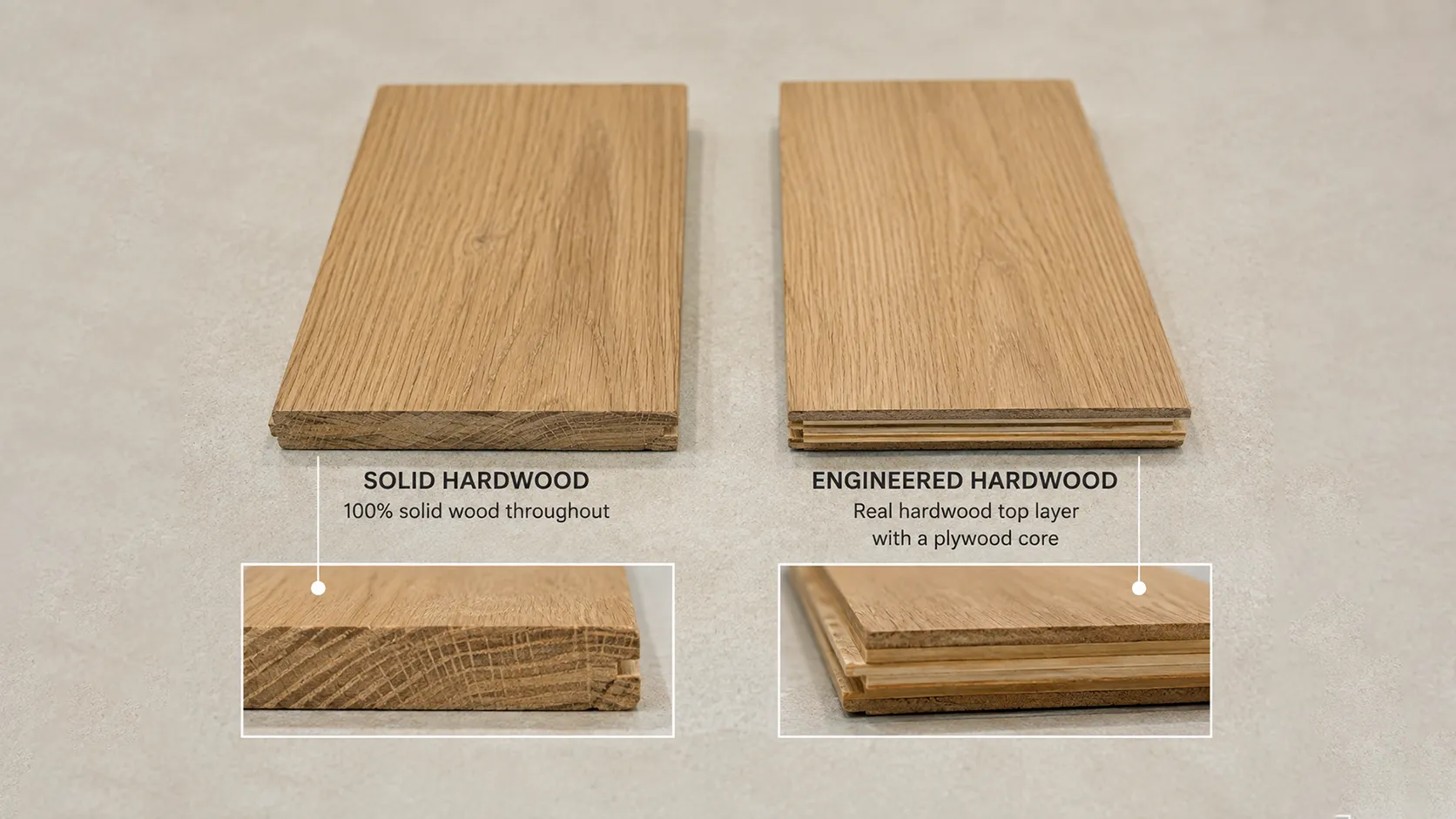
Both are real wood flooring, but their construction is different. The National Wood Flooring Association (NWFA) describes solid flooring as one piece of wood from top to bottom, while engineered flooring uses multiple layers with real wood at the surface. Engineered wood generally expands and contracts less than solid wood, which can make it useful in a wider range of locations.
Wide-plank natural oak hardwood flooring in a bright open-plan living room with soft neutral furniture

Feature

Engineered hardwood

Solid hardwood

Construction

Real hardwood surface over a layered core

One piece of wood from top to bottom

Design range

Often strong in wide-plank, European-oak and contemporary collections

Strong traditional selection with many classic species and profiles

Movement with humidity

Generally less movement than solid wood

More responsive to environmental moisture changes

Below-grade use

Some products may be approved; verify manufacturer and site conditions

Generally reserved for on- or above-grade applications

Refinishing

May be refinishable depending on wear-layer thickness and construction

Can often be refinished more times because there is more solid wood above the tongue

Best choice when...

You want dimensional stability, wide-plank design options or a product approved for the site

You value traditional solid construction and future sanding potential

The category alone is not enough. Engineered floors vary widely in wear-layer thickness, core construction, plank dimensions and installation requirements. Solid floors also vary by species, grade and cut. Compare the exact specifications and warranty for the product you are considering.

3. Plan for Maryland Humidity and Jobsite Conditions

Wood naturally exchanges moisture with the surrounding air, so Maryland's seasonal changes make jobsite preparation important. Current NWFA technical guidance emphasizes checking the actual environment, flooring and substrate rather than relying on a fixed number of acclimation days. The goal is to condition the flooring to the expected living conditions and follow the manufacturer's installation instructions.

The U.S. Environmental Protection Agency recommends keeping indoor relative humidity below 60 percent and ideally around 30-50 percent for general moisture control. For wood flooring, the specific acceptable range should come from the flooring manufacturer and installation guidance for the product.EPA moisture guidance can be useful background for homeowners managing indoor humidity.

What this means for a homeowner: keep HVAC operating normally before and after installation, disclose known moisture issues, and expect the installer to assess the subfloor and site conditions. If a basement, slab or moisture-prone room is part of the project, confirm in writing that the exact hardwood product and installation system are approved for that location.

4. Choose a Wood Species for Character, Not Just a Name

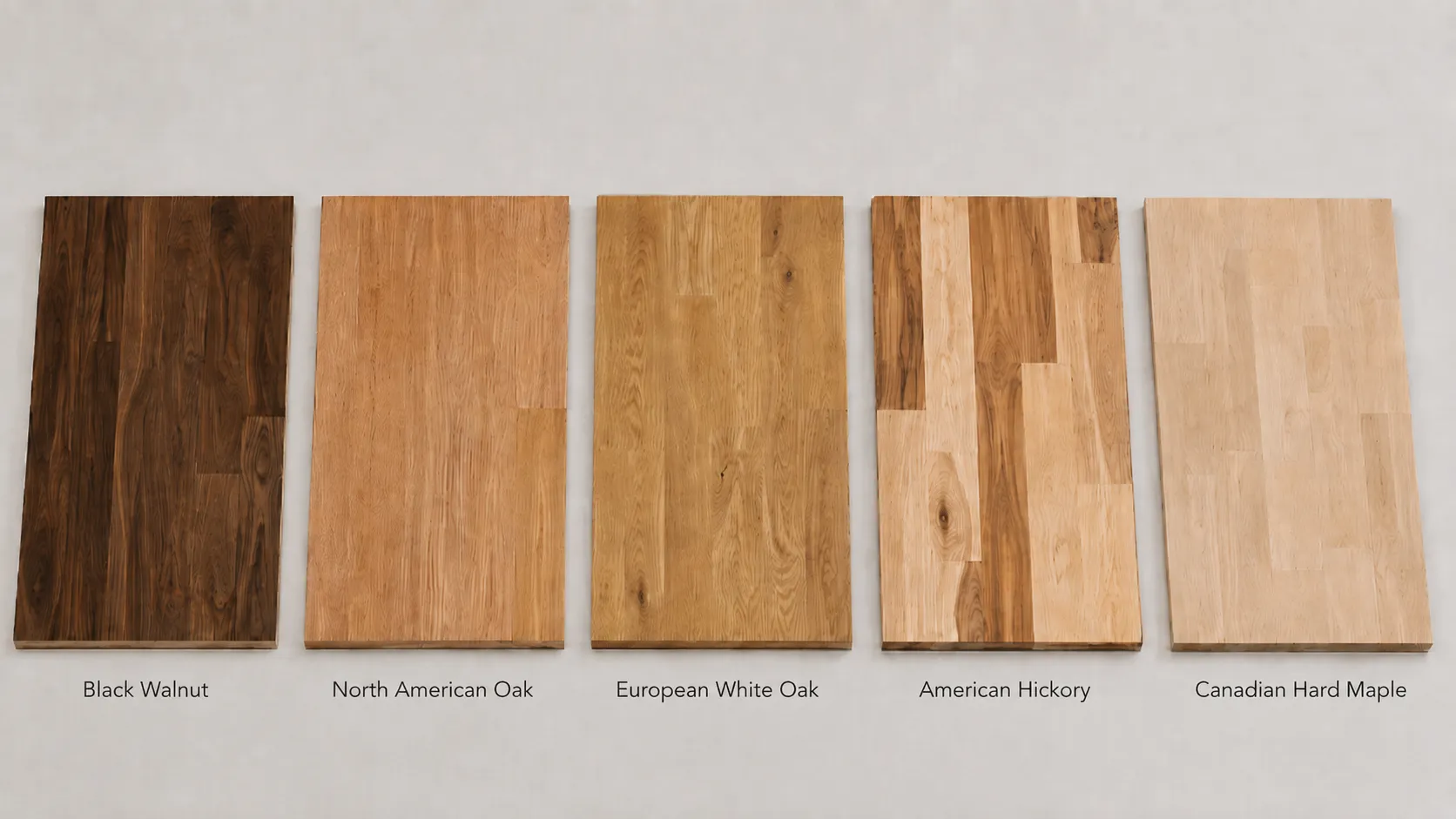
Species influences the floor's natural base color, grain pattern and visual movement. Grade, cut, stain and finish can change the final appearance dramatically, so species should be treated as a starting point rather than a guarantee of one look.
Hardwood flooring guide samples showing white oak, red oak, maple, hickory and walnut

White oak: Refined, versatile grain with a neutral-to-warm base. Works especially well with natural, beige and lightly toned finishes.

Red oak: More visible grain and naturally warmer undertones. Familiar in traditional and transitional interiors.

Maple: Smoother, subtler grain that can create a cleaner visual field. Some maple products show less dramatic grain than oak.

Hickory: Strong contrast and natural variation. A good fit when you want the wood itself to be expressive and character-rich.

Walnut: Naturally deeper brown color and flowing grain. Often chosen for richer, more sophisticated interiors.

Always review the specific collection. A select-grade white oak floor can look very different from a rustic or character-grade white oak floor, even though the species name is identical.

5. Decide How Much Grain and Natural Variation You Want

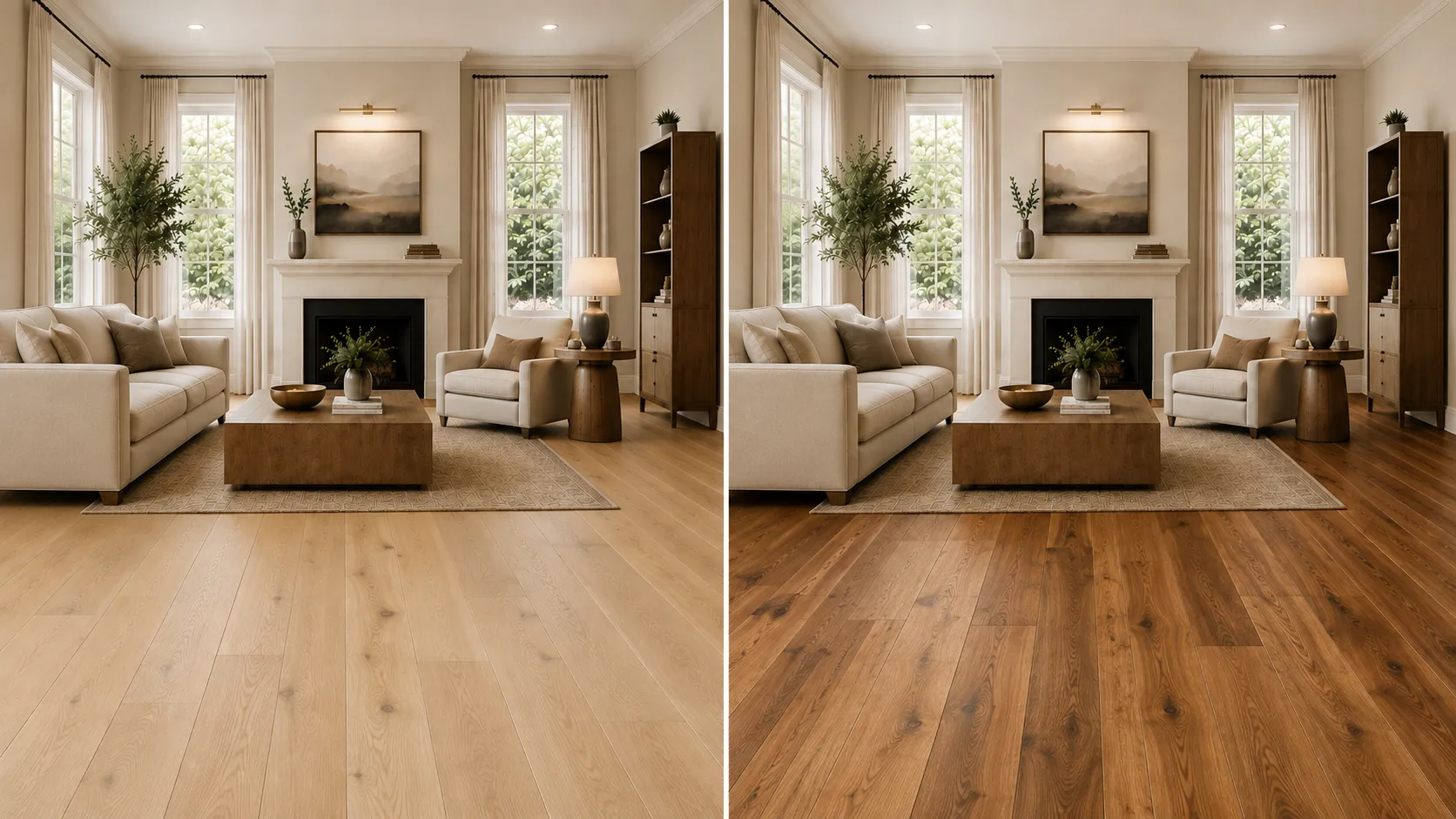
Two floors in a similar color can create completely different rooms if their grain and variation are different. A subtle grain and consistent board-to-board color creates a cleaner, quieter background. More knots, mineral streaks and color movement make the floor feel more organic and expressive.

Neither is automatically better. The decision is about visual balance. If cabinetry, stone and furniture already carry strong pattern, a quieter floor can give the room breathing space. If the architecture and furnishings are simple, a character-rich floor can become the material that gives the room personality.

Ask to see more than one sample board when variation matters. One attractive plank cannot show the full range of a natural wood collection.
Side-by-side hardwood samples comparing subtle grain with stronger natural grain and color variation

White oak: Refined, versatile grain with a neutral-to-warm base. Works especially well with natural, beige and lightly toned finishes.

Red oak: More visible grain and naturally warmer undertones. Familiar in traditional and transitional interiors.

Maple: Smoother, subtler grain that can create a cleaner visual field. Some maple products show less dramatic grain than oak.

Hickory: Strong contrast and natural variation. A good fit when you want the wood itself to be expressive and character-rich.

Walnut: Naturally deeper brown color and flowing grain. Often chosen for richer, more sophisticated interiors.

Always review the specific collection. A select-grade white oak floor can look very different from a rustic or character-grade white oak floor, even though the species name is identical.

6. Read the Undertone in Your Actual Light

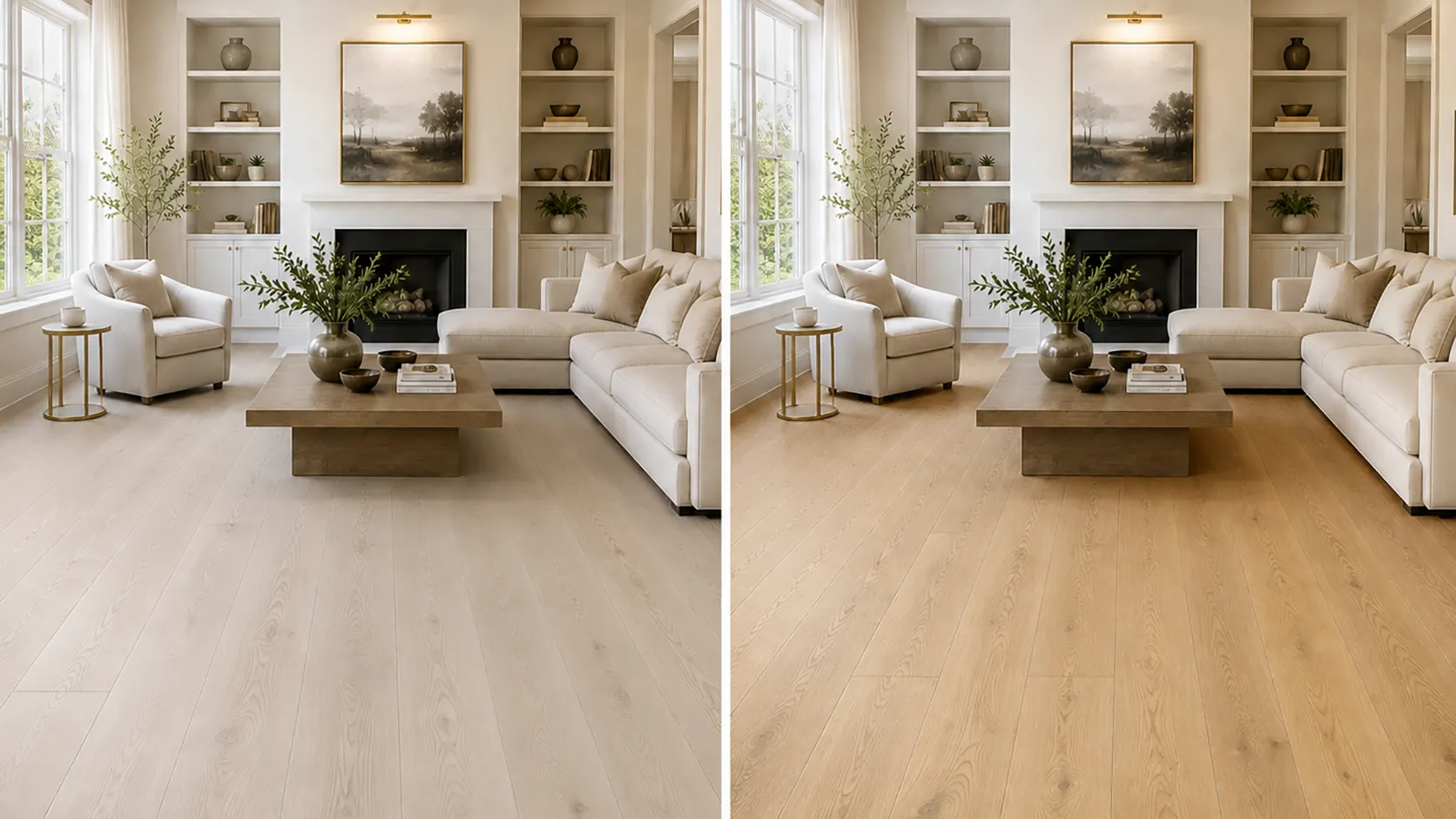
Color names can be misleading. Two floors may both be called “natural oak” while one leans honey or yellow and the other reads beige, taupe or slightly gray. That hidden undertone affects how the floor works with white paint, cabinetry, countertops, rugs and existing furniture.

The safest approach is to compare the floor with the fixed materials that will remain in the room. A warm floor does not require every other material to be warm, but the palette needs a deliberate relationship. Near-matches are often harder to coordinate than clear, controlled contrast.

View samples at different times of day. Morning daylight, afternoon sun and warm evening lamps can shift the appearance of wood. Whenever possible, borrow a larger sample and place it flat on the floor, because vertical showroom displays can read differently from an installed horizontal surface.

For more help building the full palette, see Karpet King's flooring and interior design guide, which explains how flooring relates to cabinetry, countertops, rugs, wall color and connected rooms.
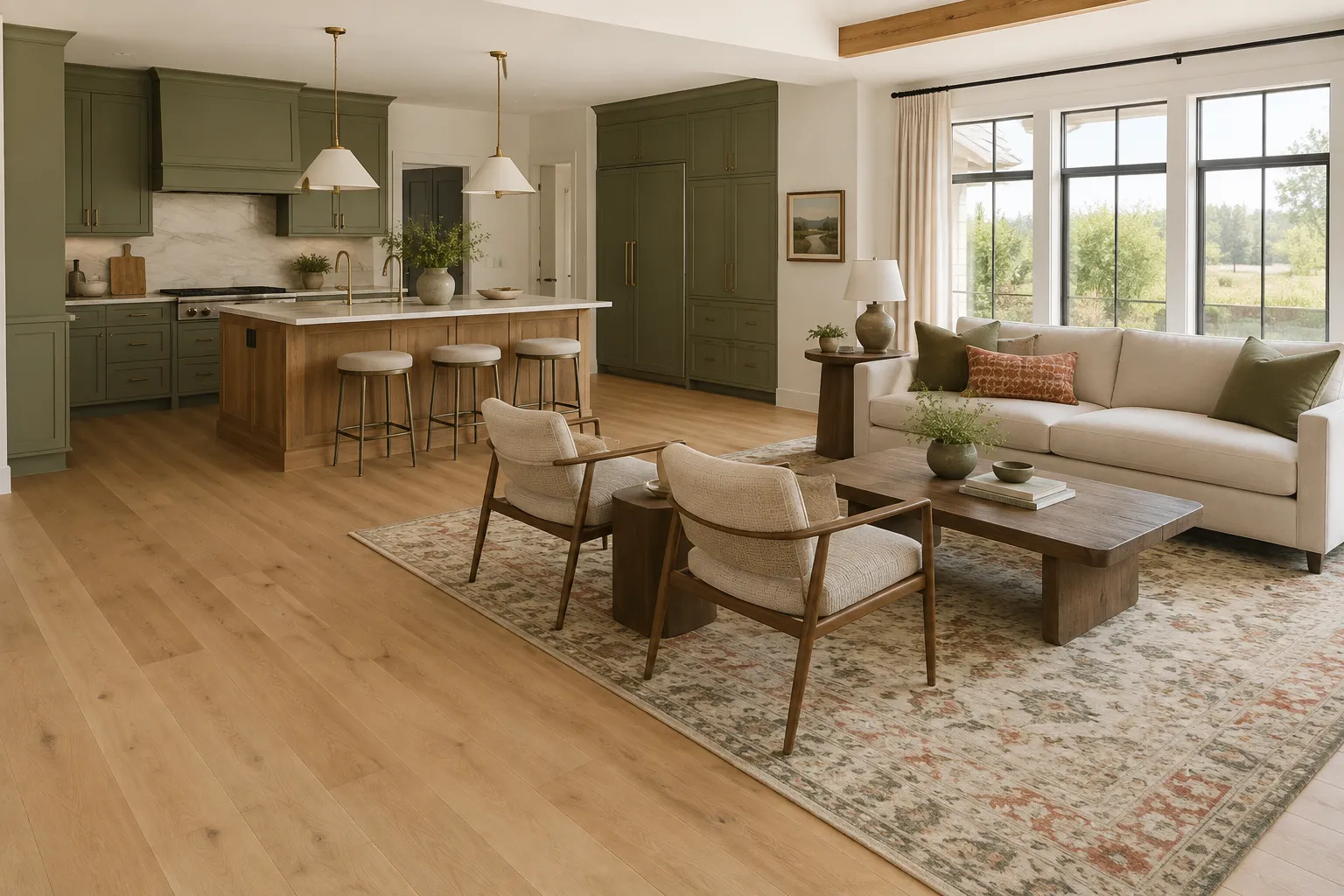
Same living room shown with two natural oak hardwood undertones to compare how the floor changes the overall palette

7. Choose Plank Width and Direction With the Room in Mind

Plank width changes the rhythm of a floor. Wider planks create fewer seams and often make a room feel calmer, more open and more contemporary. Narrower planks create more repeated lines and can feel more traditional or detailed.
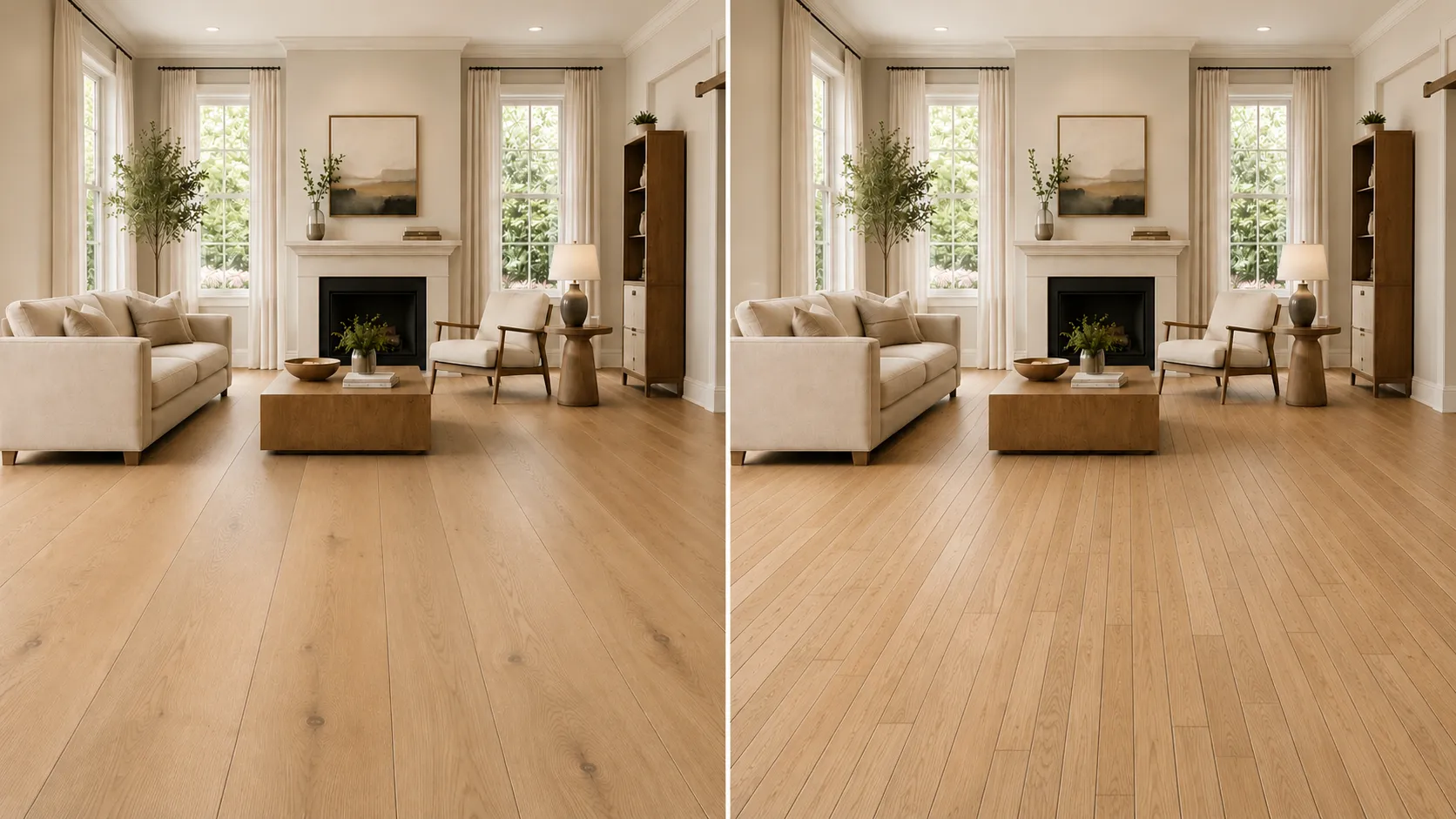
Same living room compared with wide-plank and narrow-plank hardwood flooring

Width should also relate to scale. Very wide planks can be beautiful in a large open plan, but the product construction, subfloor and installation requirements matter. Do not choose width only from a lifestyle image; compare a full-size board and understand how many planks will actually span your room.

Plank direction affects sightlines. Straight planks often look best when they support the longest architectural line or the main direction of movement. In connected rooms, avoid unnecessary direction changes unless a doorway, threshold or structural condition gives you a clear reason.

8. Decide Whether the Floor Should Be Quiet or Patterned

Straight-laid hardwood is the most versatile foundation because it creates a continuous linear field. Herringbone and chevron introduce more movement and architectural detail. They can be especially effective in entries, dining rooms, libraries or larger open areas where the pattern has room to read.
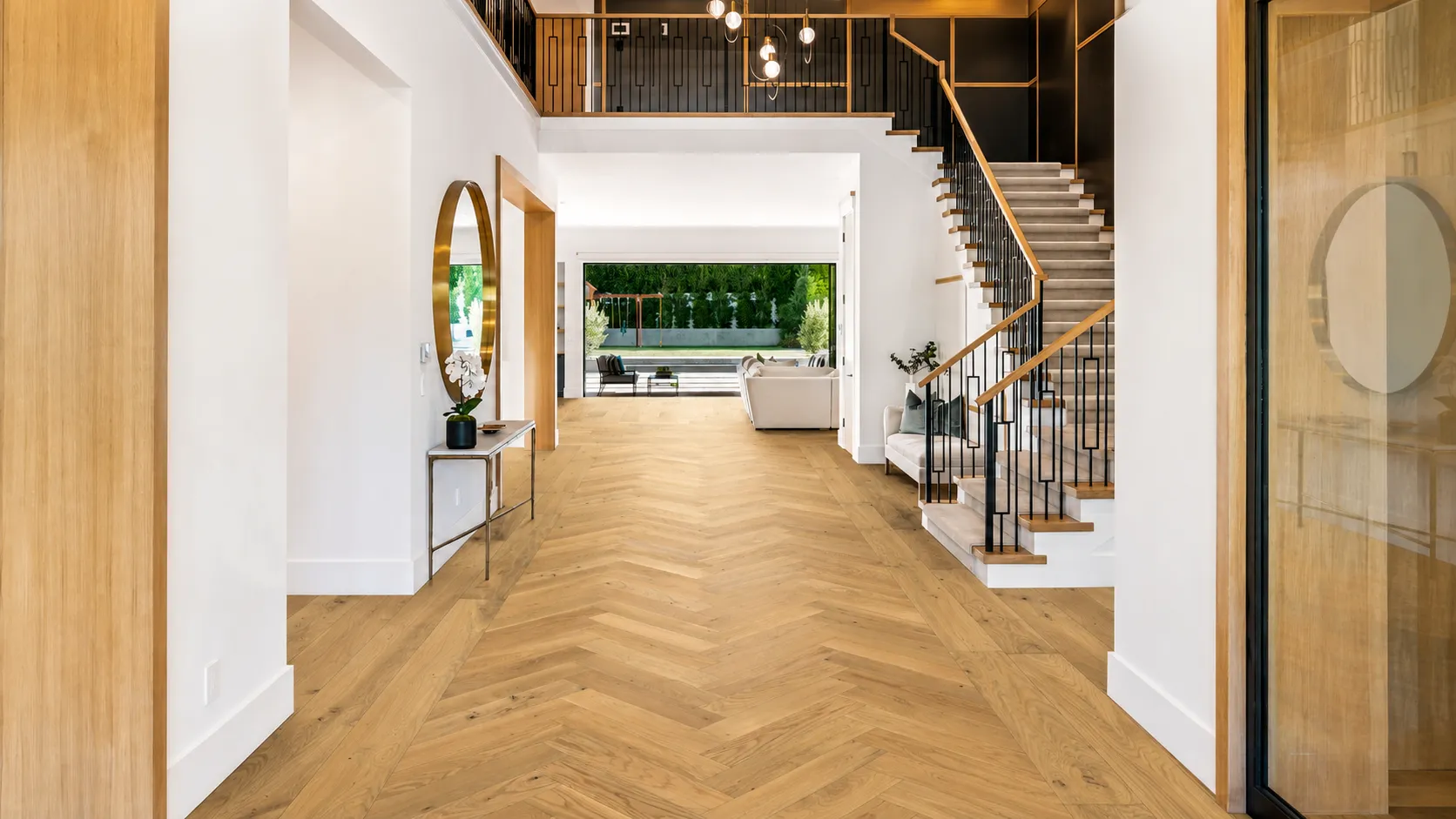
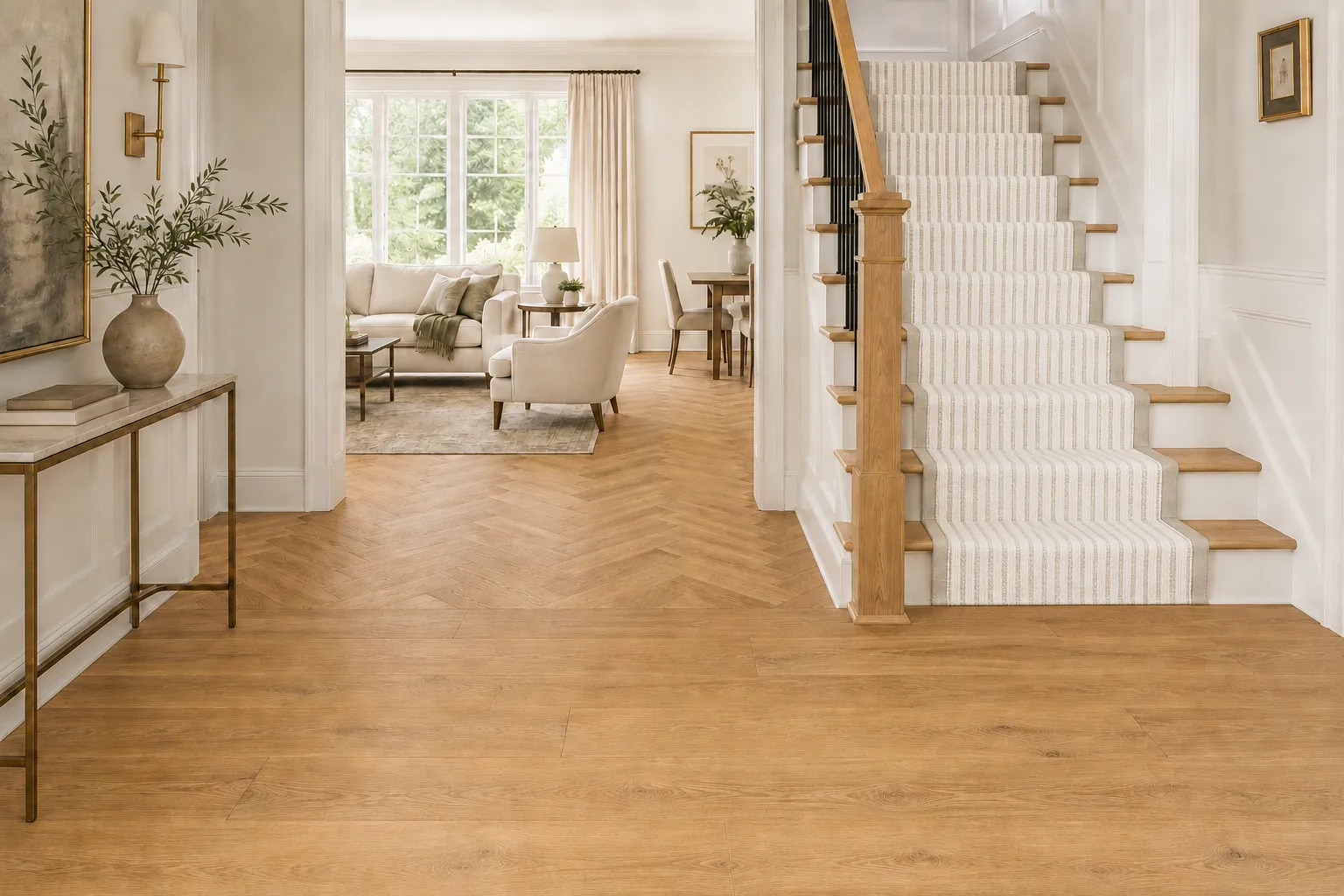
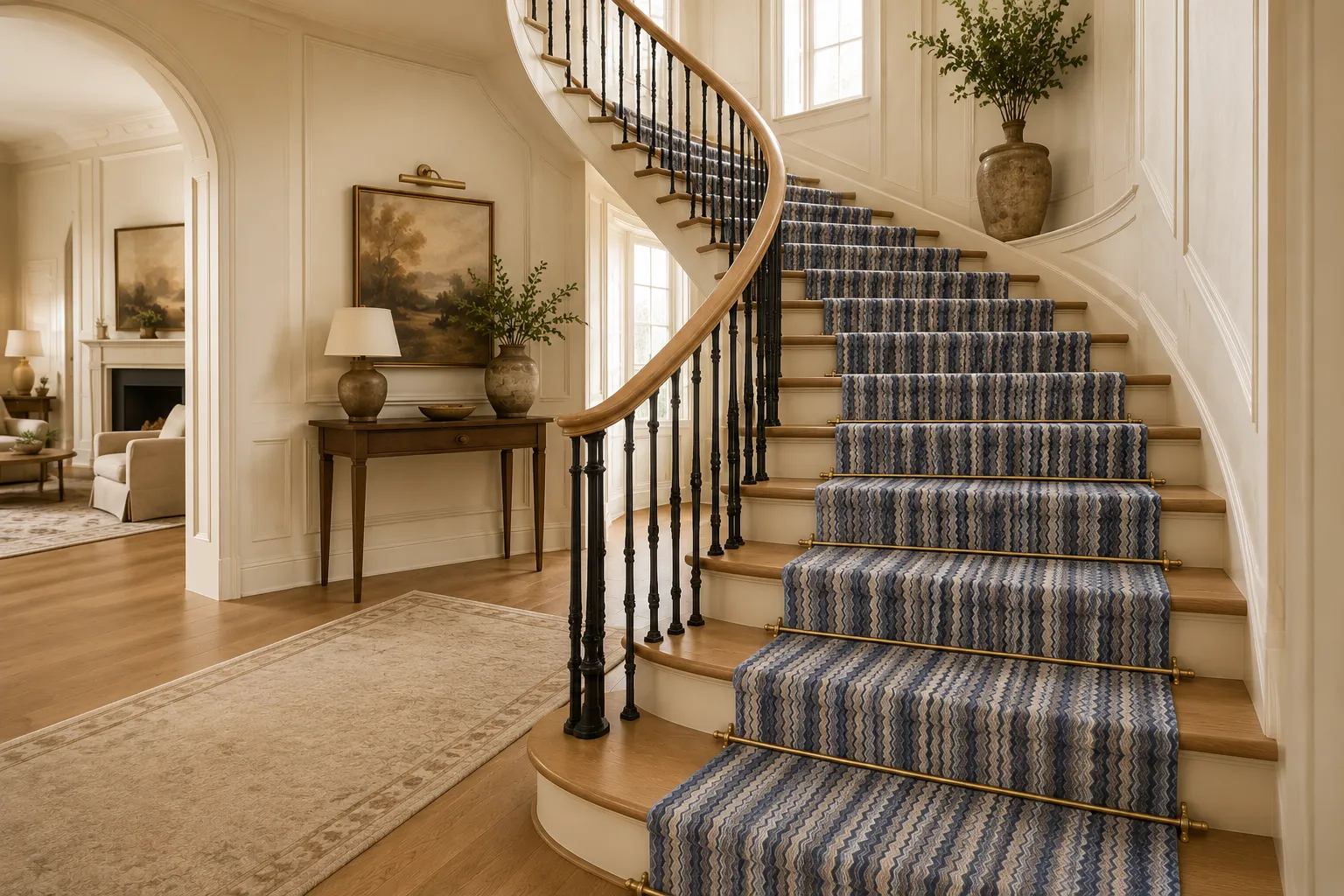
Herringbone hardwood flooring with a straight-plank border in a bright entryway with staircase

 Herringbone uses rectangular pieces arranged in a repeated broken-zigzag pattern. Chevron uses angled ends that meet point-to-point. They are related looks, but they should not be treated as interchangeable when you are ordering material or planning installation.

Patterned hardwood requires more layout planning and can increase material and installation complexity. If you love the look, discuss transitions, borders, room centering and waste allowance before ordering rather than treating the pattern as a last-minute styling choice.

9. Pick Texture and Finish for the Way You Want the Floor to Read

Finish changes the way light moves across wood. Matte and low-sheen finishes keep reflectivity lower and emphasize a more natural, relaxed appearance. Satin reflects more light and can feel slightly more polished. The exact sheen level varies by manufacturer, so compare real samples rather than relying on the finish name alone.

Wire-brushed texture gently emphasizes the grain and can add tactile character. Smooth floors create a cleaner surface appearance. Hand-scraped or distressed looks are more specific style choices and should be evaluated at room scale so the texture does not become visually repetitive.

For active households, also think about what will disguise everyday wear. Mid-tone colors, visible grain, matte finishes and some texture can make small dust, dents or surface marks less noticeable than extremely dark, glossy or highly uniform floors. Product finish systems differ, so ask about the exact care instructions and warranty.
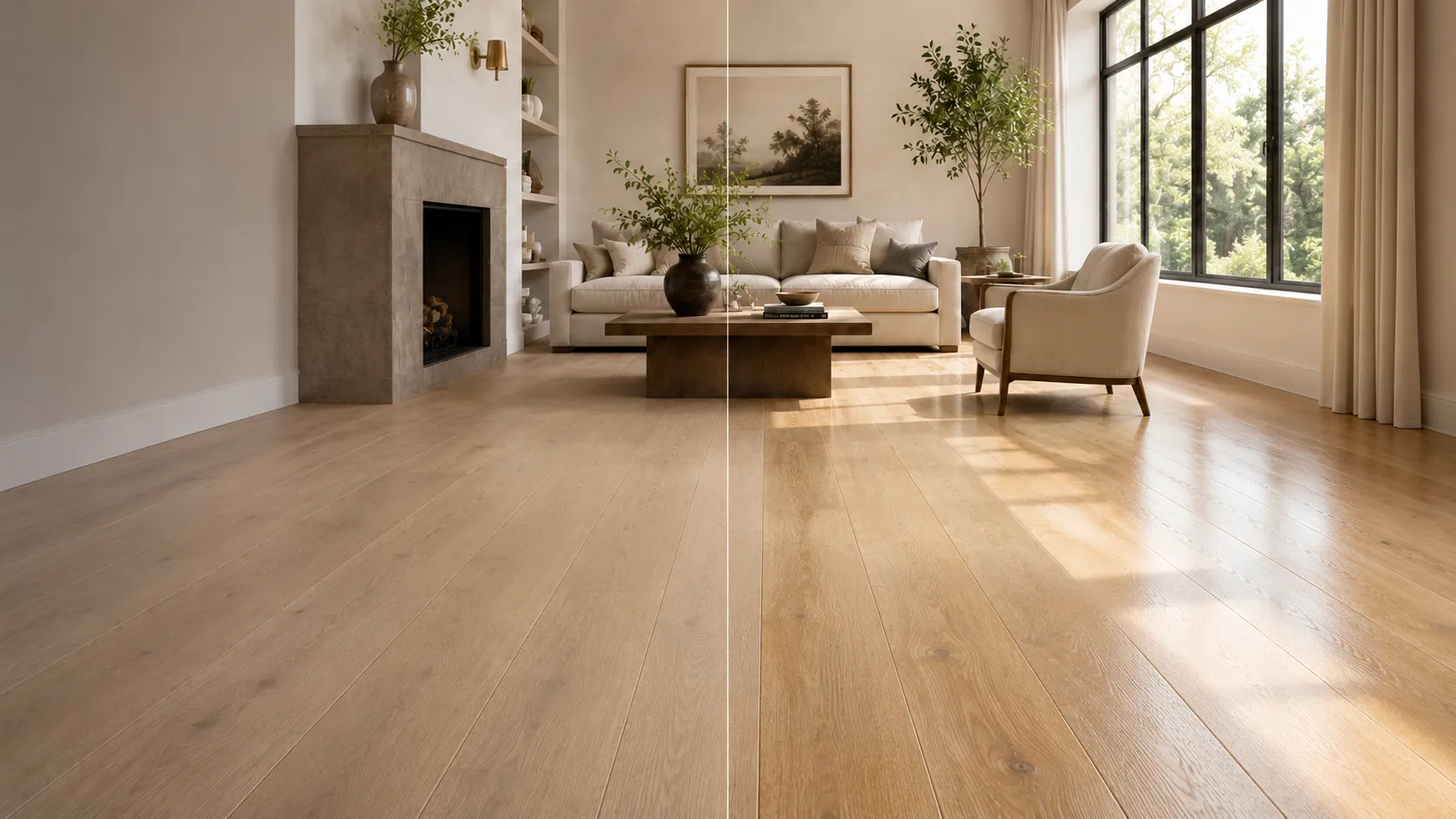
Hardwood flooring shown in the same sunlit room with matte and satin finish reflectivity for comparison

10. Think About Care, Refinishing and the Sample Before You Order

Real wood flooring can be maintained and, in many cases, renewed over time. The NWFA maintenance guidance recommends routine sweeping, dust mopping or vacuuming with a bare-floor setting, wiping spills promptly with a dry or slightly damp cloth, and avoiding wet mops and steam mops. Always use care products approved for the exact finish on your floor.

When a finish becomes dull, a maintenance coat may sometimes restore the surface. A full sand-and-refinish may be appropriate when wear or damage is deeper. The NWFA refinishing guidance notes that the number of times a floor can be sanded depends on factors such as wear-layer thickness, floor condition, equipment and contractor skill. This is especially important for engineered hardwood, where wear-layer thickness varies by product.

Before ordering, ask for the manufacturer care guide, warranty and installation requirements. If future refinishing is a priority, ask specifically about wear-layer thickness and whether the manufacturer permits sanding or recoating.

Finally, compare larger samples in your actual home. A showroom is useful for narrowing the field, but daylight, wall color, cabinetry and surrounding finishes can change how a floor reads. Sample borrowing is one of the most useful steps between “I like this board” and “I want this across the whole room.”

Where Does Hardwood Work Best?

Room

What to consider

Living rooms & dining rooms

A classic use for both solid and engineered hardwood. Focus on design continuity, traffic, furniture protection and sun exposure.

Bedrooms

Hardwood can create a clean, cohesive look, especially when the same floor continues from a hallway. Area rugs can add softness where desired.

Hallways & entries

Excellent places to showcase grain or pattern, but choose a finish and color that fit the traffic level and plan for walk-off mats where exterior moisture enters.

Kitchens

Possible with an appropriate product and household habits, but spills should be cleaned promptly. Confirm manufacturer approval and protect against plumbing or appliance leaks.

Basements

Engineered hardwood is often the starting point because it moves less with humidity than solid wood, but the exact product, slab moisture and installation system must be approved for below-grade use.

Bathrooms & laundry rooms

Real wood is usually not the first choice where repeated water exposure is expected. If considering it, rely on explicit manufacturer approval and realistic moisture management rather than appearance alone.

Common Hardwood Shopping Mistakes to Avoid

  • Choosing the stain color before deciding whether the construction and room conditions are appropriate.
  • Judging natural variation from one small board instead of several samples or a larger display.
  • Ignoring undertone because two products share the same color name.
  • Choosing very wide planks without reviewing the product construction and installation requirements.
  • Assuming every engineered hardwood can be refinished the same number of times.
  • Assuming “water resistant” or a kitchen lifestyle photo means the product is suitable for standing water or every moisture-prone room.
  • Using a steam mop or generic cleaner without checking the finish manufacturer's care instructions.
  • Ordering before planning transitions, stairs, borders, direction changes and adjacent-floor heights.

Compare Hardwood in Person at Karpet King Design Center

A hardwood flooring guide can narrow the choices, but the final decision is easier when you see the materials at full scale. At Karpet King Design Center in Rockville, you can compare engineered and solid hardwood, species, plank widths, grain, finishes and pattern options, then coordinate the floor with rugs, stair runners, cabinetry, countertops and tile.

Start by exploring hardwood flooring in Rockville, MD, then visit the showroom or book an interior design consultation to compare samples with the rest of your project materials.

If you are ready to price the project, request a flooring estimate. Professional flooring installation and hardwood floor refinishing are available as separate services.

KARPET KING DESIGN CENTER

751 East Gude Drive, Rockville, MD 20850  |  (301) 770-4110  |  [email protected]
Serving Rockville and surrounding Montgomery County / DMV communities.

Frequently Asked Questions

Yes. Engineered hardwood has a genuine wood surface layer over a layered core. It is different from laminate and vinyl, which use different surface constructions.

Not automatically. Engineered hardwood generally moves less with changes in humidity and is available in many wide-plank formats, while solid hardwood offers traditional one-piece construction and often greater sanding potential. The best choice depends on the specific product, room, subfloor and installation conditions.

Some engineered hardwood products may be approved for below-grade installations. Solid hardwood is generally used on or above grade. Always verify the manufacturer requirements, slab moisture and installation system for the exact product.

Light-to-medium floors can help a room feel brighter and more open, but color is only one factor. Plank width, direction, continuous flooring, wall color, furniture contrast and daylight also affect perceived size.

Both can work well. Matte finishes reflect less light and may make small dust and surface marks less noticeable. Satin has more reflection and a slightly more polished look. Care requirements depend on the manufacturer's finish system.

Neither is universally better. Wide planks create fewer seams and often feel calmer and more contemporary. Narrow planks create more rhythm and often read as more traditional. Product construction and room scale should also be considered.

Many engineered floors can be recoated or refinished, but not all can be sanded the same way. Wear-layer thickness, floor condition and manufacturer guidance determine what is possible.

Follow the finish manufacturer's instructions. NWFA guidance generally recommends routine sweeping, dust mopping or bare-floor vacuuming, prompt spill cleanup with a dry or slightly damp cloth, and avoiding wet or steam mops.

Use small samples to narrow the options, then compare larger boards or several planks. Natural grain and color variation become much clearer at a larger scale, and home lighting can change the appearance significantly.

Karpet King Design Center at 751 East Gude Drive in Rockville carries hardwood samples and offers design guidance so you can compare construction, species, colors, plank widths and finishes in person.

Use This Hardwood Flooring Guide as a Decision Checklist

The best hardwood floor is not simply the most popular color. It is the product whose construction fits the site, whose grain and variation match the amount of character you want, whose undertone works with the room, and whose plank, pattern and finish support the architecture.

Use this hardwood flooring guide to narrow the direction, then confirm the decision with real samples, manufacturer specifications and professional site evaluation. A thoughtful selection at the beginning can create a floor that feels connected to the home now and still makes sense years from now.
How Flooring Shapes Interior Design: Color, Style and Flow

How Flooring Shapes Interior Design: Color, Style and Flow

How Flooring Shapes Interior Design: Color, Style and Flow

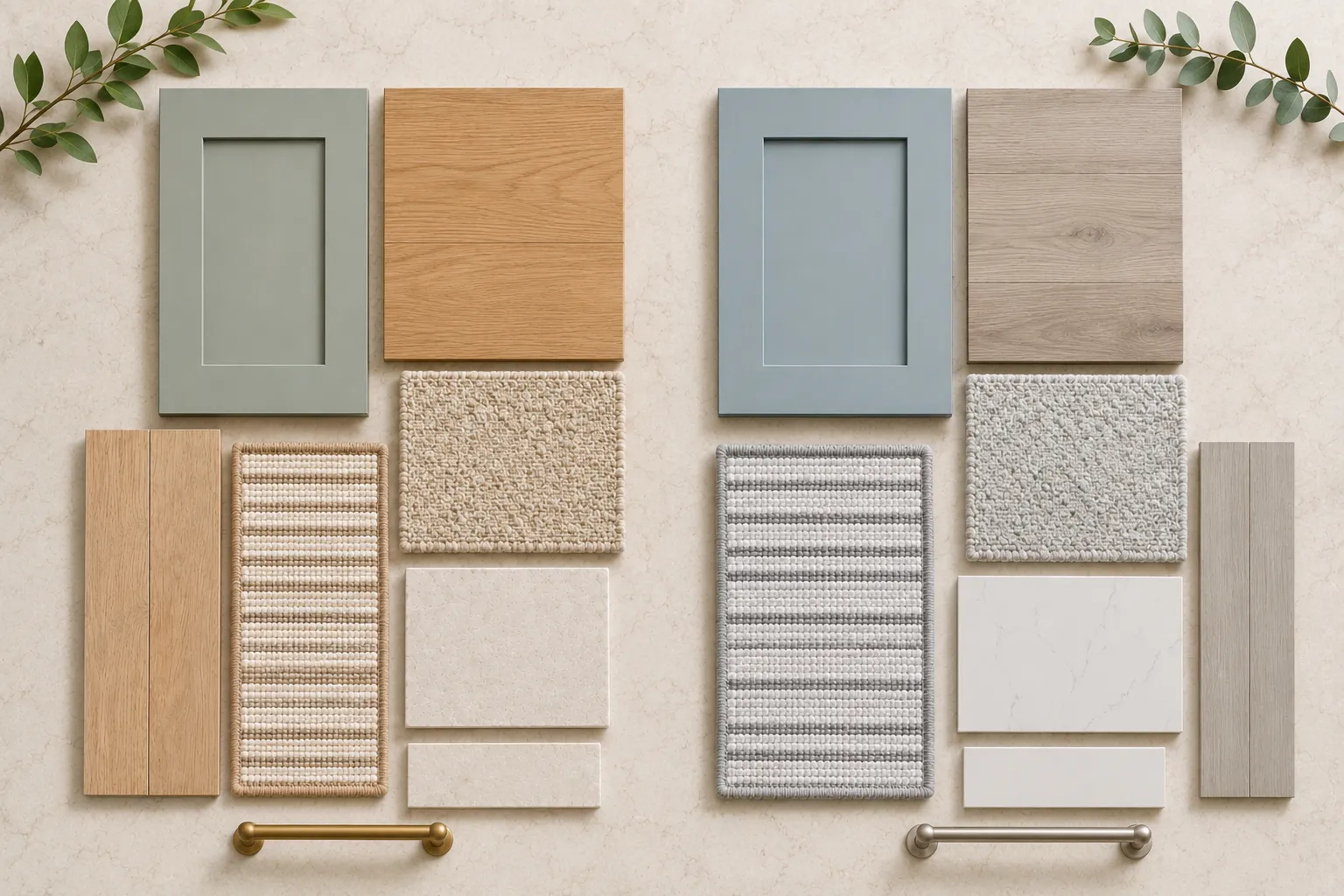
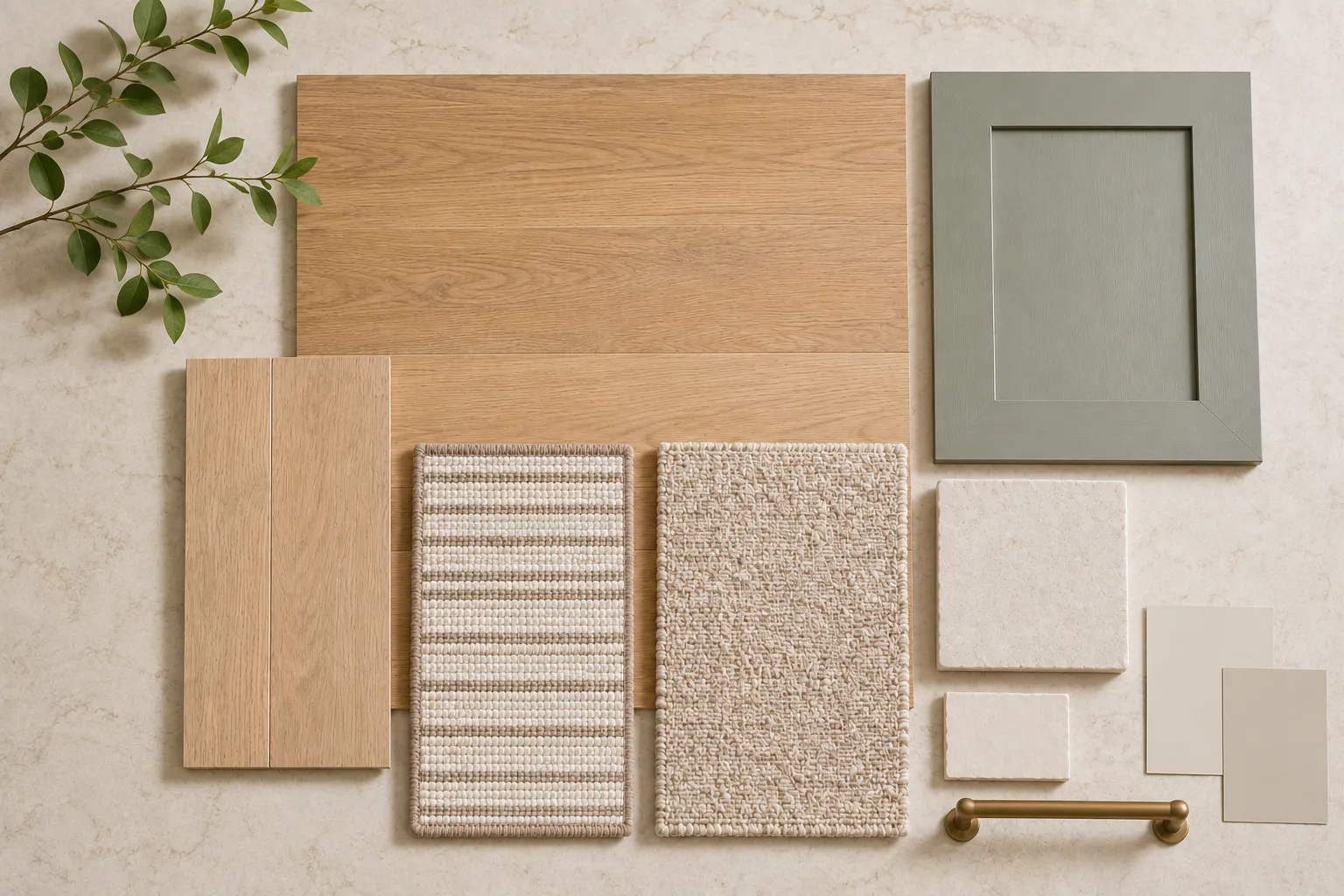
Coordinated hardwood, carpet, luxury vinyl, cabinet, countertop and fabric samples arranged on a designer material table

Understanding how flooring shapes interior design begins with recognizing the floor as one of the largest uninterrupted surfaces in a home. Flooring is often treated as a practical decision: hardwood or carpet, light or dark, durable or delicate. In a well-planned interior, however, it does much more. Its color, undertone, texture, sheen, plank width and installation pattern influence how every wall color, cabinet finish, countertop, rug and piece of furniture is perceived.

A beautiful room rarely comes from choosing each finish separately. It comes from building a coordinated material story. If you are still comparing the basic performance of different surfaces, begin with our flooring and interior design overview. This guide goes one step further and explains how to use flooring as the visual foundation of a complete interior.

1. Start With the Flooring, Not the Paint Color

Paint is flexible. Flooring is not. Wall color can be adjusted quickly and relatively affordably, while flooring is a major investment that is expected to remain in place for years. For a renovation, it usually makes sense to choose the flooring first, then coordinate the fixed finishes, cabinetry, countertops and tile—before selecting paint, textiles and accessories.

This order is especially important in an open-concept home. A flooring sample may appear quiet on a small board, yet cover hundreds of square feet once installed. The color will reflect onto walls and cabinetry and can make a room feel warmer, cooler, brighter, heavier or more relaxed.

A useful selection order is:

  1. Flooring and other large fixed surfaces
  2. Cabinetry and countertops
  3. Backsplash or wall tile
  4. Paint colors
  5. Area rugs, upholstery and window treatments
  6. Lighting, hardware and accessories

2. Read the Undertone Before You Match the Color

Two materials can both be described as beige, brown or gray and still clash. The reason is undertone: the subtle warm, cool, green, pink, yellow or red cast beneath the main color. A floor with golden undertones may look beautiful beside creamy white cabinetry but overly yellow beside a stark blue-white. A taupe floor with a violet cast may fight with a countertop that leans green.

Warm and cool flooring samples compared with cabinet, countertop and paint swatches under natural light

Do not try to make every surface identical. Instead, repeat one or two related undertones and vary the value—the lightness or darkness, and texture. A medium warm-oak floor, an ivory wall, a mushroom cabinet and a warm white quartz can feel layered because they share a family resemblance without matching exactly.

For a warmer palette, our guide to creating a warm modern interior without making it feel dark explains how natural wood tones, soft neutrals and controlled contrast can work together.

3. Let Flooring Establish the Interior Style

One of the clearest examples of how flooring shapes interior design is the way it establishes the design vocabulary. Flooring does not have to dictate one strict style, but it sets the visual direction. A pale matte oak with subtle grain supports Scandinavian, Japandi and organic-modern rooms. A medium brown wood with natural variation feels welcoming in transitional interiors. Deep walnut or a classic narrow plank adds formality. Stone-look tile can create a clean contemporary foundation, while patterned carpet can make stairs, libraries and bedrooms feel tailored and collected.

The finish matters as much as the color. Matte and low-luster surfaces feel natural and relaxed. High sheen reflects more light and reads as formal, but it also makes dust and surface marks more visible. Strong knots, color variation and wire-brushed texture add character; a quieter grain creates a more minimal backdrop.

Explore our hardwood flooring options and compare species, plank proportions, textures and finishes in person before deciding how much visual movement your room needs.

4. Use Scale and Pattern to Change the Room

The size and direction of flooring elements affect the way a room is read. Wide planks create fewer seams and can make an open space feel calmer and more expansive. Narrow planks introduce more rhythm and often feel traditional. Large-format tile reduces the number of grout lines, while smaller tile brings pattern and detail.

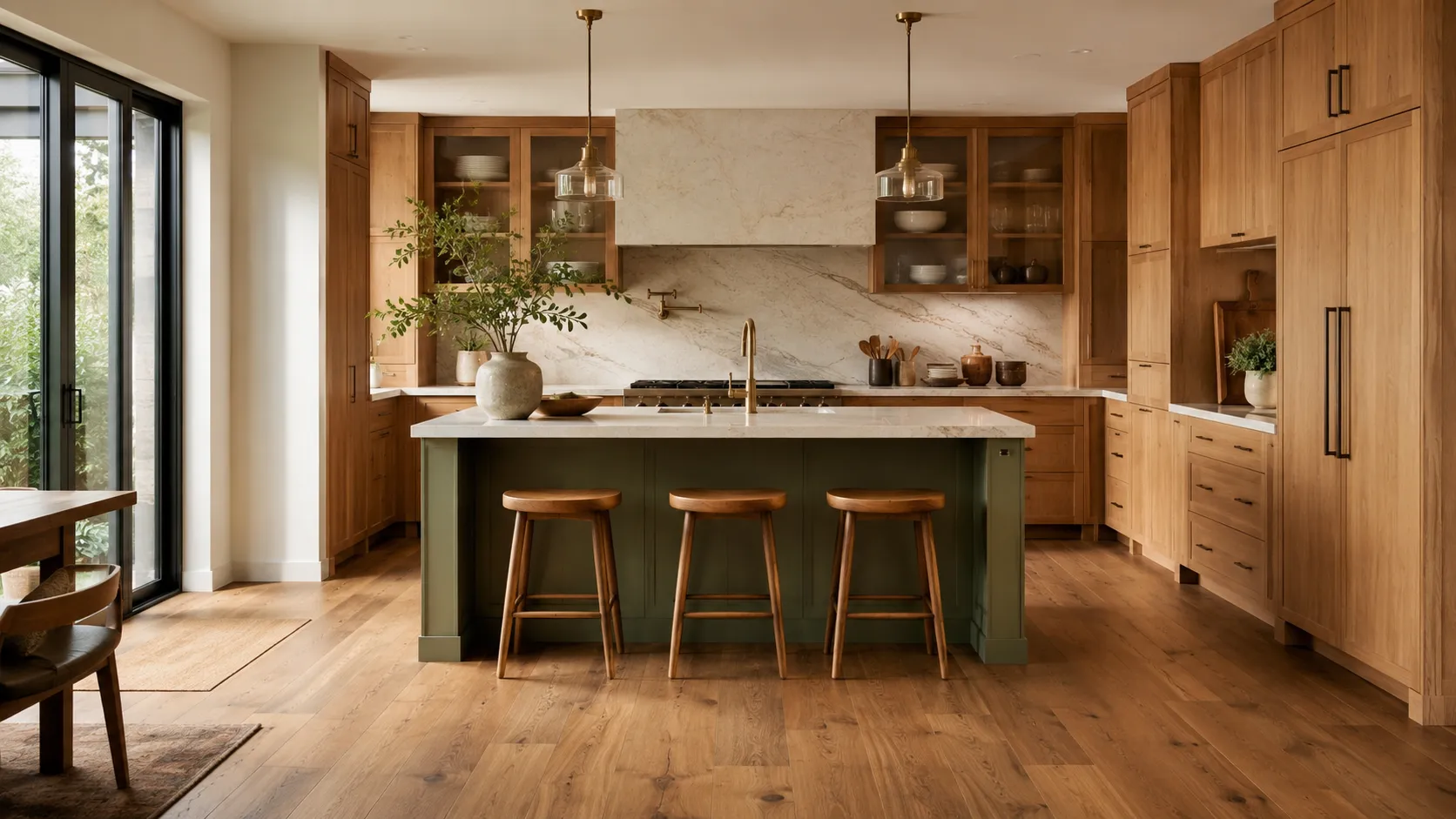
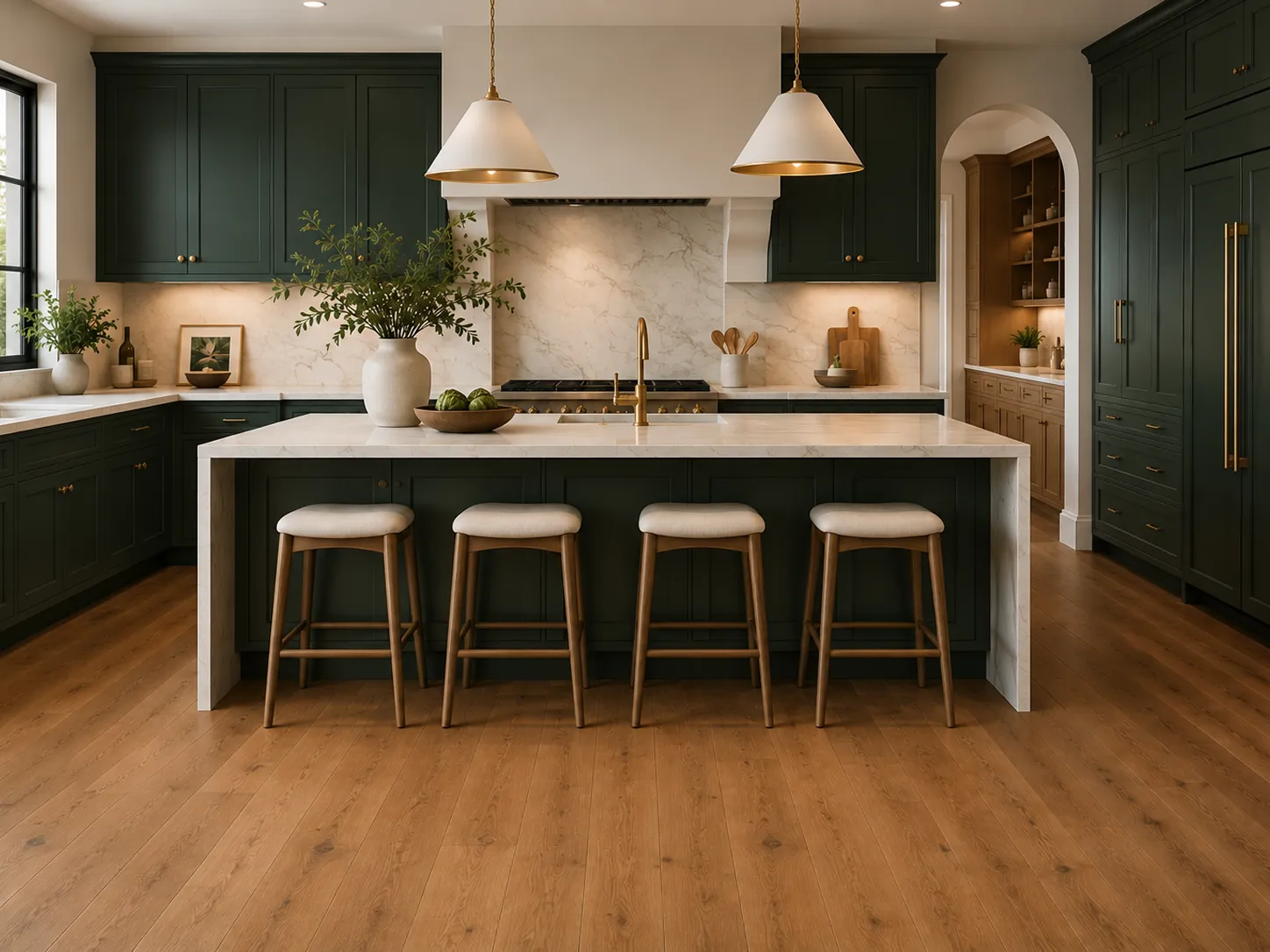
Wide plank, narrow plank and herringbone flooring layouts shown in coordinated interior spaces

Direction matters too. Straight-laid planks usually create the cleanest flow and can visually lengthen a room. Herringbone or chevron adds movement and formality, so it works best when surrounding finishes are quieter. A patterned carpet or stair runner can become an intentional focal point, but its repeat should be viewed at full scale, not judged from a tiny cutting.

Designer tip: align the dominant flooring direction with the longest sightline or the main flow of movement whenever the architecture allows. In connected rooms, avoid changing direction without a clear architectural reason.

5. Coordinate Flooring With Cabinets and Countertops

In a kitchen, the floor, cabinetry and countertop are the three largest visual surfaces. If all three have strong grain, contrast or veining, the room can feel busy. A more balanced approach is to choose one lead material and let the others support it.

For example, highly figured stone may pair best with a quieter floor and simple cabinet finish. Character-rich wood flooring can be balanced with painted cabinetry and restrained countertop movement. When both floors and cabinets are wood, aim for contrast rather than a near match: combine light with medium, or warm with slightly deeper neutral tones, while keeping the undertones related.

Compare cabinet finishes beside flooring samples in the same light. Then add the countertop sample and view the group vertically as well as flat on a table; materials can look different in their installed orientation.

6. Balance Hard Flooring With Area Rugs and Textiles

Hard flooring gives a room continuity, but textiles make it feel finished. An area rug introduces softness, sound absorption, color and a sense of place. In an open living area, it can define the seating zone without interrupting the flooring beneath it.

The rug should relate to the floor without disappearing into it. On a warm medium wood, try an ivory, rust, olive, muted blue or patterned rug with enough contrast to create a clear boundary. On pale flooring, a deeper or more textured rug adds weight. If the floor already contains strong color variation, choose a rug with a calmer field; if the floor is quiet, the rug can carry more pattern.

Browse area rugs alongside your flooring sample so you can judge contrast, pile, pattern scale and edge detail together.

7. Create Flow Between Connected Rooms

A cohesive home does not require the same flooring in every room. It requires intentional transitions. Use continuous flooring across the largest connected areas when function allows, then change material where there is a clear reason, such as softness in a bedroom, water resistance in a laundry room or traction on a stair.

Wide plank, narrow plank and herringbone flooring layouts shown in coordinated interior spaces

When materials change, connect them through at least one shared design element: undertone, color family, texture or pattern scale. A warm-oak hardwood can transition to a taupe carpet, a limestone-look tile or a wood-look LVP with a related neutral base. The materials are different, but the palette still feels planned.

Transitions should also occur at logical architectural boundaries, such as a doorway, threshold or change in level. Avoid small isolated patches of flooring or too many materials visible from one viewpoint; both can make the home feel fragmented.

For moisture-prone or high-use areas, luxury vinyl flooring can provide a wood-inspired visual connection while offering easier everyday care. In bedrooms, family rooms and stairs, carpet can add comfort and acoustic softness without breaking the overall color story.

8. Test the Full Palette in the Actual Light

Showroom lighting is useful for comparison, but the final decision should account for the home’s daylight direction, artificial lighting and surrounding colors. North-facing rooms often make colors appear cooler; warm bulbs can intensify yellow or red undertones. A floor can also look different in the morning, afternoon and evening.

Bring the core samples together: flooring, cabinet door, countertop, tile, paint and one or two textiles. View them on the floor and, when relevant, hold cabinet and wall samples vertically. Move the group between rooms. Look at the materials from several feet away as well as close up. This simple step helps reveal undertone conflicts, insufficient contrast and patterns that become too active at scale.

9. How Flooring Shapes Interior Design: Common Mistakes

  • Choosing paint first. Paint is easier to adjust than a floor, cabinet or stone surface.
  • Trying to match every wood exactly. Near matches often look accidental; controlled contrast feels more intentional.
  • Ignoring undertones. Materials with similar surface colors can still conflict beneath the surface.
  • Using too many statement materials. Strong floor variation, dramatic stone, bold tile and patterned fabric need visual breathing room.
  • Judging a product from one small sample. Natural variation, carpet repeats and large-format veining should be reviewed at a larger scale whenever possible.
  • Forgetting transitions. The meeting point between materials is part of the design and should be planned early.
  • Selecting for appearance alone. A cohesive room must also suit moisture, traffic, pets, maintenance and comfort needs.

10. Build a Material Palette Before You Order

A material palette is more useful than a collection of individual favorites. Start with the floor, then add the fixed surfaces and one or two supporting finishes. The goal is not for every sample to be exciting on its own; it is for the group to feel balanced.

Layer

What to Evaluate

Design Question

Flooring

Undertone, variation, sheen, scale

Does it create the right foundation?

Cabinetry

Wood tone or paint color, door style

Is there enough contrast from the floor?

Countertop

Base color, veining, movement

Which material should lead visually?

Tile

Format, grout, texture, pattern

Does it connect or introduce a new idea?

Paint

Light reflectance and undertone

Does it support the fixed finishes?

Textiles & rug

Color, softness, pattern scale

Does the room feel layered and comfortable?

Metal & lighting

Finish, temperature, contrast

Do the final accents repeat the palette?

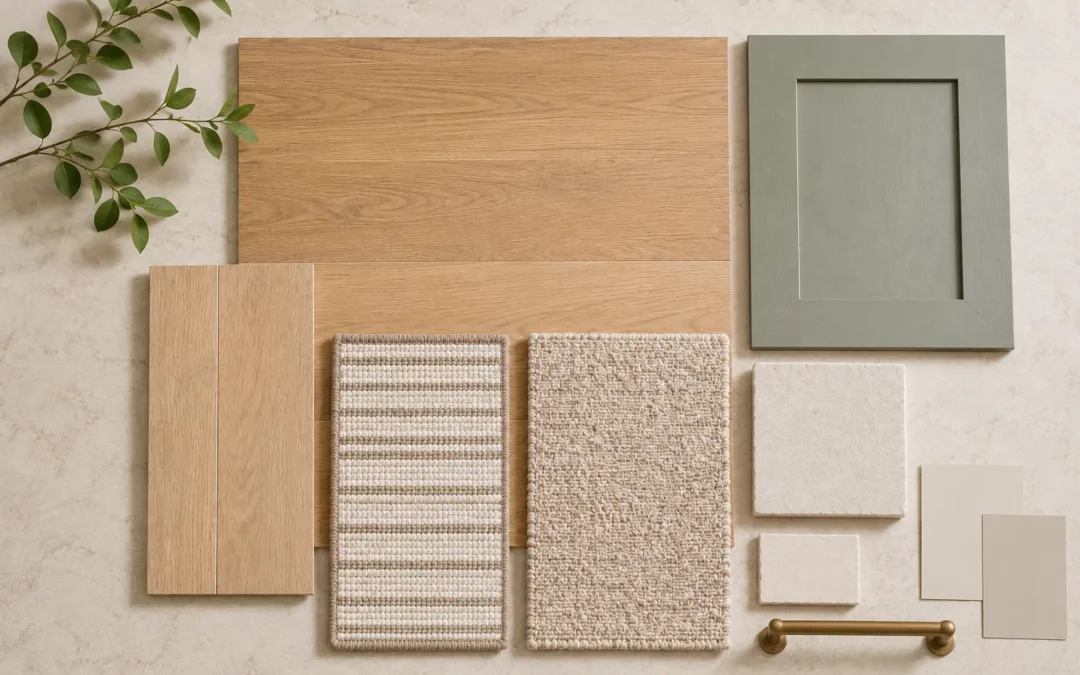
Before ordering, photograph the palette in natural light and keep a record of exact product names, colors, finishes and lot information. This makes later selections—and communication with installers and trades—more reliable.

Interior design material board with coordinated flooring, cabinet, countertop, tile, paint, rug and metal finish samples

Bring the Whole Design Together in One Showroom

Understanding how flooring shapes interior design makes it easier to build a coordinated home, even when the project is completed in stages. Seeing flooring beside cabinetry, countertops, tile and rugs helps catch color conflicts early and creates a home that feels connected from room to room.

At Karpet King Design Center in Rockville, homeowners, designers and contractors can compare materials side by side and receive interior design guidance for flooring, kitchen and bath selections. Bring photos, measurements and any samples you already love; we can help turn them into a coordinated palette that fits the architecture, lifestyle and budget of your project.

Visit our showroom at 751 East Gude Drive, Rockville, MD 20850, call (301) 770-4110, email [email protected], or contact us online to plan your visit.

Frequently Asked Questions

Either can work. The most important factors are undertone and contrast. If the floor and cabinets are both wood, a visible difference in value usually looks more intentional than an almost-match.

Yes. Use changes only where they make functional or architectural sense, and connect the materials through a shared undertone, color family or level of visual movement.

There is no fixed rule, but fewer usually feels calmer. In most open views, one dominant floor plus one purposeful transition is easier to coordinate than several competing surfaces.

Choose the floor first, then compare rug options against the actual flooring sample. If you already own an important rug, bring it—or a clear photo and color reference—into the selection process.

Daylight direction, bulb temperature, wall color and nearby finishes all affect perception. Review samples in the intended room at different times of day before final approval.

Flooring & Interior Design Solutions – Karpet King Design Center

Flooring & Interior Design Solutions – Karpet King Design Center

Flooring & Interior Design Solutions – Karpet King Design Center

Flooring & Interior Design Solutions in Rockville, MD

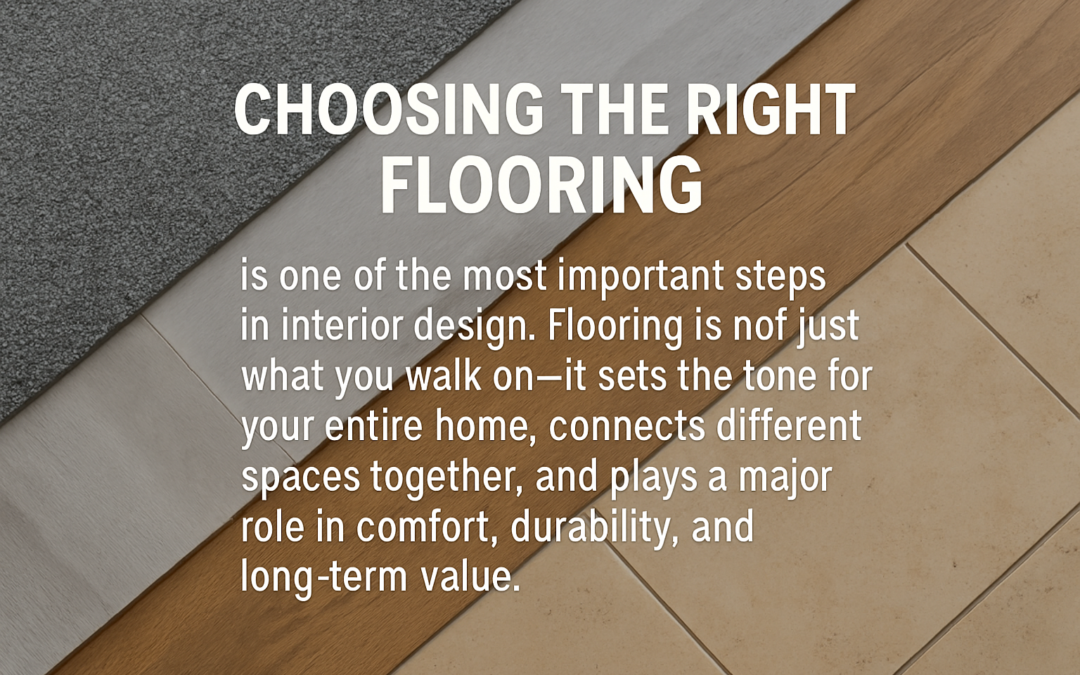
Choosing the right flooring is one of the most important steps in interior design. Flooring is not just what you walk on it sets the tone for your entire home, connects different spaces together, and plays a major role in comfort, durability, and long-term value. Karpetking Design Center is your chosen for Flooring & Interior Design Solutions in Rockville, MD.

Homeowners searching for flooring and interior design solutions in Rockville, MD often want more than materials. They want expert guidance, quality installation, and designs that actually work for their lifestyle. That’s exactly where professional support makes the difference.

At Karpet King Design Center, we help homeowners design beautiful, functional spaces by starting with the right flooring choices.

Why Flooring Is the Foundation of Interior Design

Interior designers always begin from the ground up. Flooring influences everything that comes after—from wall colors and furniture placement to lighting and flow between rooms.

Well-chosen flooring:

  • Creates visual balance throughout the home
  • Helps rooms feel larger and more connected
  • Supports your interior style (modern, classic, transitional)
  • Impacts maintenance and daily comfort

When flooring is planned correctly, kitchens, bathrooms, living rooms, and bedrooms feel cohesive instead of disconnected. For moisture-prone areas, our bathroom flooring and tile solutions provide durability without sacrificing design.

why-flooring-is-the-foundation-of-interior-design

Hardwood Flooring for Timeless Interiors

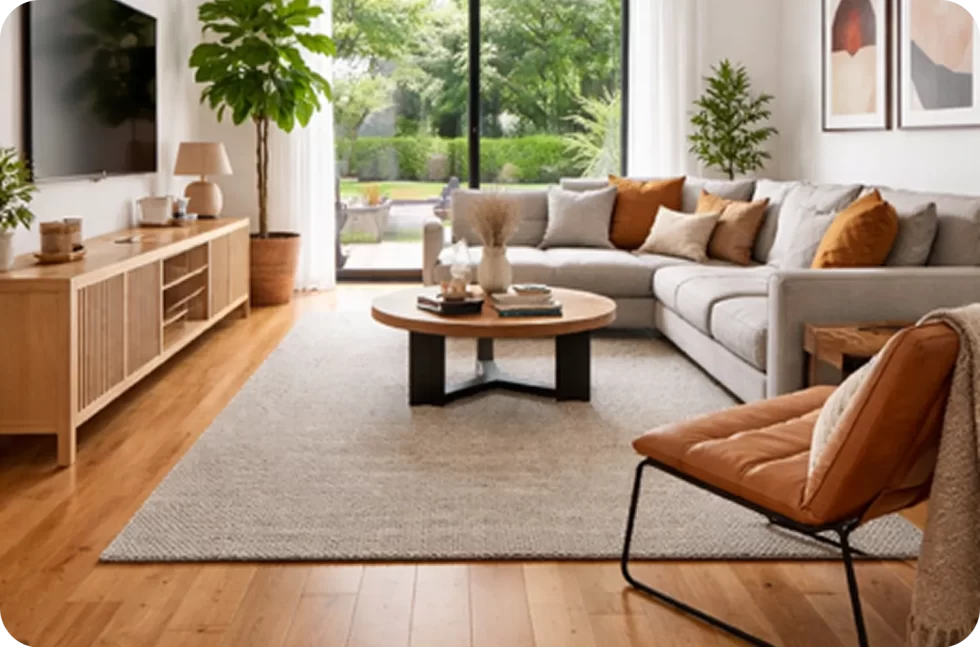
Hardwood flooring remains one of the most popular choices for Maryland homes, especially in living rooms, dining areas, and open-concept spaces. Its natural warmth and character make it a favorite in both traditional and modern interiors.

Why homeowners love hardwood flooring:

  • Timeless, elegant appearance
  • Adds long-term property value
  • Works with a wide range of interior styles
  • Can be refinished over time

Hardwood flooring creates seamless transitions between rooms, making interiors feel polished and intentional.

hardwood-flooring-for-timeless-interiors

Luxury Vinyl Plank Flooring for Modern Living

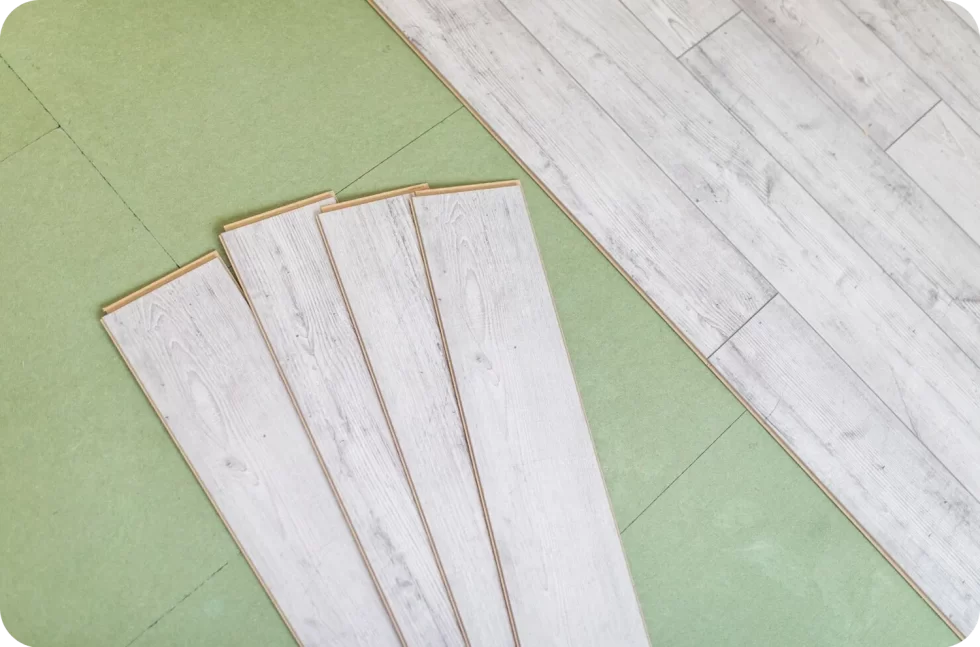
Luxury vinyl plank (LVP) flooring has become a top choice for homeowners who want durability without sacrificing style. It offers the look of hardwood with enhanced performance.

Benefits of LVP flooring include:

  • Waterproof and moisture-resistant
  • Scratch- and wear-resistant
  • Easy to maintain
  • Ideal for kitchens, entryways, and basements

LVP flooring is especially popular for kitchens, where spills, heavy foot traffic, and daily use demand durability. Explore our kitchen flooring and design solutions to find materials that combine waterproof performance with modern style.

luxury-vinyl-plank-flooring-for-modern-living

Carpet Flooring for Comfort and Warmth

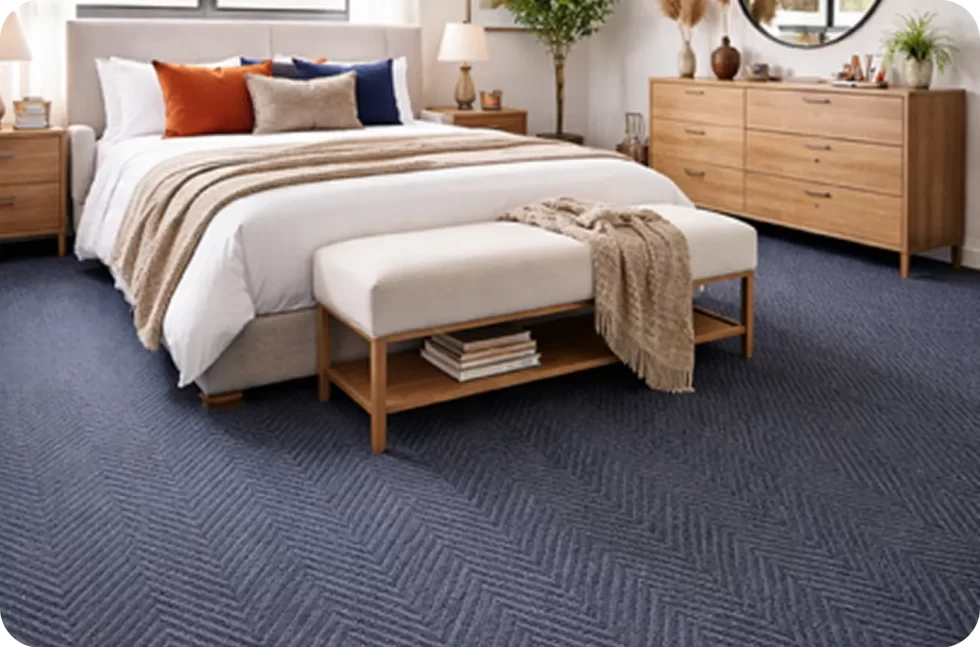
Carpet flooring continues to play an important role in interior design, particularly in bedrooms, home offices, and family rooms. Modern carpets offer advanced stain resistance, improved durability, and a wide variety of textures and colors.

Carpet flooring is ideal when you want:

  • Soft comfort underfoot
  • Noise reduction
  • Warm, cozy spaces
  • Flexible design options

Carpet remains one of the best choices for areas where comfort matters most.

carpet-flooring-for-comfort-and-warmth

Why Professional Flooring Installation Matters

Even the highest-quality flooring materials require proper installation to perform well long-term. Poor installation can lead to uneven surfaces, gaps, moisture issues, and early wear.

Professional installation ensures:

  • Correct subfloor preparation
  • Proper leveling and moisture control
  • Manufacturer warranty protection
  • A clean, finished interior look

Expert installation protects your investment and ensures your flooring looks and performs as intended.

why-professional-flooring-installation-matters

Visit our Flooring & Interior Design Solutions in Rockville, MD

Seeing flooring online is helpful, but visiting a local showroom makes a big difference. Lighting, texture, and scale can look very different in person.

A showroom visit allows you to:

  • Compare flooring materials side by side
  • See colors under real lighting
  • Match flooring with cabinets and countertops
  • Get expert interior design guidance

This hands-on experience helps homeowners make confident decisions.

outside view of karpet king design center showroom in rockville maryland for kitchen remodeling cabinets countertops and flooring

Flooring & Interior Design Solutions in Rockville, MD You can Trust

As a local flooring and interior design showroom in Rockville, MD, we work closely with homeowners to select flooring that fits their space, lifestyle, and budget. Whether you are updating one room or redesigning your entire home, expert guidance helps avoid costly mistakes and ensures long-lasting results.

Book a Free Flooring Consultation in Rockville, MD

Looking for expert flooring and interior design solutions in Rockville, MD?
Visit Karpet King Design Center or schedule a free in-store consultation today. Our team is ready to help you choose flooring that elevates your home’s style, comfort, and value.